Grant Liddell left Arturo Marte right

<strong>Air France and KLM sign inaugural environmental deal with Metro</strong>

Metro is the first of the airlines’ customers in the United Kingdom to invest in their joint, innovative Sustainable Aviation Fuel (SAF) programme, confirming our shared ambition to contribute to the development of reduced greenhouse gases within the aviation logistics sector. 

(Pictured above are Grant Liddell (left), Metro's managing director and Arturo Marte (right), cargo director, Air France KLM Martinair Cargo.jpg

Metro has already made its head office operations carbon-neutral and is committed to extending this zero-emission strategy as far down customers’ supply chains as possible, which is why we have become the first forwarder to join the Air France KLM Martinair Cargo (AFKLMP Cargo) SAF programme and invest in sustainable aviation fuel.

IATA member airlines and the wider aviation freight industry are collectively committed to making flying net zero by 2050 and Sustainable Aviation Fuel (SAF), which was first flown on a commercial flight by KLM in 2011, and has been identified as one of the key elements in helping achieve this goal.

Aviation biofuels are produced from plant sources, waste oils, solid biomass, or from synthetic biology and can lower CO2 emissions by up to 98% compared to conventional jet fuel.

Arturo Marte, cargo director, Air France KLM Martinair Cargo said. “I’m pleased to welcome Metro as our first UK customer to join our Sustainable Aviation Programme and helping us raise awareness in our industry.”

Grant Liddell, Metro’s managing director. "We are proud to be partnered with Air France KLM Martinair Cargo and take this collaborative approach directly with the airline.”

“Air France and KLM have been pioneering SAF since 2009, but it is still a pioneering technology and Metro’s participation in the AFKLMP programme will help fund the research and development, which can increase production and make SAF available in greater quantities and in more locations.”

“Although it is currently early in the switch to full SAF on cargo flights, this will gather pace over the coming years, and we are already promoting the benefit in greenhouse gas reductions to our customers that are using time-critical modes across the industry." 

The signing ceremony took place at Metro’s head office in Birmingham, with officials from both companies attending, including Arturo Marte, cargo director for the United Kingdom & Ireland at Air France KLM Martinair Cargo, and Grant Liddell, managing director of Metro. 

The same toolkit we use to measure, reporting and offset our emissions, to achieve carbon neutrality, is available ‘free of charge’ to our customers.

Part of our MVT supply chain platform, the ECO module monitors the energy emissions, emission costs and CO2 equivalent emissions, of customers’ consignments, by every mode. 

Reports and key eco statistics related to their movements, allow them to see which areas will benefit most from emissions offsetting and where efforts can have the most impact.

To request a demo or discuss your requirements, please contact Simon George, who can outline our proven carbon reduction strategies and the availability of offset projects.

FXT at dawn

<strong>December 2022; Freight market summary review</strong>

As freight prices on every mode return to relative stability and the worst effects of inflation work though, the market is expected to rebalance, achieve ‘correction’ and ultimately recover with slow growth in 2023.

The spiking freight rates on all modes are falling away and, taking inflation into account, the global freight market is expected to grow over 27% this year, though that figure falls to -2.4%, when inflation is removed, reflecting the falling volumes and demand slumps.

AIR

More shippers and particularly those that switched modes, when vessel operating performance fell to historic lows, are busily switching back to sea freight, as ocean congestion ends and container freight rates recede towards pre-pandemic levels.

The stabilisation of sea freight rates and improvements in vessel schedule reliability is encouraging some shippers to move cargo between airplanes and ocean containers, and especially users of our supply chain management MVT platform.

With MVT it is easy to amend purchase orders and be agile in switching complete or partial orders from ships to planes, or vice versa, if SKU sales velocity change.

Despite rates on many routes continuing to soften, shippers are unlikely to delay booking and securing airfreight capacity, to wait and see how the market fares, because from an operational point of view, this would mean an enormous risk, if any market changes restricted capacity. 

Time critical movements of cargo will always be necessary and unforeseen market dynamics will undoubtedly occur resulting in demand for air freight, whether through production delays or logistics interruption – history dictates that there will always be a necessity for airfreight, and usually at very short notice as world events continue to change, sometimes dramatically.

SEA

Freight rates have continued their decline with the market struggling to keep up and the carriers resorting to ever more drastic blanking programmes, to slow the price slide, or other tactics including cancellation of whole services or suspending vessel departures entirely – which is becoming more prevalent on many major routes.

The Asia-Europe trade remains under pressure with falling spot rates, a generally soft trading environment and no sign of the market bottoming out. Although contract rates for 2023 fixed validity and capacity assurance are hardening and increasing for the longer term situation in 2023 as carriers look to recover control of the current demand slump and balance supply to match.

Carriers are expected to announce more blank sailings/ cancellations as they seek to reduce the supply equation in their favour and while residual congestion is still impacting parts of Europe and the Americas, hopes are rising in China as the government finally begin to relax their absolute zero-COVID restrictions. Although they do still remain in a toned down form.

With transpacific volumes declining, rates have been falling, with west coast spot rates reaching something approaching pre-pandemic levels (it was only 12 months ago that rate levels on the spot market were at $20,000 per FFE) and while east coast rates have dropped, some capacity has been tied up in the continuing Savannah congestion and at other ports.

Transatlantic rates are starting to soften, particularly to Europe and while there is no change to capacity expected through the end of 2022, the expected fall in volumes is reducing port congestion and vessel waiting times on both coasts.

After what seems like an eternity most ports are finally turning vessels around on schedule, although times are still tight in Savannah, Houston, Oakland and Vancouver.

ROAD

European road freight rates hit an all-time high in 2022 as rising cost pressures, supply and capacity disruptions, regulatory change and the conflict in Ukraine created a potent mix of rate influenced drivers, but are beginning to reduce after Q3 peak.

Europe’s domestic road freight market is projected to grow by just 0.7% in real terms, while the European international road freight market is projected to grow by 2.1% in 2023.

A key driver behind the stronger performance of the international section might be retail and e-commerce sales which stimulate more cross-border flows of consumer goods.

Shortages of raw materials and intermediate products, together with weakening demand and energy shortages are clouding the outlook for the manufacturing sector in Europe,

Soaring diesel prices appear to have been subdued for now in the UK and the most recent EU data shows that the average weekly diesel prices in Q3 have fallen by 1.7% quarter-on-quarter. Although still incredibly high in reality and this could change very quickly from some of the consequences of global activity and the geopolitical landscape.

This represents at the very least a stabilisation of prices across the UK and Europe, with the momentum at the end of the last quarter appearing to be downward. However as widely reported in the trade, national and international press the UK, in particular, is still seeing issues with European trade levels and supply chain demand and supply availability.

Despite the ongoing challenges, we continue to find cost-effective international transport solutions, by every mode for every shipment, including urgent and time-sensitive cargo.

Please contact the below to learn more, or to discuss any of the issues covered in this market report.

SEA - Andrew.Smith@metroshipping.co.uk

AIR - Elliot.Carlile@metroshipping.co.uk

OVERLAND - Simon.Balfe@metroshipping.co.uk

Metro are here to assist with your decision making and planning for 2023 logistics strategy and options available. We are at the forefront of the market globally and will ensure you are best positioned to succeed in 2023. Please contact us – we encourage proactive knowledge based intelligence sharing and will always deliver on your expectations.

LHR BA landing

<strong>Heathrow; officially number one…and number two</strong>

COVID had a profound impact on air travel and the airports that support it, with the bulk of the world’s airline fleet grounded, global passenger volumes down 75% and Heathrow slipping to Europe’s 10th busiest airport during the pandemic.

Aviation especially saw a decline within passenger traffic during the pandemic, with passenger volumes dropping 75%, while air cargo only saw a 21% reduction.

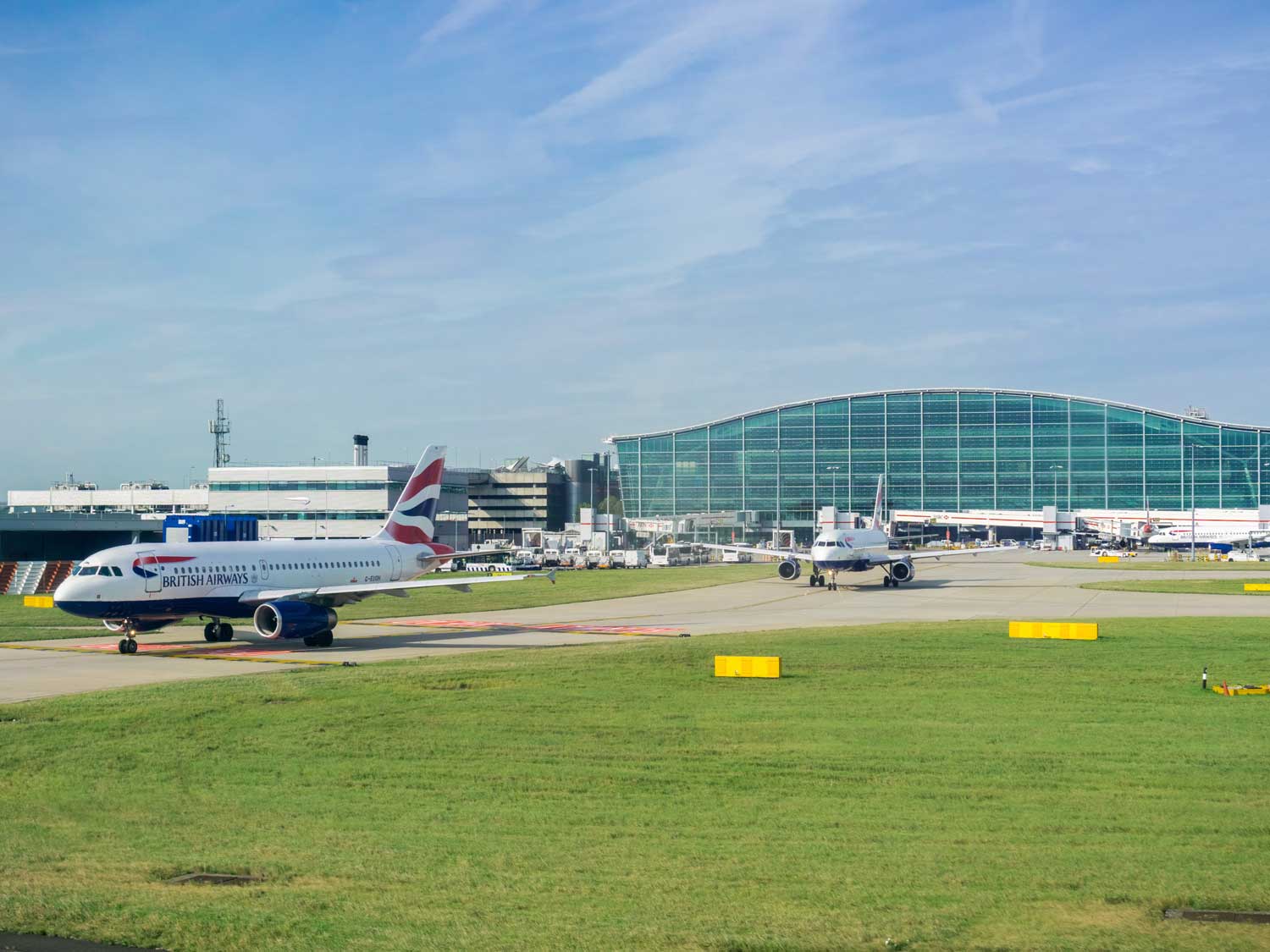
Heathrow regained its status as Europe’s busiest hub airport during the summer beating its rivals in Paris, Amsterdam, Frankfurt and Madrid.

And, in a remarkable turnaround, Heathrow was the second busiest airport for international flights in November, behind Dubai, which are the same positions the pair held in 2019, before the pandemic.

Heathrow remained the UK’s lifeline by maintaining strong cargo throughput, transporting 1.4m tonnes, including vital supplies such as PPE, medical equipment and pharmaceuticals including vaccinations.

With airlines reconfiguring their fleets for cargo, the revenue contribution from this sector increased from 12% in 2019 to 40.3% in 2021 and the expectations are for cargo to account for 27.7% of airlines’ total revenue in 2022.

Although airfreight only accounted for 1% of goods by volume, pre-pandemic, airfreight represented 40% of goods by value.

In 2021, Heathrow was the UK’s most valuable port, seeing £153bn in non-EU imports and exports passing through the hub, handling 75% of all UK air cargo and more cargo by value than all other UK airports combined and serving 354 destinations in the process.

This significant figure shows the unique position of Heathrow and the vital role airfreight plays as an enabler of import and export trade.

The role airfreight plays in keeping Britain trading cannot be understated.

Heathrow’s cargo tonnage has risen to 87% of pre-pandemic levels and while Paris, Frankfurt and Amsterdam’s cargo volumes have recovered faster, they process less belly-hold cargo, which is growing at Heathrow, as more passenger flights return.

Despite the slip in cargo recovery, Heathrow remains confident for the future with plans to invest in infrastructure over the next fIve years to grow capacity and the sustainability and efficiency of its operation.

It will grow the airport’s airfreight proposition, in cooperation with the Heathrow Cargo Community.

In July 2015, the independent Airports Commission reported the conclusions of its three-year study examining the need for additional capacity to maintain the UK’s position as Europe’s most important aviation hub.

With overall UK airfreight volumes 8% lower in 2021 than in 2019, the expansion of Heathrow with a third runway has the potential to significantly grow airfreight capacity.

Heathrow Airport is the only hub airport within the UK and the only airport which accepts both European and international cargo freight, serving 350 destinations in 80 countries.

The expansion of Heathrow does come with its own challenges and approval of a third runway - with the potential for an additional 260,000 flights annually - has been controversial. The airport is currently seeking a development consent order (DCO), a type of planning permission for nationally significant infrastructure.

While our Heathrow team continue to handle increasing cargo volumes, we monitor market capacity and identify opportunities to use regional airports - and particularly our Birmingham hub - when it will benefit our customers, ensuring that expectations and timelines are met.

We find solutions for every critical shipment. Please call Elliot Carlile to discuss your situation, requirements and potential resolutions for your products that need to be in the right place at the right time. At the right price. We have the answer.

ground handlers

<strong>Heathrow air freight ground handlers strike</strong>

(STRIKE OFF - SEE UPDATE BELOW) Heathrow ground handlers have rejected below-inflation pay offers, with members of the Unite union taking part in three days of strike action, commencing tomorrow, which could impact cargo flying with major carriers.

18TH NOVEMBER - The strike by ground handlers at at dnata has been called off after members accepted an improved offer. Today's strike action by Menzies has gone ahead, but it is believed that it has now been suspended, so that union members can be balloted on a new pay offer

The strike involves 700 workers employed by dnata and Menzies, that are responsible for aircraft while they are on the ground, assisting with the prompt arrival, turnaround and departure of jets, with efficient baggage and cargo handling.

Unite is warning that the action starting in the early hours of the 18th November and running to the 21st November will cause “disruption, cancellation and delays” to flights operating from terminals 2, 3 and 4.

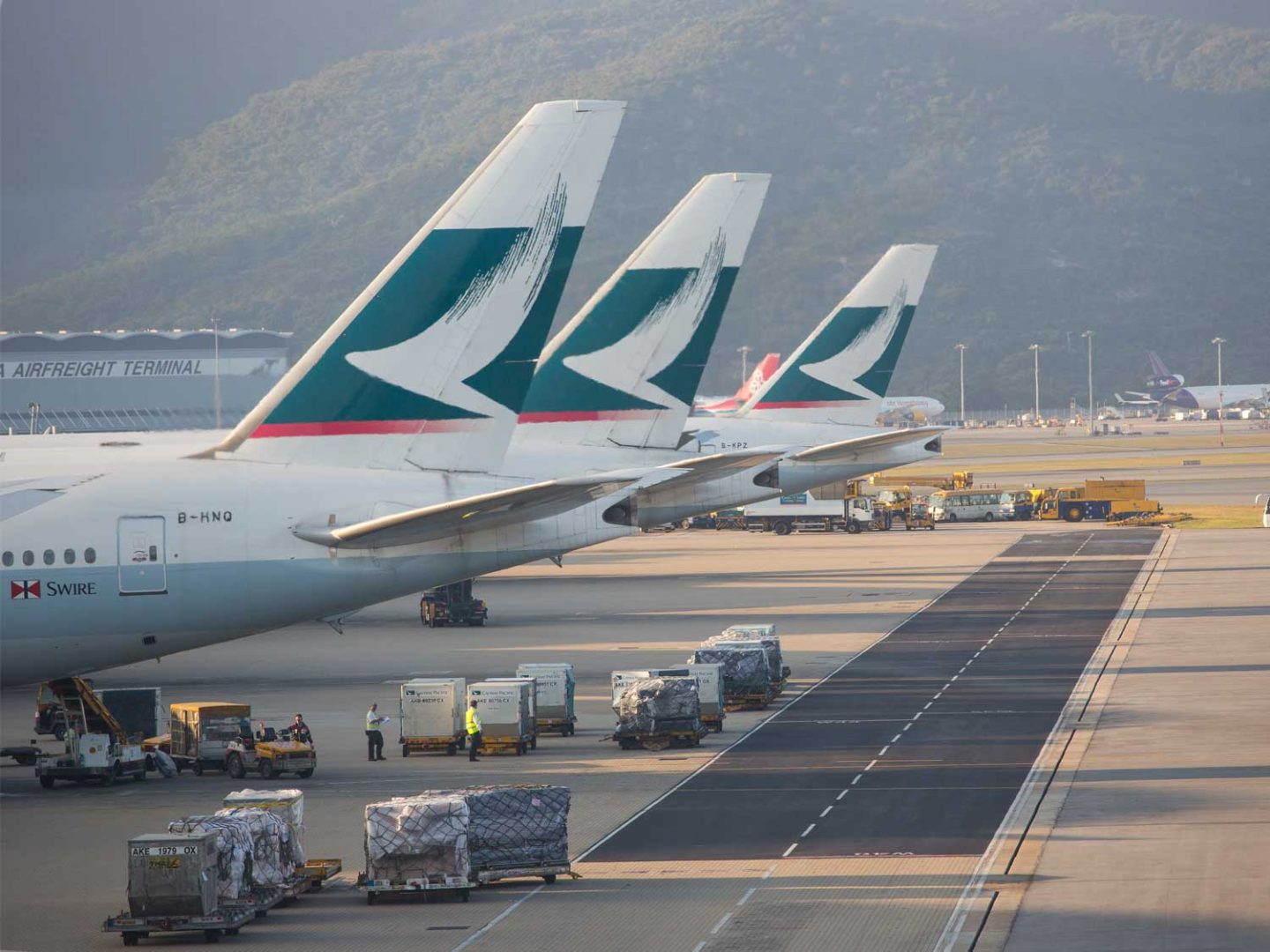
The strike action will particularly affect Qatar Airways, which has scheduled an additional 10 flights a week during the football World Cup, the union said and other airlines that will be “hit heavily” by the strike action include Virgin, Singapore Airlines, Cathay Pacific and Emirates. 

Heathrow Airport management have held discussions with airlines on their contingency plans to support ground handling and avoid disruption should the strike go ahead.

Menzies and dnata have announced the formation of contingency plans, but details have yet to be made public.

Long-standing cargo disruption at the airport, which has only recently cleared, would make an unwelcome return if the strike creates too much congestion and bottlenecks, from flight cancellations and delays.

The union said that a pay rise on offer from the two firms does not cover inflation. “Dnata has offered its workers a 5% increase, while the offers for Menzies workers vary between 2% and 6%.”

The employers said that it is disappointing that Unite plans to progress with this costly industrial action, and that strike action will only delay the process at a time when employees need the increase now.

Unite general secretary Sharon Graham said: “Our members at Dnata and Menzies undertake highly challenging roles and are simply seeking a decent pay rise. Both companies are highly profitable and can fully afford to make a fair pay increase".

We will keep you updated with the situation and hopeful progress in relation to any impact on cargo movements through the Heathrow gateway.

Our Heathrow office is monitoring the ground handling situation closely and, if necessary, will take action to avoid disruption from the dispute. We regularly flex cargo volumes between our Heathrow and Birmingham airport hubs, as well as other gateway and regional hubs throughout the UK and Europe.

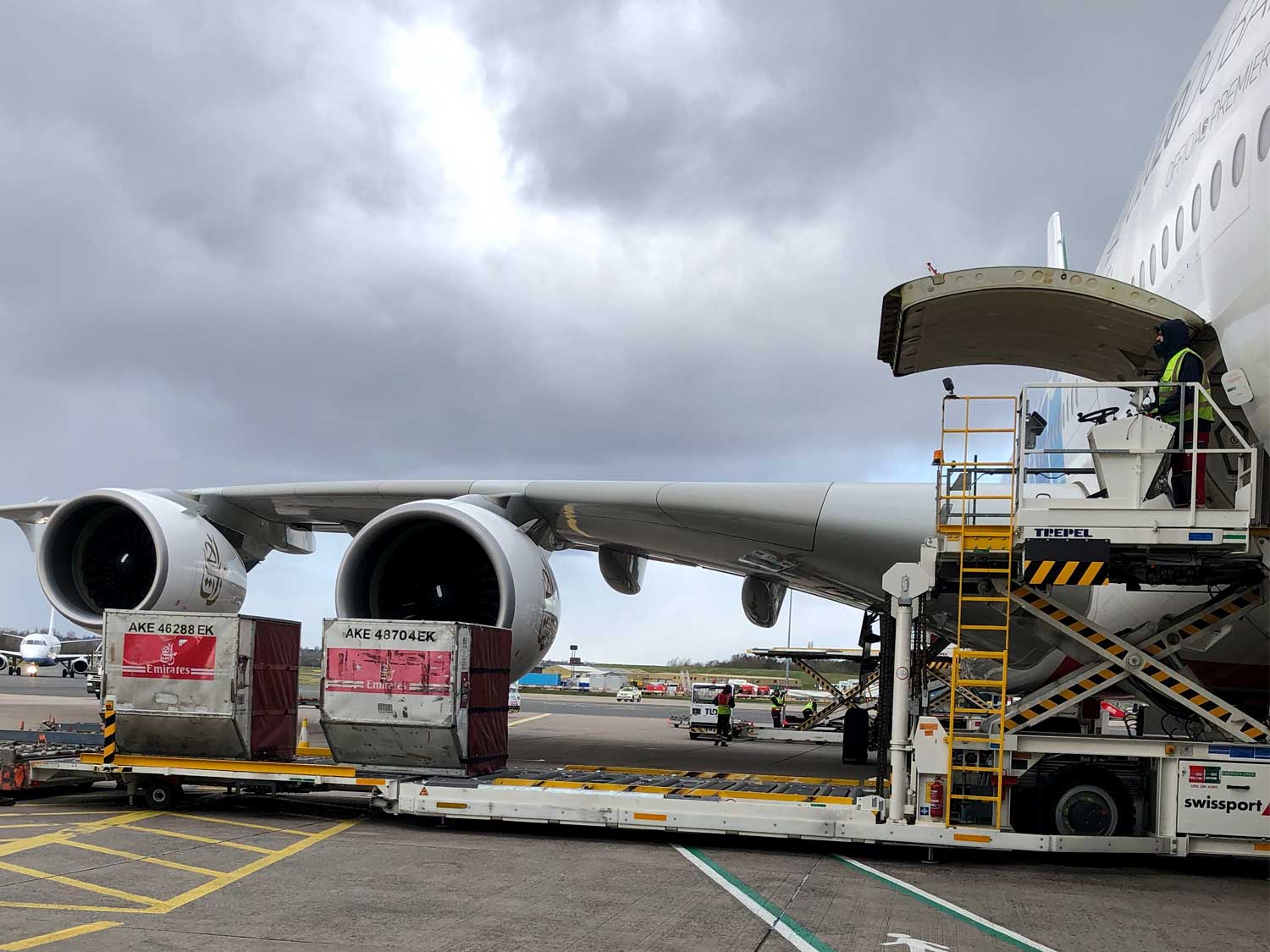
With more direct flights, including daily Emirates 777s and multiple long haul and regional connecting carriers into Birmingham Airport hub, we are even better positioned to protect our customers from any adverse impact during the potential Heathrow dispute, or any other congestion that occurs at the UK’s largest cargo airport. We react as needed ensuring alternatives are available and reliability and integrity to time critical movements is always maintained, regardless of the situation.

For further information on our air freight services and solutions please contact Elliot Carlile for immediate assistance. We have it covered and have the solution to ensure delays are minimised, and where possible, avoided.