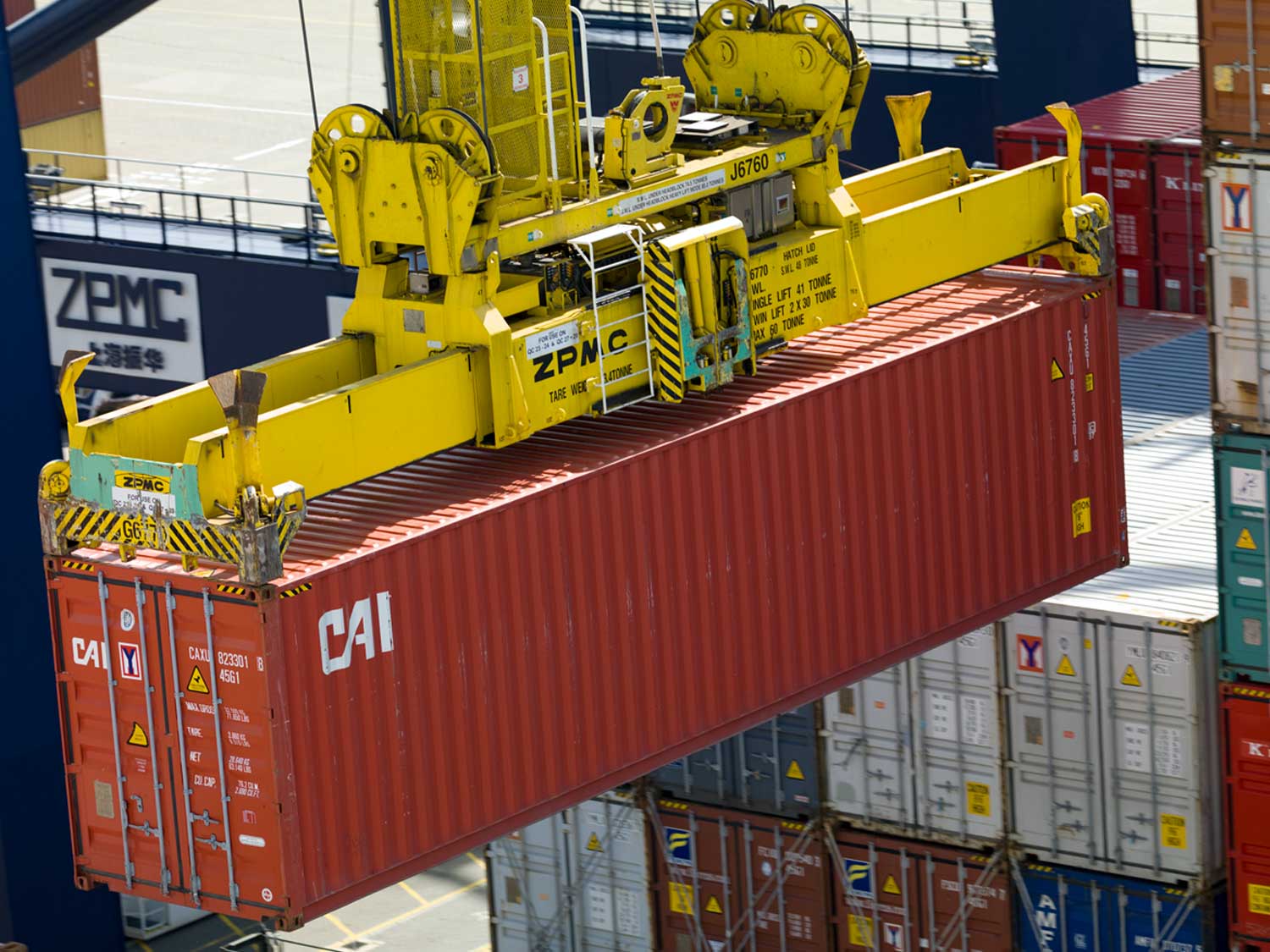
container

Asia-Europe congestions adding to transit delays and schedule confusion

Congestion at both ends of the critical Asia-North Europe (this still includes the UK) shipping trade is wrecking vessel schedules, with the average delay of container ships completing a round-trip loop rising by over two weeks, as carriers skip congested ports at both ends, and quite often in between.

These extended transit time delays are removing much-needed capacity from the sea freight market, with analysts suggesting that the three alliances would need to add a further 44 ships of between 14,000 to 24,000 TEU to cover the delays and maintain a weekly sailing frequency on all 17 Asia-North Europe loops. 

In essence up to a quarter of total container shipping capacity has been removed, with the extended transit situation. The equivalent of parking up and idling 25% of the world’s global container shipping fleet to put it into perspective. Unbelievable a few years ago – but reality as of today.

Comparing the voyage durations for ships on the 17 Asia-North Europe loops arriving in Asia, for their next westbound sailing, during a week last month, shows that they needed up to 54 days additional time to complete a round trip, with delays averaging 18 days. This, therefore, affects both imports and exports – from and to everywhere – on the trade lanes between Europe and Asia. It is unavoidable not to.

Measuring the delays on a full round trip revealed the massive impact of port congestion on lines’ schedules, with an average of seven days’ delay for the OCEAN Alliance, 19 days for 2M, and 35 days for THE Alliance.

THE Alliance’s performance is particularly marked because it has not been skipping ports in Europe and trying to maintain its original rotation. But Rotterdam, Hamburg, and Antwerp have added significant delays because these ports were far more congested than smaller ports like Zeebrugge or Wilhelmshaven that are used by the OCEAN Alliance.

A significant and often overlooked factor in the operational stress that creates port congestion has been the excessive growth in call sizes over the past year and the sheer volume of containers that need to be loaded and discharged on a single vessel call.

While container ship volumes on the Asia-North Europe trade increased 11.3% year over year, this was just 2.8% above the 2019 total, but more vessels are also not a solution to the congestion. Due in part to the time between order, build and delivery of new vessels and in part because injecting more vessels would run the risk of simply compounding existing bottleneck problems. It’s a conundrum that is not easily solved.

Maersk warned, and other carriers followed, in an October market update that congestion would force them to join other carriers in implementing ad hoc port omissions, to try to maintain schedules, with extra loaders deployed to sweep up cargo and minimise the delays that customers are experiencing.

It does seem that decisions on port call omissions are not being communicated to freight booking desks and consequently, shippers are being offered space on sailings for which cargo may only arrive at the original destination port several weeks after the advertised date.

We have been offered space on MSC’s Shogun/Maersk’s AE1 sailing from China in early November, on the 19,224 TEU MSC Erica. MSC is advertising a transit time of 29 days to Felixstowe, while Maersk is quoting a transit time of 46 days for the same vessel.

We have seen similar errors from the Ocean Alliance and THE Alliance partners because their schedules have not been updated and it’s a major problem because shippers may make inventory calculations based on incorrect ETAs.

For the latest information and updates on your ocean freight planning and supply chain for the end of the year and 2022 please contact Chris Carlile or Grant Liddell for immediate advice and the latest intelligence relating to your global freight movements.
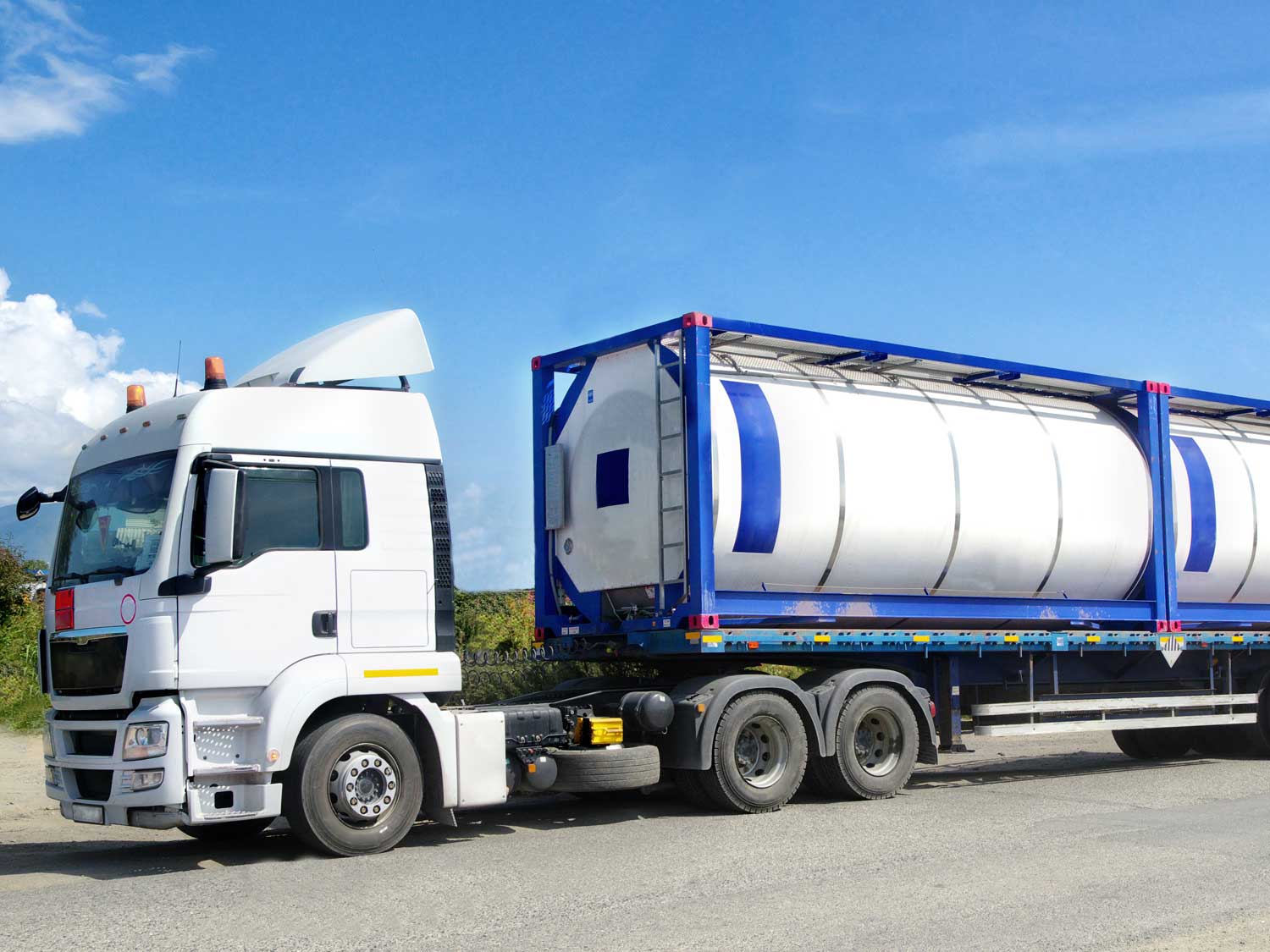
ISO tank

The challenge of shipping chemical cargo around the world

The challenges of finding tank containers and getting them booked for vessel loading at origin have been growing, making the transport of dangerous and complex goods more and more difficult.

Widespread disruption and delays in the global ocean supply chain have cut available transport capacity, with chemical cargoes that are typically dense weight and better suited to 20’ equipment, increasingly rejected by carriers in favour of cargo that is lighter and packed in 40’ containers, to offer greater yields.

Pretty much all nine leading container shipping lines have declined, at one time or another, to accept dangerous goods or requested such extraordinarily high rates, that it has been cost-prohibitive for the shipper.

The potential inability to move critical chemical products is of great concern, because these are specifically designed to support health care operations or water treatment facilities, and are contained in everyday goods that may be running critically low in certain parts of the country.

While there is no reluctance from our preferred ocean carriers to transport chemical products and dangerous goods, there are additional operational issues that need to be considered when handling that type of shipment and they are equally impacted by the challenges in the current market-driven by slow-moving supply chains.

With complex dangerous cargo, it would be inadvisable to leave it at the port terminal for an extended period ahead of departure and we need to make sure it is loaded as planned, which is more challenging because of the many omissions and ship delays.

Specific regulations around the transport of dangerous goods also add layers of complexity. The quantity and type of dangerous goods a ship can carry depends on the vessel’s Document of Compliance for Carriage of Dangerous Goods and restrictions may also apply at loading and discharge terminals, in addition to other local or international regulations.

A very significant issue over the past year has been the shortage of equipment in key origins, which has driven up the costs of shipping an ISO tank container by an average of six times, and up to a 30-fold increase at its worse.

The equipment imbalance is a huge problem, which is made worse by the HGV driver shortage because even if an ISO tank container can get on a ship in Asia when it lands in the UK, there is a major effort to ensure that there will be a driver there to pick it up.

For over thirty years we have been managing the safe and compliant storage, handling and transportation of chemical and petrochemical products to local, regional and international destinations.

Our ops team has extensive knowledge of the handling, packaging and compliant documentary requirements for the global multi-modal transport of hazardous and non-hazardous chemical products.

We work with twenty offices across Europe, Middle East, India, South East Asia, China, Japan and North America, to monitor market conditions and manage relationships with carriers, to ensure that our customers’ cargo is lifted and transported to the destination on time and in full.

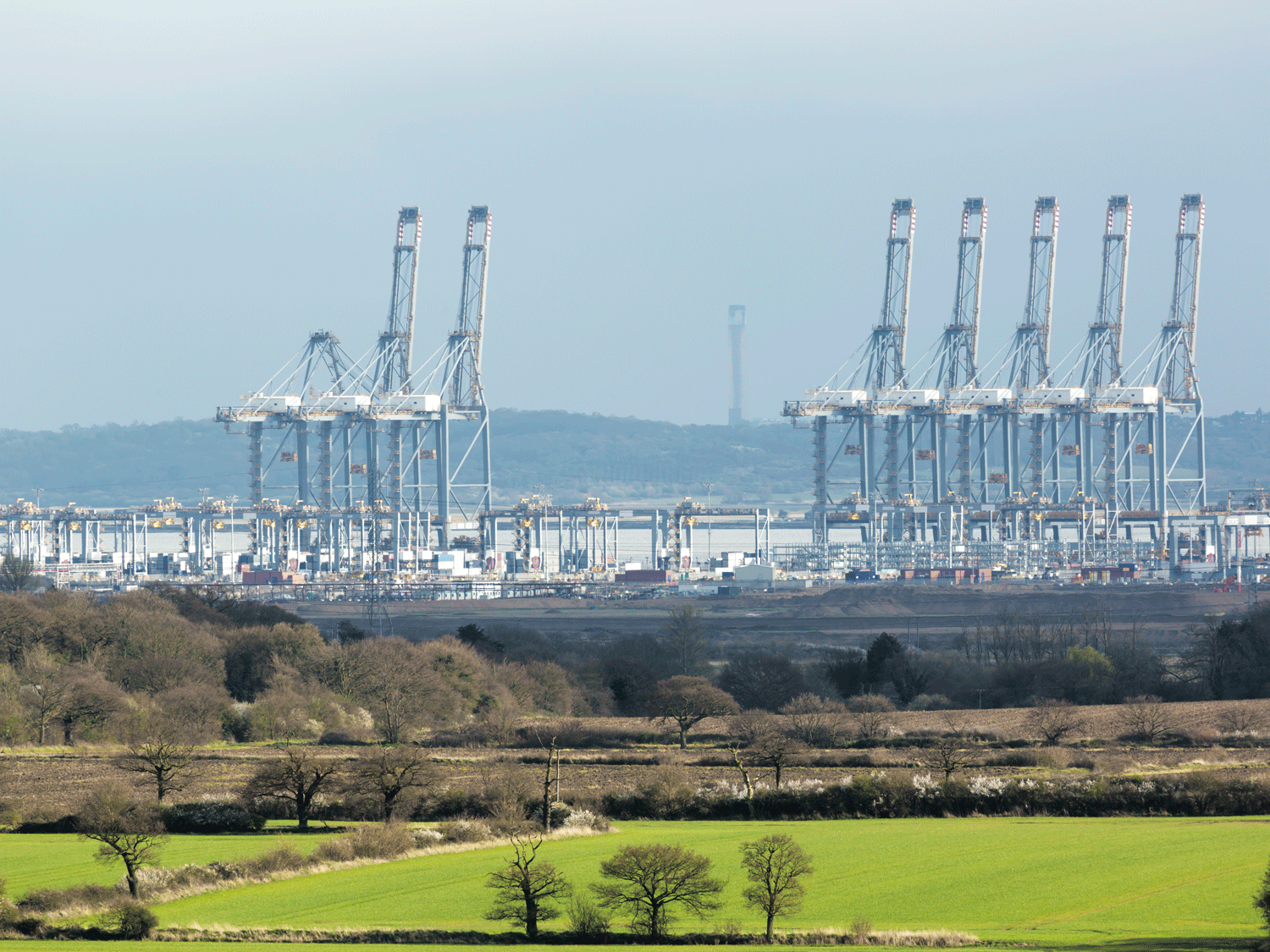
London Gateway

Ports invest for future

DP World has opened an 11.5 acre container park near Southampton, to increase storage capacity during the peak pre-Christmas season and work has begun on a fourth berth at London Gateway container port, to increase supply chain resilience and create more capacity for the world’s largest vessels.

The new park at Southampton will be able to hold additional empty containers and reduce stack sizes at the nearby container port, a critical factor in keeping supply chains moving at a time when dwell times at terminals across the UK have increased.

The new £3m empty park is part of DP World’s £40m investment this year at Britain’s second largest container terminal - designed to take it up to the next level as a smart logistics hub - which will provide 25% more storage capacity at Southampton and enable the port to maintain productivity and service levels for the vital next few months.

Southampton has already benefitted this year from the dredging and widening of berths to ensure continued accommodation of the world’s biggest ships and a £1.5m extension of a quay crane rail by 120 metres to ensure that the world’s biggest cranes can service the entire terminal and receive the largest container vessels that are operating today and in the foreseeable future.

In the first half of 2021, a record volume of cargo was handled at Southampton, with throughput of 995,000 TEU, while London Gateway saw record throughput of 888,000 TEU, a more than 23% increase on the previous best performance. Impressive although not without some pain during the process.

Southampton and London Gateway have both been awarded freeport status as part of Solent Freeport and Thames Freeport respectively.

The new London Gateway berth is part of a £300M investment by DP World, to support Thames Freeport and will raise capacity by a third. Completion of the new berth will coincide with the delivery of a new wave of 24,000 TEU vessels in 2023/2024, which will undoubtedly be operated between Asia and Europe. 

Along with the Port of Tilbury and Ford’s Dagenham plant, London Gateway will form part of Thames Freeport after being awarded ‘freeport’ status by the Government earlier this year, as a stimulus to both the local and national economy and global trade initiative.

With 40 commercial ports in the UK and hundreds across continental Europe to choose from, we select the optimum mix of cost and operationally effective port-pairs, to complete your transit in the shortest possible time.

Graph and pound coins 1440x960 1

Air freight rates continue to rise as capacity falters

Frustrated shippers, trying to avoid further container shipping delays, by switching modes, has driven air freight and charter rates to climb by up to ten times in a single week.

Further imbalance between supply and demand is emerging, with the airlines conversion of passenger aircraft into temporary cargo planes failing to satisfy demand.

Many airlines are operating at their maximum capacity, which means that airports, and their cargo ground handling facilities, are heavily congested and global delays are inevitable, with significant disruption reported at Atlanta, Frankfurt and New York. Heathrow is also experieincing disruption as aircargo flows intensify during the final quarter.

Unprecedented demand for charter flights has been driven by massive increases in ocean freight rates on major trade-lanes, unreliable extended ocean freight transit times, delays and local driver shortages in Europe and the continued lack of passenger aircraft belly capacity due to travel restrictions globally, which is only beginning to open up as countries lift restrictions.

Charter prices have risen to record levels and as more aircraft are booked up, equipment is moving from increasingly large distances to service key routes from Asia, since there’s no ad-hoc scheduled capacity left in the market throughout October and into November.

We would expect to see further ‘preighter’ capacity added in the days and weeks ahead and express airlines are also adding freighter capacity to attempt to meet rising demand. With one expanding its services to Europe and North America in the run-up to Christmas, adding 62 flights a week and new services from Japan and Taiwan. However this is also now clashing with the re-introduction of scheduled passenger driven flights which is reducing the number of aircraft available for cargo only flights as the mainstream revenue opportunity returns to the airlines.

Intra-Asia integrator capacity has also been increased by replacing Boeing 757 narrow-body freighters with B767 wide-body freighters, doubling cargo capacity from/ to Indonesia, Vietnam, Thailand and the Philippines.

Shanghai Pudong is operating relatively smoothly again after multiple Covid-linked disruptions and the local market has been quieter, due to Golden Week, although demand has picked up again after the holiday period as factories return and the Christmas period approaches.

Overall the market seems to be steady, with rates to certain destinations slightly higher, but with the peak season continuing, we expect this situation will degrade, as shippers in certain areas want to make sure they get their products in for the seasonal period and this is likely to push air freight rates up even further as a consequence of the supply/ demand dynamic.

We work closely with our global network to monitor market capacity and identify service opportunities that might benefit our customers, which means that despite the massive challenges, we continue to find solutions for time-sensitive shipments. 

Evaluating and blocking space on viable services early, is a critical factor in achieving deadlines based on customers’ requirements and expectations, including the constant recalibration of our hybrid sea/air platforms and hub services. 

Please call Elliot Carlie or Grant Liddell for further insights and advice.