RoRo

<strong>Critical export customs changes draw near</strong>

HMRC will be writing to traders to raise awareness that all export declarations currently made through CHIEF, must be made through the Customs Declaration Service (CDS) by 30th November 2023 and that they must register for the service.

The customs handling of import and export freight system (CHIEF), which has been in use by HM Revenue and Customs (HMRC) for nearly 30 years, was due to be replaced when the UK left the European Union (EU), but its CDS replacement was not ready to handle the large increase in customs declarations.

The decision to create CDS was made before the EU referendum in 2015 and CDS was originally scheduled to launch in 2019 but as Brexit changed the UK’s trading landscape so dramatically, CHIEF was retained, while CDS was scaled to handle the increase in the volume of declarations resulting from Brexit, which has been estimated at 400 million p.a.

The migration from paper-based rules on CHIEF, to data processing rules on CDS was scheduled in two stages, with import declarations moving on the 30th September 2022, while exports, which were due to migrate on the 31st March 2023, have had their deadline extended to the 30th November 2023.

At the start of the year HMRC data showed that more than a quarter of businesses had not signed up to CDS and could potentially find themselves unable to export.

The British Chambers of Commerce (BCC) has been critical of the deadline extension, saying that HMRC should do more to spur companies to sign up and pointing out that delays were unfair to those that had already invested in switching over.

HMRC said: “The majority of frequent traders have now migrated to CDS, with 91% of import declarations now being made on the system. Through our extension process we have provided extra time for those who had a good reason why they couldn’t migrate to CDS. We continue to work with declarants to support them moving across and ensure there is no disruption to trade.”

It is critical to note that CDS requires far more data and specific information than CHIEF and may involve changes to commercial documentation.

Metro clients have been migrated onto the CDS platform and are supported by our customs brokerage team, but you must hold a valid GB EORI and be registered on the Government Gateway to use CDS. 

If you have not registered for CDS, or are uncertain how it applies to you, we can guide you through the changes and actions required. 

EMAIL Andy Fitchett, Brokerage Manager, for further information, or to discuss your situation.

Belfast

<strong>New Customs framework agreed for Northern Ireland shipments</strong>

Business groups have welcomed the ‘Windsor framework’ deal announced on the 27th February, between the UK and EU over trading arrangements in Northern Ireland, which offer a considerable reduction in checks and documents to move goods across the Irish Sea and into the province.

To avoid a land border with the Republic of Ireland the British government introduced customs checks at NI ports, for goods heading to the Republic. The policy known as the Northern Ireland Protocol (NIP).

Unionists in NI questioned this move, as it effectively created a border between NI and the rest of the UK and the checks were unpopular with businesses who argued they added unnecessary bureaucracy, additional costs and delays. 

The Windsor Framework points out that under the NIP Protocol, a single truck carrying agrifood products could be required to produce as many as 500 officially-signed certificates, costing up to £150 per certificate, and adding hours of additional work.

While agreement has been reached between the British government and the EU, the Windsor Framework has yet to be accepted by DUP politicians in NI and ratified by the British parliament.

Under the new deal goods going to NI will pass through a ‘green’ lane with far fewer physical checks and paperwork, while goods destined for the Irish Republic will pass through a ‘red’ lane and would still be subject to checks to ensure they comply with EU regulations.

To qualify to use the new 'green lane', shippers will need to register as a trusted trader under the new United Kingdom Internal Market Scheme (UKIMS).

Fresh meat produced to UK standards will be allowed to enter Northern Ireland as long as it is clearly labelled. The distribution of British medicines will be allowed across NI, while parcels sent by individuals to friends and family will not require customs paperwork and online shopping will also be exempt.

Shipments between GB and NI will require a reduced amount of data, using ordinary commercial information rather than customs processes. The exact format in which this reduced set of data will be submitted has not yet been announced.

Dependant on the agreement’s progress through parliament, the Windsor Framework’s processes may come into effect from September 2023, with grace periods until 2025 for certain rules and checks. 

We will share information on the new framework and processes as they become available and will work directly with clients, as necessary, to ensure that they are prepared and compliant with any new customs regulations and requirements.

If you have any questions or concerns EMAIL Andy Fitchett, Brokerage Manager, who will be happy to review your situation.

plastic 2

20,000 UK businesses eligible for Plastic Packaging Tax – are you one of them?

Manufacturers or importers of 10 or more tonnes of plastic packaging, containing less than 30% recycled material, over a 12-month period should be registered for the tax, with the liability date fast approaching on the 1st May 2023.

The Plastic Packaging Tax (PPT) came into force in the UK on 1st April 2022 and applies at a rate of £200/tonne on plastic packaging with less than 30% recycled plastic, manufactured or imported into the UK, including packaging on goods which are imported.

It is estimated that 20,000 businesses across a broad range of sectors will be affected and those that fall within the regime will need to submit quarterly returns to HMRC detailing weights of plastic packaging components imported, and that which contain 30% or more recycled content, or is exempted because it is used for medicinal products, or for other reasons.

Imports of packaging which already contains goods, such as plastic bottles filled with drinks or plastic packaging around goods, are also potentially subject to the tax with some exclusions. 

Exclusions apply to filled packaging components with a primary storage function, such as glasses cases or DVD cases; and where the packaging is an integral part of the goods.

PPT is not charged on plastic packaging which is designed to be reused for the presentation of goods such as shop fittings or sales stands.

Businesses will need to conduct regular checks to ensure plastic packaging does not fall below the 30% threshold or else face fines. This means keeping a record of all checks conducted as well as completing plastic packaging tax returns over the accounting periods if the business is liable to pay the tax.

We have found many importers and manufacturers are not aware of this new tax, even though it has already been introduced. Are you compliant and have you taken action to avoid potential penalties?

Registration is required if:

At any time after 1st April 2022 a business expects to import or manufacture at least 10 tonnes of plastic packaging in the following 30 days. In that case registration is required within 30 days of the first day that this condition is met; or

A business has manufactured or imported at least 10 tonnes of plastic packaging in a 12-month period ending on the last day of a calendar month. In that case the business becomes liable for PPT from the first day of the next month and must register by the first day of the subsequent month.

In the first year of the tax, a business only needs to register for the tax when the amount of plastic packaging exceeds 10 tonnes in a 12-month period from 1st April 2022.

If either of these conditions is satisfied, registration is required even if a business’ packaging is not chargeable and it does not have to pay any tax.

RESOURCES

Check if you are liable and need to register for Plastic Packaging Tax
Register for Plastic Packaging Tax

To discuss your PPT situation, exemptions and compliance, EMAIL Andy Fitchett, our brokerage manager, who can take you through the implications.  We have, within our extended group, expertise and specialist business analysts that can help and advise you on this evolving situation and we can introduce you directly to the best solution for your business needs.

Dover istock

<strong>New EU border controls threaten cross-channel delays</strong>

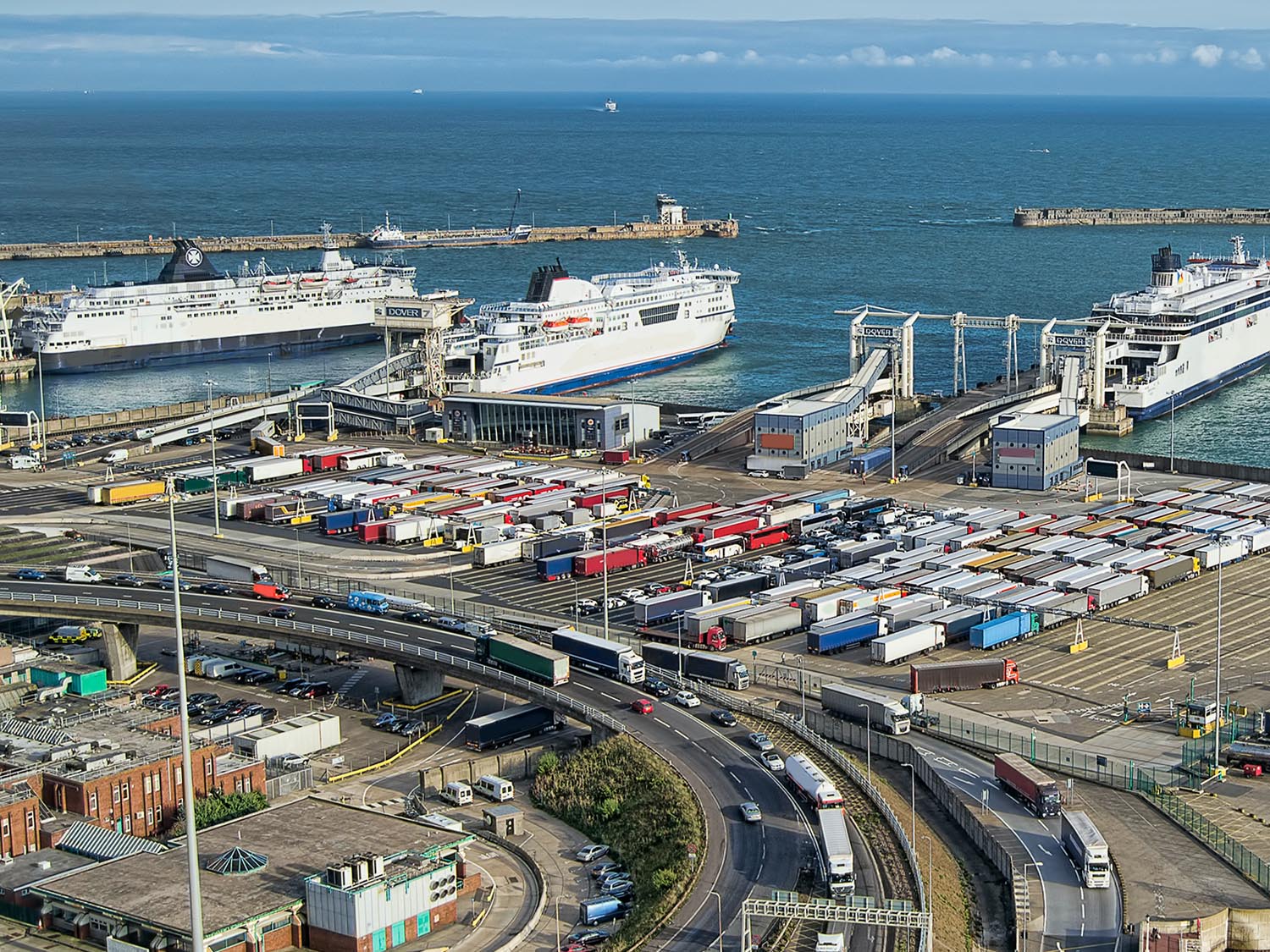
Almost 60% of all UK-EU trade passes through the UK short straits and ensuring their operational stability is key to facilitating and maximising international trade, but EU border controls due to take effect next May threaten to impact their resilience and sustainability.

The European Entry/Exit System (EES) will replace wet stamping of passports and require Britons to register biometrics including facial and fingerprint scans on their first border crossing into the EU, and then be scanned on subsequent crossings.

Britons travelling to the European continent have been warned to expect huge delays at ferry ports and the Channel Tunnel from May 2023, with the launch of the scheme expected to be chaotic.

The technology the EU is implementing to support the EES rollout was designed for airports and railway stations, where passengers approach individually in queues and under French laws, the information must be gathered in the presence of a border official and cannot be subcontracted.

The head of EU exit for the Dover Harbour Board, told MPs last year that there is no such thing as an eGate for a car, and there is no such thing as an eGate process for people travelling as a group. They’re all one-at-a-time processes, which means that at British exit ports, EES would require car passengers and commercial vehicle drivers to exit their vehicles at French border controls to undertake passport checks; in addition to compromising the safety of drivers, it would also delay just-in-time supply chains.

The port of Dover has voiced fears - that are supported by Logistics UK and other freight trade associations - that EES will not work in a ferry port where there could be hundreds of cars waiting to get onto ferries and with up to 10,000 lorries crossing every day, any disruption to processing cars for departure, could lead to prolonged freight delays.

Experts suggest that EES could extend passenger processing times, currently averaging 90 seconds per car by a few minutes, which Imperial College forecasts would trigger 29-mile queues.

The Port of Dover, ferry operators, Logistics UK and the British Ports Association (BPA) are lobbying the government to address the looming threats to traffic fluidity from the EU Entry Exit System (EES) and support new border control infrastructure.

Metro are at the forefront of UK/EU customs brokerage solutions, with our automated CuDoS declaration platform and a dedicated team of customs experts, reacting swiftly to any changes in the UK’s trading relationship with the EU.

To learn how we can simplify and automate customs declarations for your businesses, please EMAIL Elliot Carlile to review the options.