Dover queue 2

Metro is SMEs resource to deal with post-Brexit paperwork

Time-poor SMEs are being forced to outsource their post-Brexit paperwork, which is adding cost and time pressures, but Metro’s digital CuDoS platform offers an easy solution.

The  Federation of Small Business (FSB) Customs Clearance report found SMEs are often forced into using high-cost intermediaries because they do not have the internal resources to handle complex post-Brexit customs paperwork themselves.

The report revealed that less than one in ten SMEs have a dedicated staff member or team for customs procedures, with over a third of businesses saying that extra intermediary fees were posing a challenge to international trade because they increase their supply chain costs. 

The research also revealed that four in ten SMEs do not have the expertise required to handle customs declarations, while over half said they have outsourced this function to help free up their time for other tasks.  

FSB policy chair Tina McKenzie said: “Unlike big corporates, most small firms don’t have the specialised resources needed to deal with complex customs procedures, so they’re dependent on intermediaries. [But] Smaller businesses may also have to bear higher costs as they are unable to commit to large volumes and they are less able to reach fixed price agreements or to negotiate with couriers.”

Metro are at the forefront of automated customs brokerage solutions, simplifying and automating customs declarations for importers and exporters, with our CuDoS declaration platform and dedicated team of customs experts ready to support businesses of all types and sizes.

The CuDoS solution uses the latest artificial intelligence (AI), machine learning (ML) and automation capabilities to optimise the data capture and customs declaration processes, to create a compelling 20% reduction in headline costs and 25% increase in volumes.

Metro’s CuDoS is now achieving a SLA of 98% on two hour turnaround times, from customer submission/request through to document delivery, with 96% of declarations processed and submitted to HMRC within 30 minutes at a 99% processing accuracy.

The targeted business support provided by CuDoS reduces the cost of trade and is helping to unleash the export potential of small international traders as well as encouraging more businesses to sell overseas.

To learn how we can simplify and automate customs declarations for your businesses, please EMAIL Andy Fitchett to review the options.

Metro continues to invest in MVT and CuDoS innovation in 2023-2024, with more exciting releases planned.
Trailer

European division continues expansion

Five months ago European Director, Richard Gibbs, outlined his vision for Metro’s road freight and short sea services, in developing the business’ capability across the EU. Today, he updates us on his progress and next priorities.

“Since the start of the year we have been working very closely with our continental partners and carriers to add new ‘lanes’ to our transport network, extending the scope of our regular services, alongside our daily EU-wide FTL and LTL services.”

“At the same time we’ve been increasing our operational capacity, by growing the European team and adding new freight centres and groupage hubs in Leicester (Desford) and Manchester.”

“Service design has a been a primary point of focus, but so too has customs compliance solutions and advanced technology, to deliver visibility, control and supporting services.”

“The development of the CuDoS customs platform by our technical services team and the digitising of customs compliance has been a ‘game-changer’ for our customers and particularly those trading with Europe.”

“Using Artificial Intelligence and Machine Learning CuDos optimises data capture and customs declaration processes, with an SLA of 98% on turnaround times of under two hours and record turnaround speeds under 8 mins.”

“Since Brexit, the UK is considered as a third country and transactions with the EU are no longer intra-community, but considered as imports and exports, which means that VAT and duties need to be paid in the country of import, creating a trade barrier for many exporters.”

“Some EU importers are comfortable arranging import clearances and our standard T form services accommodate these movements, across single and multiple borders. However, some EU importers do not want to arrange import clearances, which is why we have created a range of options that allow UK exporters to complete transactions with their EU customers simply and seamlessly and even as if it were a domestic transaction.”

“The options are varied and can be adapted to suit specific transactions and customer relationships. They are listed below, but really require further explanation, which we will provide in a future post - or you can EMAIL me now.”

The Delivered Duty Paid or ‘DDP’ Incoterm means the exporter takes responsibility for the transport of the goods and customs formalities in the UK and EU, by becoming the ‘Importer of record” in France (or another member state) taking the burden away from your customer.

 - Regime 42 is for DDP transiting France for another EU destination. 

 - Regime 40 is for DDP shipments where the exporter has a French VAT number enabling clearance in France for free circulation in the EU.

 - DDP Light is where the consignee authorises their VAT number to be used as the importer of record but any duty is paid by the exporter. 

To learn more about our expanded European capability, including our CuDoS and EU/DDP solutions EMAIL Richard Gibbs. 

Inland Border Facility

FDF member update: UK border changes impact for food industry

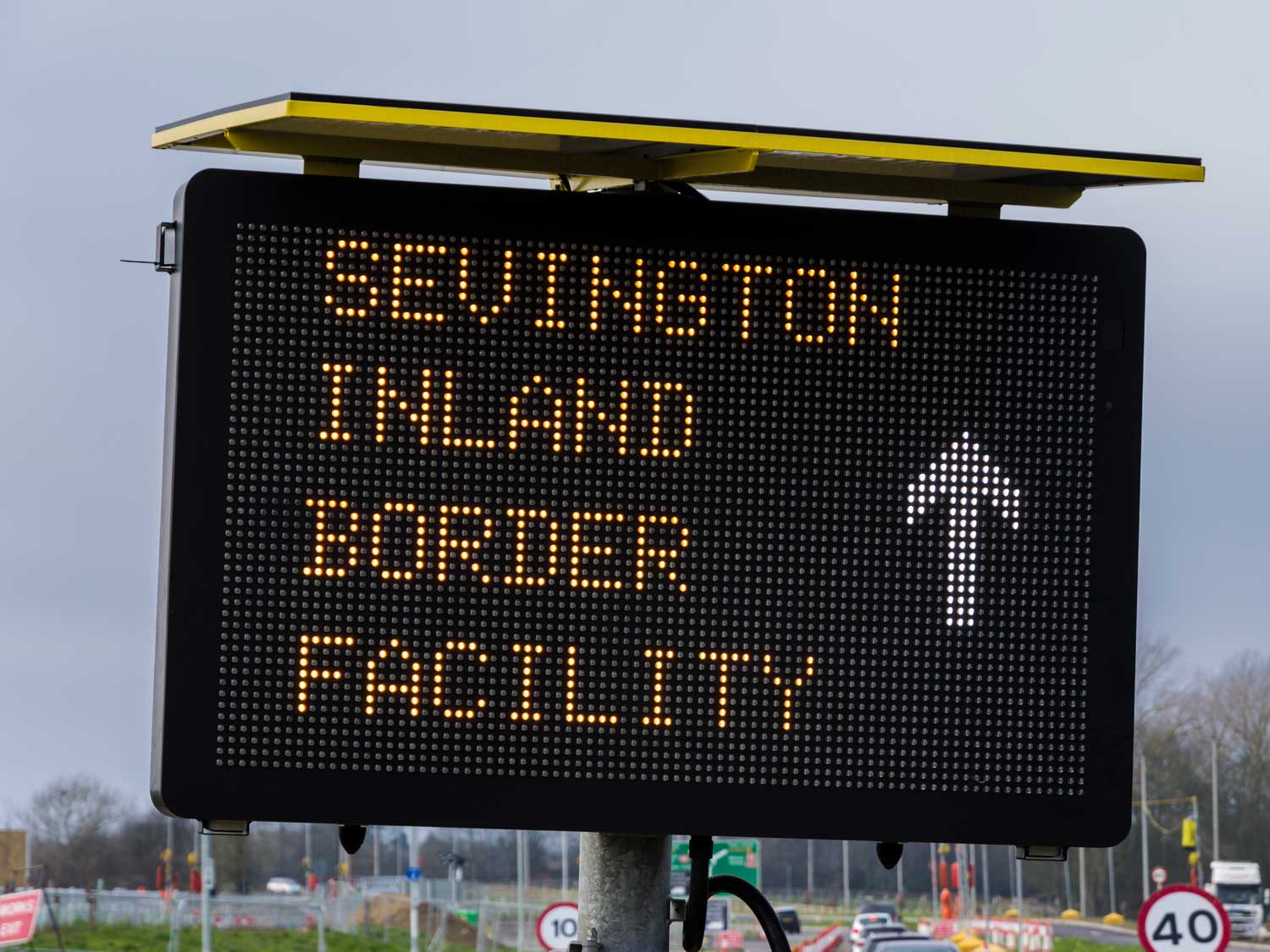
The UK Government is finally planning to introduce new checks on food imports coming into the UK from this October, with new checks under its Border Target Operating Model (TOM) set to be phased in over the following year.

In April 2022, the UK government opted to delay the final phase of its planned border implementation covering sanitary and phytosanitary (SPS) goods moving from the EU to the UK.

In the period since then, the government has been working on the Target Operating Model, a long-term border plan aiming to balance the need for a secure border with the needs of business for a simple border system.

The draft plan for the Target Operating Model proposes a new approach to importing food and goods into the UK, split between customs changes that apply to all goods and goods that require SPS controls.

For goods that have SPS controls, there will be a new global risk-based approach with simplified and digitised health certificates, piloting trusted trader approaches.

The risk model will be dynamic, responding to changing health risks, with emergency safeguarding measures to allow an immediate response to emerging threats or outbreaks.

There will be reduced checks on medium and low risk products alongside simplified export health certificates and electronic phytosanitary certificates for the import of plants and plant products.

Trusted trader schemes will support biosecurity and food safety risk management on ‘trusted’ premises, with Authorised Operator Status focused on plants and plant products and Accredited Trusted Trader Scheme and Technology Assurance Scheme focsed on animal and animal by-products.

Subject to industry feedback, the Target Operating Model will be introduced in stages and businesses should begin work to prepare their supply chains.

From 31st October 2023:

 - Health Certificates and phytosanitary certificates required for medium risk animal and plant products from the EU.

From 31st January 2024:

 - Document and physical checks for medium risk animal, plants and plant products and high-risk food of non-animal origin from the EU.

 - Lower risk plants and plant products will no longer require pre-notification.

 - Inspections of high-risk plants and plant products will move to Border Control Posts or Control Points.

 - Trusted trader scheme pilots for animal products begin.

 - Plant and plant product Authorised Operator pilots begin.

From 31st October 2024:

 - Safety and Security declarations for EU imports.

 - UK Single Trade Window will remove duplication across different pre-arrival datasets.

Metro are at the forefront of customs brokerage solutions for the food and drink industry, with our automated CuDoS declaration platform and dedicated team of customs experts, reacting swiftly to any changes in the UK’s trading regimes.

To learn how we can simplify and automate customs declarations for your businesses, please EMAIL Andy Fitchett, Brokerage Manager, to review the options, or, for industry specific enquiries, EMAIL Matt Paxton-Rhodes who oversees our food and drink portfolio.

eCommerce2

Customs failures inhibit cross border eCommerce

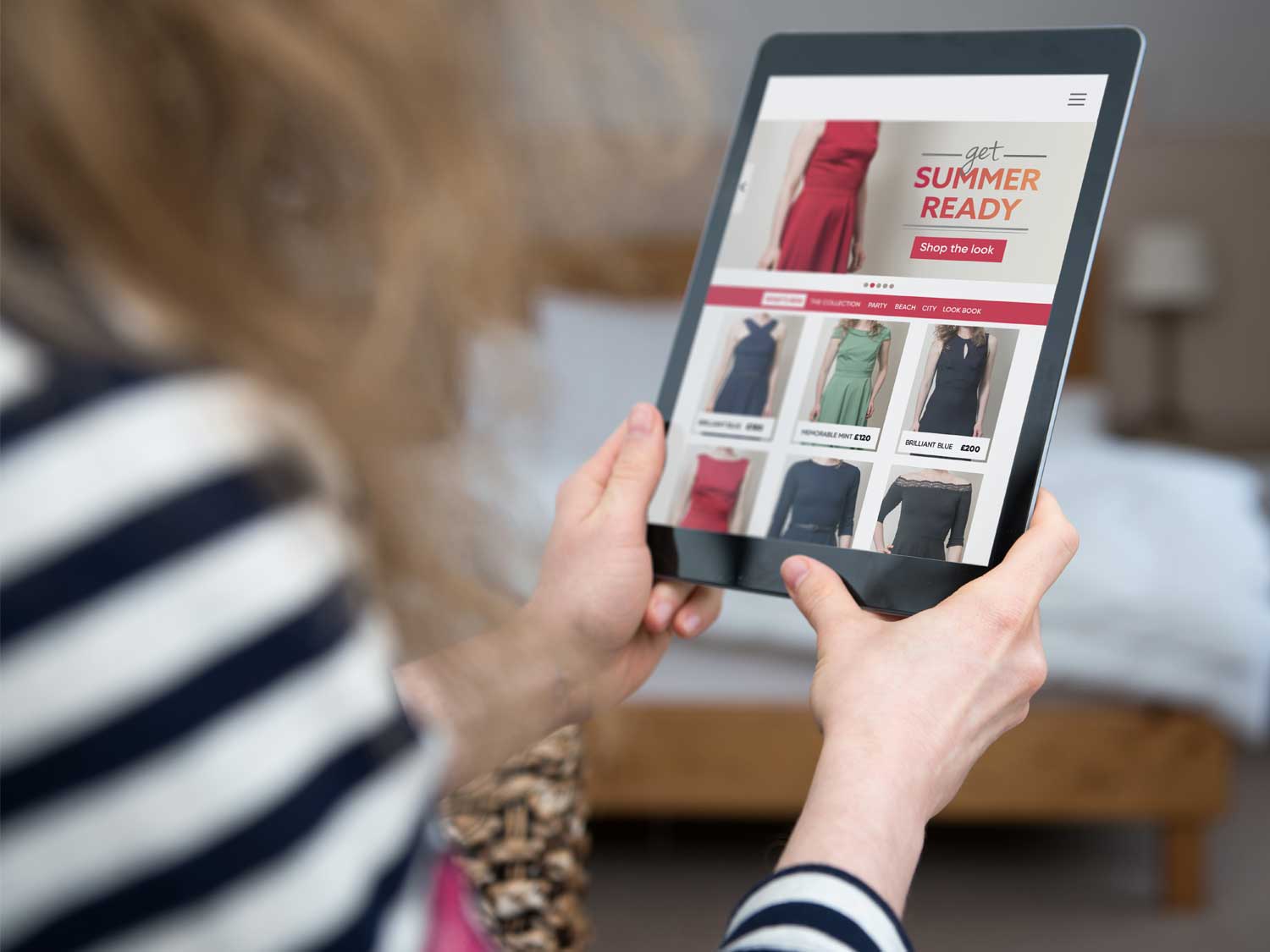
A Reuters report has revealed that nearly two thirds of manufacturers and retailers are currently conducting cross-border eCommerce, or planning to within the next year, with over 90% of them experiencing delays due to incorrect documentation, that are negatively impacting customer experience.

Reuter’s State of Cross border eCommerce report shows that just 6% find the process easy, while a massive 94% of supply chain respondents are encountering paperwork delays, which are “hugely costly” because, second only to price, their consumers value speed, convenience and reliability of deliveries.

The eCommerce cross border market has expanded massively in recent years, following the sky-high growth rates that were triggered by the pandemic and the market expected to expand by 18.67% by 2030, the opportunity is vast, but so too are the operational challenges.

The strategic move from domestic sales to international customers is considerable and this can create issues for sellers and buyers, as the new cross border shipper has to consider unfamiliar compliance and customs regimes, which can lead to higher costs and delays.

The European Customs Union reduces the cost of international eCommerce within its borders, but 55% of respondents said that they found the cross border eCommerce environment challenging, with four specific challenges highlighted: 

 - Shipments delayed in customs 43%
 - Customs regulatory compliance / HS codes 41%
 - Supply chain costs 41%
 - Costs of tariffs and duties 37%

The share of consumers liable for customs fees has risen considerably since the pandemic, from 10% pre-2020, to almost 20% in 2023 and it is this customer experience that needs to be improved by adopting a Delivery Duty Paid (DDP) model, where shoppers pay any taxes during the checkout process.

Cross border transactions account for 28% of sales from companies engaged in eCommerce trading and there are two primary areas of DDP attention that will reduce complexity and cost for them, while enhancing and simplifying their customers’ experience. Which is critical to build loyalty and trigger repeat purchases. 

First. Simplifying and automating HS classification, duties, tax calculations and the preparation and filing of customs declarations will improve compliance with changing rules and regulations, reduce workloads for employees and streamline documentation processes, with less errors and customs issues.

Second. Showing a checkout cart price to the customer at checkout, which is based on DDP calculations (when exceeding prevailing De Minimus thresholds) is advantageous to both consumer and company through jointly understood and consistent fees that accurately match classifications.

The majority of businesses are selling internationally, many via eCommerce transactions and this number will rise in the short term, as more companies react to growing demand and particularly in developing markets. 

Metro are innovating international trade, creating a more effective environment for cross border eCommerce, with digitally-driven international trading and customs compliance solutions.

Drawing on databases and automation, the CuDoS customs platform instantly interprets the terms of trade and maintains a consistent pathway from seller to customer that minimises the costs and simplifies the crossing of international borders.

To learn how we can simplify and automate customs declarations for your businesses, please EMAIL Andy Fitchett, Brokerage Manager, to review the options.