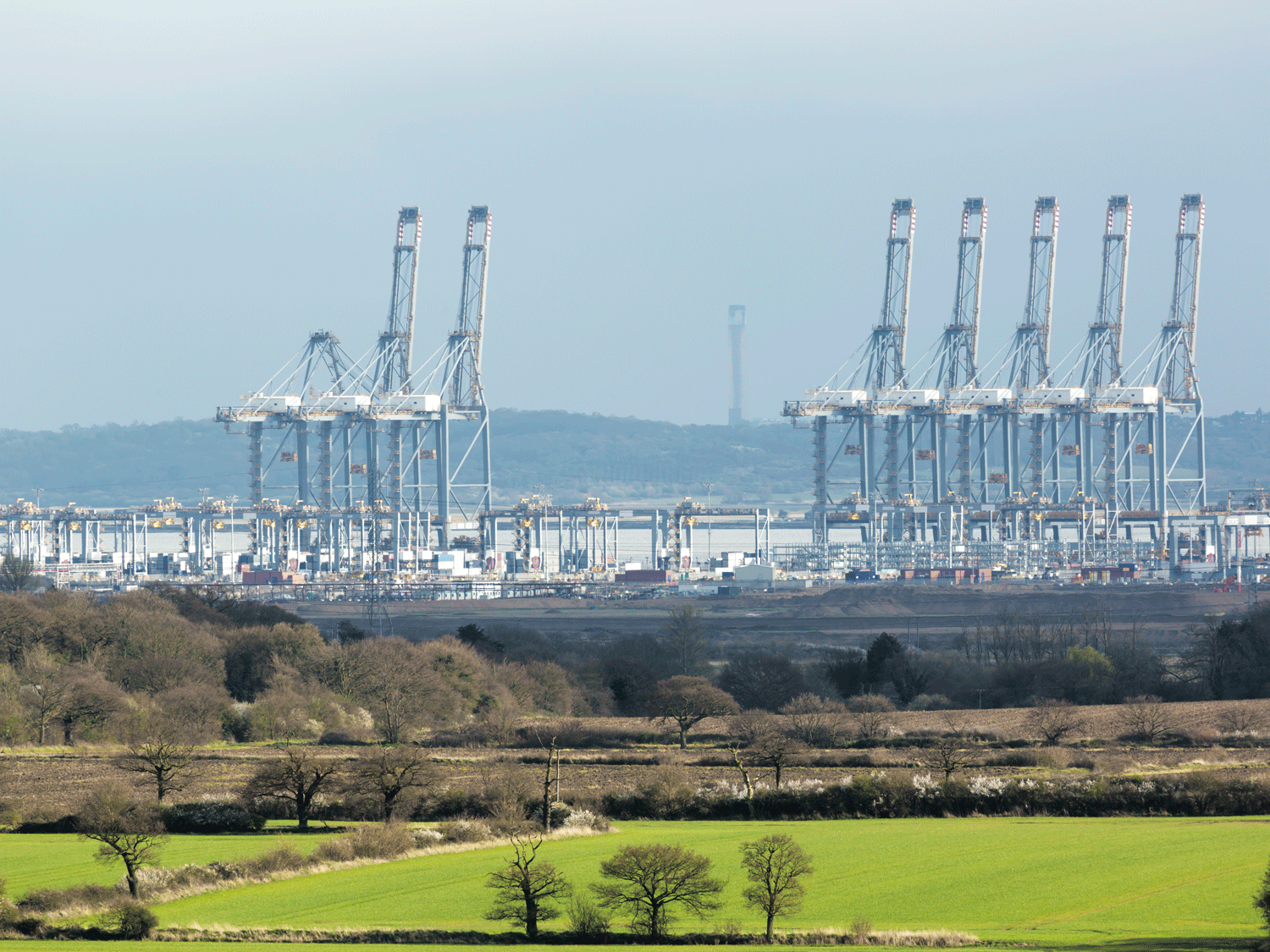
London Gateway

Import supply chains; the UK challenge

The equipment shortage in China and Asia and the lack of vessel space on primary trade lanes are continuing to present significant supply chain challenges and while the UK’s port and transport infrastructure continues to struggle, stability is emerging in some areas.

The port and terminal disruption that began in Felixstowe and filtered out to the UK’s primary gateway container ports in the later part of 2020 has not entirely dissipated, with congestion disrupting dock collections, empty restitutions and vessel working.

More stability is evident, but demands are still very high and it is likely that issues at ports and warehouses will persist while operational capability is hindered by COVID-safe working practices.

Transport operations have been under significant stress since last Summer and, despite reduced capacity at ports and railheads, the traditional transport booking window remains predominately AM Monday/Friday, which has inevitably added to existing congestion. 

An increase in PM booking times would benefit and reduce the current pressure points, as all ports/railheads get particularly congested during the AM demand, which has become more acute as cargo receiving warehouses reduced opening times during covid, removing  flexibility to accept late arriving vehicles. 

UK haulage resources will continue to be constrained post-COVID and the industry would be wise to challenge the AM delivery window convention, if timed delivery slots are not to be replaced by delivery periods that may run into hours, per other transport sectors.

Haulage and rail demand remains extremely, high with bookings being made up to +2 weeks ahead, leading to a high level of close management, to match booking with flexing vessel scheduling and then massive intervention to recover if deliver date changes close to planned delivery, vessels divert or unexpected vessels arrive.

Southampton

Port volumes remains very high and although carriers are activity moving empties out, restitutions are not available until vehicles return to the port resulting in some delays or diversions to off dock depots.

Export receiving is presently limited to 7 days before ETA, which has reduced the loading window and requires units to be held off dock before delivering to terminal or delayed vanning.

Vehicle booking slot (VBS) availability has improved, but overall turn-times remain higher particularly at peak periods.

Gateway

As volumes grow and ad-hoc vessel diversions are accepted we are seeing  more VBS issues or Module restrictions, where the port limits the number of units per area that can be accessed leading to delivery delays.

Rail expansion is leading to increased cut-off times, to ensure resilience and avoid containers missing their booked train connection.

Felixstowe

VBS availability has improved, but vehicle turnaround can be poor at peak times.

Berth capacity or vessel diversion is leading to haulage capacity at short notice.

Rail operations remain capped in capacity, but plans to relax are active as rail demand is greater than present limits, not allowing spot business to be moved.

Seaforth/Liverpool

Rapid increase in demand and new services are leading to landside issues, with availability of VBS insufficient to clear arrivals and turnaround times increasing.

We are pleased to note that the port owners are investing for the future, including new quay infrastructure, which we hope will see Seaforth’s capacity increase, so they can become a viable alternative to the traditional southern ports.

Storage facilities

Port storage facilities at FXT/SOU/LGW all remain heavily utilised, but some storage options are returning as PPE volumes reduce or are transferred away to long-term storage facilities to reduce congestion.

Empty depots remain at high capacity and carriers are having to manage stocks carefully to ensure capacity / right equipment to fulfil export bookings.

Driver shortages have been a critical supply chain risk factor for many years and driver wages are likely to increase, as hauliers look to expand capacity, by securing additional labour.

Metro has strong working relationships directly with port, carrier and haulage/rail partners, which ensures we are informed and can react swiftly to changing developments. 

We keep customers informed at all times, through their account management team and via our award winning MVT supply chain visibility tool. Keeping supply chains optimised and avoiding unnecessary costs. 
Coronavirus The China supply chain latest

Container crisis continues from Asia to the rest of world

As Metro reported in last week’s supply chain bulletin, the availability of container equipment has become the primary supply chain issue for shippers and importers from China and Asia in general. 

The lack of equipment is a key issue impacting both rates and supply chains across Asia, with some areas experiencing the shortages more severely, including the key southern Chinese ports of Ningbo, Yantian and Shanghai, while in Taiwan and Vietnam shortages are also acute, with inventory at times completely exhausted. 

We understand that despite the huge demand for vessel space out of the Far East, some ships are not sailing at full capacity, because carriers cannot find the right equipment to utilise against the high booking demand. 

Issues are not only being seen on the 40’ high-cube, but are now impacting 40’ standard dry boxes and 20’ containers too, as shippers book whatever equipment they can find, regardless of cost, to move their product. 

The issue has been building for some time, with sustained high demand reducing equipment stocks, while vessels have been regularly omitting ports to collect empties, that would replenish these stocks. In addition with lockdowns and other disruption related to the pandemic, the turnaround of containers has extended up to twice the round trip transit resulting in containers being in the wrong place for reloading.

Severe operational delays at key European and trans-Atlantic ports since the summer has been a further contributory factor impacting the repatriation of empty containers. When vessels are in port, reduced operational capacity and terminal congestion means that vessels are not worked effectively and they are not able to unload/load as planned, which means that equipment remains where it is not needed.

Carrier efforts to lease more equipment is having little impact and orders for new builds from Chinese container factories will not increase stock availability before end of March, when they are built, ready and in service. Even then they need to be transferred to the areas of high demand where needed.

With the spot rate market at record unprecedented levels - rising 34% last week - having vessels leave with empty space because there is no equipment will be totally unacceptable to carriers and cargo owners, but with no surplus equipment areas anywhere in Asia, or Australasia, the carriers are unable to simply reposition to where they are needed, as containers are needed everywhere.

Securing scarce space before CNY is creating a sellers market, with carriers seeking premium rates to guarantee slots and equipment, far above standard rates for the time of year, with some shippers paying rates that would make your toes curl !

It is noteworthy that there have been less blank sailings from the carriers ahead of CNY. It is very likely that the reason for this is that they need every sailing they have from Europe and North America, to reposition empty equipment. 

For some weeks carriers have been prioritising empty containers ahead of laden containers on the export trade lanes back into Asia, from areas in Europe and North America, where the empty containers are currently stuck. 

The carriers prefer to forego revenue from a laden export container, to get the empty boxes back into circulation faster, to take advantage of the sky high spot rate markets in Asia. This in itself is then having an impact on exporters and creating further misery for shippers in all directions.

And, while it is incredibly bad right now, we are hopeful that the lines’ decision to blank less sailings over CNY and prioritise the return of empty containers will offer some ‘light’ as their actions will increase equipment availability and vessel capacity to return empties, which in turn may ease the severe equipment challenges currently being experienced.

Metro’s commercial experts monitor the container market from Asia continuously and are in constant contact with our origin teams for local assessments, so that they can react proactively to changing conditions and developments. We have a significant number of experts in Asia and UK operations managing shipments to consignment level with each now becoming a ‘project’ movement absorbing many hours of time.

While we may hope for more market stability this year, all the signs are that we will face another challenging time. Having closed off most of our contracts with partner carriers we are ahead of the market and well placed to deliver reliability and cost effective solutions based on a fixed validity pricing structure.

Protect your supply chain and budgets for 2021, by providing us with your forecasts now, so that we can secure you a deal for the year ahead, that has fixed validity and consistency in pricing.

Call Ian Barnes and/ or Grant Liddell to discuss the latest market situation and your plans for the year.

trans Pacific

Regulators circle shipping lines

As container freight rates continue to rise from Asia, regulators in China and the US are raising concerns and the European Commission is being urged to consider whether the carriers’ behaviour is damaging trade growth at a time of economic recession.

Chinese regulators are renewing their carrier investigations, driven by concerns over volume controls and blanked sailings, while the United States’ Federal Maritime Commission (FMC) has worries that US export cargo is being refused, in favour of carriers repositioning containers directly back to Asia, to load export cargo offering considerably higher revenue.

And while many countries around the world have summoned liner executives to probe escalating freight rate prices, Europe has remained quiet, much to the dismay of shippers and forwarders.

In a joint letter sent to the Competition Directorate of the European Commission on Monday, the European Freight Forwarders Association (CLECAT) and the European Shippers’ Council (ESC) have raised concerns about carriers’ violating contracts, creating unreasonable conditions and unilaterally setting of rates far in excess of those agreed in contracts.

The associations will meet the commission within days to further demonstrate the damage carriers’ behaviour is causing to trade growth at a time of economic recession, with rates virtually quadrupling in the last 10 weeks of 2020.

The ESC and CLECAT claim that carriers have been reserving for themselves the ability to change rates whenever they see fit notwithstanding the specific rates and charges agreed and that they are continuing to top their rates with surcharges and general rate increases. 

Similarly, shippers and forwarders are being confronted with refused bookings and rolled cargo if carriers deem it more profitable to accept higher rated cargo for a particular sailing. 

Unacceptable practices, they assert, include imposing an extra fee as a price for accepting cargo at a new tariff charge, simply refusing to accept bookings at all for customers and forcing customers with contract rates to move cargo at spot rates, at a much higher price.

ESC and CLECAT warn that the “adverse consequences of carriers’ practices” are being felt equally by small and big businesses alike in Europe including retail, fashion, automotive, cosmetics and IT businesses.

While we have, like the rest of the market, seen significant prices and volume pressures on all major sea freight markets, our carrier partners have honoured agreements and have been, as far as they can be, proactive in their support.

Metro negotiate rates and volume agreements with a broad portfolio of carriers, across the three alliances, to offer our shippers the widest range of service offerings, port-pairings and rates.

For further information contact Ian Barnes, who would be delighted to talk to you about your situation. 

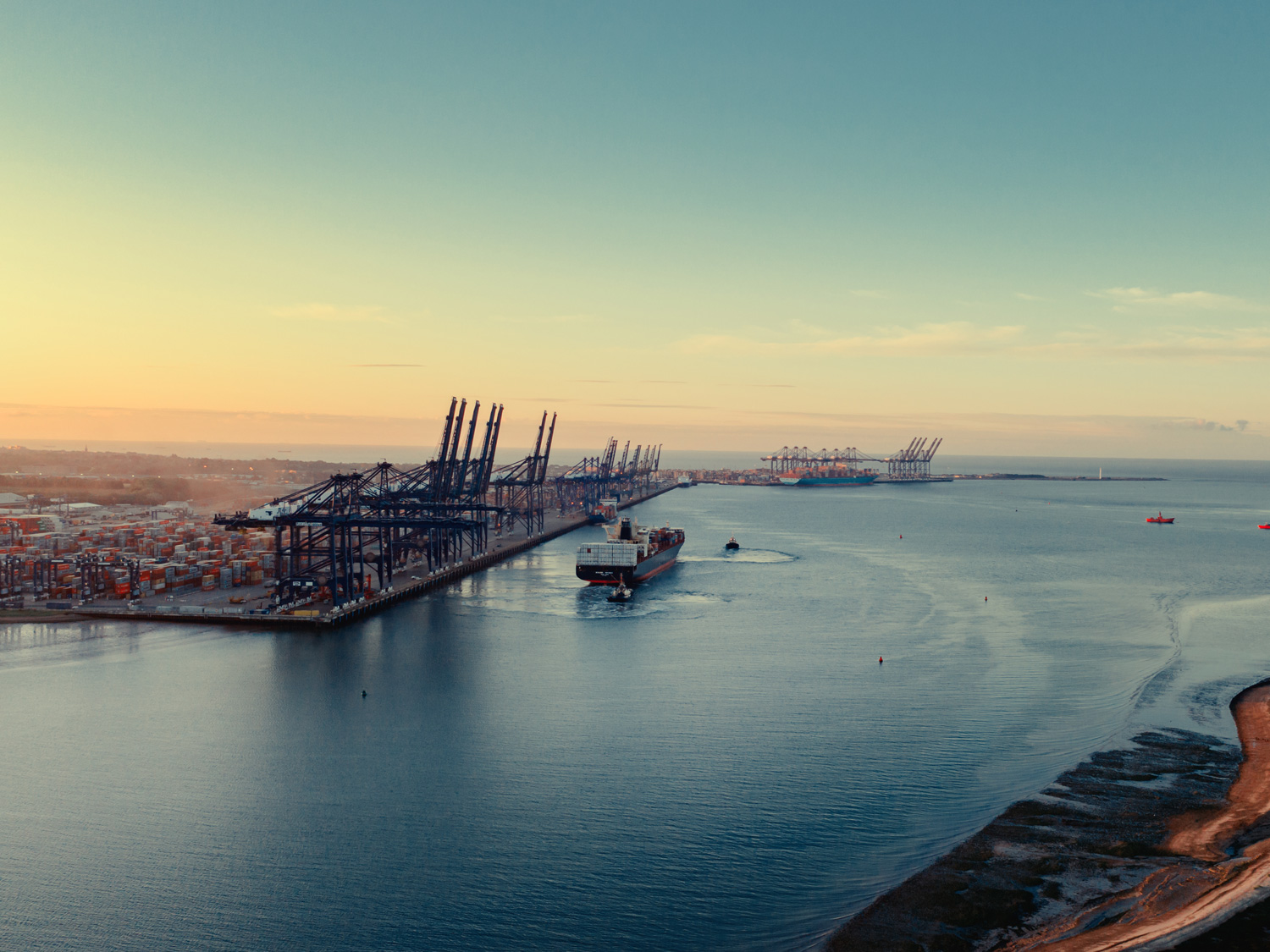
FXT at dawn

2020 supply chain challenges continue into 2021

The COVID pandemic massively impacted freight infrastructure operations, rates, vessel space and equipment availability last year and is showing little sign of ending any time soon.

Sea freight rates from Asia are at the highest levels ever seen, equipment shortages continue at virtually every origin and schedule reliability continues to be impacted by continuing port congestion.

The European Freight Forwarders Association (CLECAT) and the European Shippers’ Council (ESC) believe that the current shortage of empty containers came about because of the unprecedented number of blank sailings, up to 30% on some trades, combined with the lack of reliability with 2020 closing out with just 50% of vessels arriving on time.

In the face of mounting global criticism, the World Shipping Council, the container shipping line’s chief lobby group, told the trade press that the extraordinary situation seen in the ocean liner space was beyond anyone’s capabilities and that “No one could have planned for the type of surges that are stressing the container transportation network today, because the demand swings are unlike anything ever seen.”

The availability of container equipment availability has become the primary supply chain issue for shippers, with access to vessel space continuing to be an intermittent problem, while congestion at main EU/US ports has been the biggest issue impacting shippers and shipping lines, hitting the line’s schedules and a major factor in driving soaring freight rates.

The catalyst for the current market situation is overwhelmingly COVID, with the roots going back to 2019 and the beginning of 2020, with 4% of the global container ship fleet removed from service for retrofit of scrubbers ahead of the IMO 2020 regulations. 

The beginning 

0n the 8th December 2020 in Wuhan, Hubei province, the first COVID-19 case was officially confirmed. The city of 11 million people entered lockdown at 10am local time on the 23rd January, with residents confined to their houses and transport networks shut.

Surrounding cities and provinces soon ground to a halt, with 56 million people under effective quarantine within days.

Factories across China quickly closed and remaining closed after the New Year holidays, with demand for sea freight falling by 20-30%, as the lockdown spread globally. 

Anticipating an extended slowdown in global demand, carriers began to blank sailings, hand back leased containers and cancel orders for new equipment. Decisions that directly contributed to - and extended - the current supply chain issues.

Recovery

The first lockdowns in the EU and US began to lift from April through June, encouraging importers to start robust replenishment programmes, catching the shipping lines out and giving them confidence to restore blanked sailings and recover returned leased container equipment.

But the container equipment market quickly began to dry out as demand increased and, with production halted for six months at two of the main manufacturers in China, there had been no additional stock added globally since February.

In another complication, many container ships could not change crews during the early pandemic phase, with some crews onboard for over a year, breaching regulations and meaning ships were often idled while changeovers could be arranged. Vessels fell off schedule and were consequently located in the wrong position to meet renewed demand.

The manufacture and availability of new of containers continues to suffer from the production halt in 2020, with availability problems really coming to the fore from September.

Massive demand for PPE and hygiene products, followed by huge consumer spending on home office, DIY, sports and home entertainment created an upward demand curve that maintained momentum throughout the remainder of 2020, when every expectation had been for demand to decline.

Congestion

Disruption and delays began to build at at EU and US ports following the replenishment phase, as volumes from Asia began to increase. 

Container ports had to implement COVID-safe working practices and deep-cleaning protocols, which meant they were unable to keep terminal operations optimised and return the containers fast enough, which was a major contributory factor to the shortage of equipment in Asia.

The significant congestion at UK container ports which commenced in the Summer at Felixstowe, before filtering out to Southampton and London Gateway, continues to impact supply chain and vessel operations.

Some shipping lines continue to divert from the UK, due to port congestion, preferring to offload UK-destined cargo in continental European ports including Rotterdam, Zeebrugge, and Antwerp, but with no guaranteed timeline for those containers to feeder back to the UK, the situation requires urgent resolution.

Situation

Three or four weeks ago, locating 40’ high cube containers at primary Asia origins was near impossible and now standard 20’ boxes are increasingly in short supply.

Continuing consumer demand and restricted equipment capacity is directly affecting what some shippers are prepared to pay to ship. But even at $8,000, $9,000, or even $10,000 a container, there’s still no guarantee the lines will accept the cargo, as they are taking in the highest-paying freight only.

Towards the end of 2020 shipping lines imposed peak-season surcharges for the first time in seven years at $1,500 for a teu  and up to to $2,500 for a 40’, which increase in line with the base rates and mean that UK rates are currently higher than base European main ports, with $2,000 to $2,500 difference between rates to Rotterdam and UK ports.

Some lines are not currently willing to quote to primary UK ports, which means that the cost implication of using secondary ports like Liverpool or feedering those boxes into the UK needs to be accounted for, but many of these feeder services are already at capacity.

At this time shipping lines continue to alter schedules and divert ships, but the hope is that in the months ahead, as global vaccination programmes spread, work-practices will ease and a greater availability of work forces in warehouses and terminals in Europe and other destinations will allow the faster turnaround of vessels and repatriation of equipment.

Over 40 years we have built a global network of strategic partners and investments to protect our customers and keep their supply chains moving, whatever challenges may arise in 2021.

Our team's knowledge and experience, together with our award winning MVT digital platform, add value, visibility and flexibility to our customers’ supply chains.