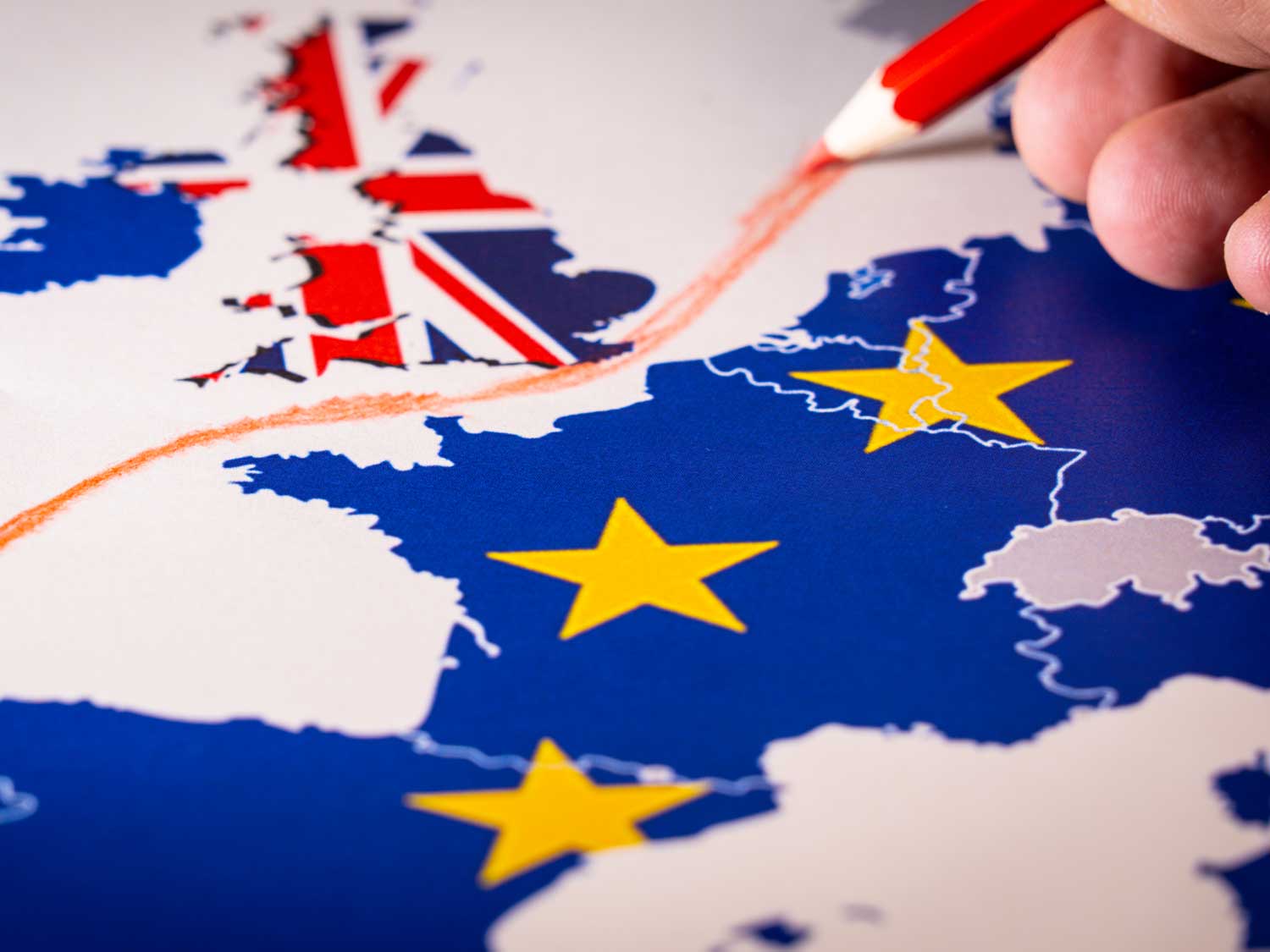
Brexit red line

Exporters bear brunt of Brexit ‘fallout’

The extension of import border controls is good news for some importers but may undermine negotiations with the EU for reciprocal easements and highlights the challenges still faced by exporters.

Imports from the EU, which fell 28.8% in January, maybe buoyed by the government’s decision to postpone import controls, including food and animal product checks, while exports to the EU that fell 40.7% over the same period face continuing border disruption, without any prospect of mitigation.

Data from the Road Haulage Association (RHA) shows empty lorries leaving the UK accounted for 26% of all truck movements into the EU, with total loaded haulage exports down 47% last month, compared with last year.

Between the end of January and February, the number of trucks moving empty fell from 37% to 26%, and the year-on-year drop for total export movements fell from 68% to 47%.

Last week’s extension of inbound EU border controls is good news for a percentage of importers. Still, it does nothing to assist exporters, and postponing these controls unilaterally may weaken the UK’s negotiating leverage when seeking similar easements from the EU.

The UK mainland’s one-sided Brexit border is coming under increasing criticism, with business leaders saying it gives EU firms an advantage over UK exporters. 75% of whom have experienced Brexit-related delays over the past three months, and over 50% have seen an increase in costs, though some of these impacts will result from lorry drivers taking COVID-19 tests before crossing the Channel.

Despite the EU/UK free trade agreement (FTA), it is the non-tariff (invisible) barriers like vet checks and additional documentation requirements that are increasing exporters' costs, and these may have to be passed on in higher prices which reduces UK exporters' competitiveness.

Exports of food and live animals to the EU plunged 64% from December, potentially due to stricter checks and certifications implemented by the EU at the end of the transition period - the same checks that the UK has unilaterally ruled out for a further six months.

The Cold Chain Federation said the situation creates an “ongoing unfairness” between UK and EU firms, and UK exporters “continue to face a hard border with all its costs and uncertainties and see their equivalents continuing to benefit from de-facto unfettered access”. 

“It’s not clear how this action will give the EU an incentive to be more willing to discuss ways to reduce the burdens on UK exporters.”

The FTA simply didn't get rid of the invisible barriers to trade and exporters are feeling the impact.

Although exports, and imports, with the EU remain suppressed for several reasons and not just post-Brexit transition, Metro are at the forefront of the industry to provide customs and border process solutions covering customs through to transit documentation. We also offer, through our group network, European transport services that are still operating with regular, reliable and competitive departures both to and from The UK. Hopefully, we will see an upturn in business with the BLOC in Q2, and a level of normality will return to the UK’s European trade and commerce.

Please contact Andrew White, leading our customs and brokerage business unit, for further information and assistance on this or any other border control measures with the new trading environment with the EU.
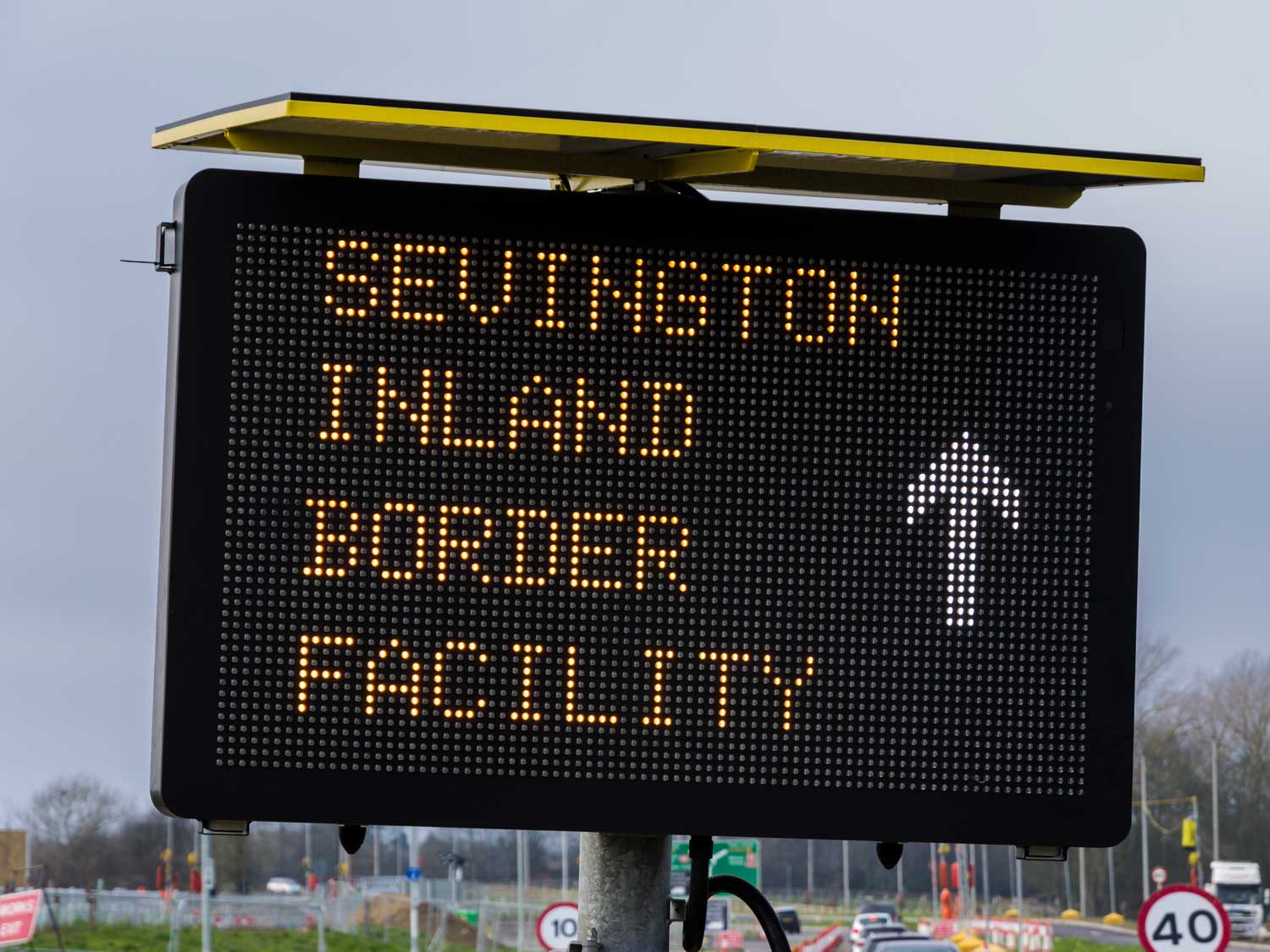
Inland Border Facility

UK Government extend EU import control easements

Michael Gove informed parliament last week that the introduction of stricter EU import controls, in line with Phases 2 and 3 of the government’s Border Operating Model, are to be delayed by at least six months.

The minister for the Cabinet Office insisted that the government had responded to businesses’ requests for more time in announcing what he called a “revised timetable”.

Mr Gove blamed the need for delays on the pandemic, telling MPs the previous timetable was “based on the impacts of the first wave of Covid” but that the government had reviewed deadlines because the disruption had been wider and longer-lasting than expected.

Critics say that the government has been forced to delay, because a network of 30 border posts being built to process incoming goods would not have been ready on time. 

Note: At the current time this does not effect the timetable and situation for export controls and protocol.

The British Retail Consortium said the postponement had come “in the nick of time” and would “ultimately reduce the impact on consumers from 1st April who might otherwise have seen empty shelves for some products”.

The BRC added. “Until the infrastructure is in place, with IT systems ready and established processes for checks and paperwork, it would be foolhardy to introduce full requirements for export health certificate documentation, pre-notification of imports, physical checks and more.”

British customs were due to begin controlling imports of animal products, live animals and plants and products from 1st April, with customs inspections from 1st July at new designated border control posts (BCPs), but in recent weeks a string of British ports had said the facilities would not be ready in time for the July deadline.

Most import checks have now been pushed back to the 1st January 2022, meaning Britain will begin these processes a year later than the EU.

The government's "revised timetable":

Delayed until 1st October 2021 - 

Checks on agri-food and feed documentation, including Export Health Certification, delayed from 1st April until 1st October 2021

Delayed until 1st January 2022 -

Import declarations still required but deferred declaration scheme, including submitting supplementary declarations up to six months, extended from 1st July to 1st January 2022

Entry Safety and Security (ENS) declarations for imports delayed from 1st July until 1st January 2022

Pre-notification requirements and documentary checks, including phytosanitary certificates will be required for low risk plants and plant products

Physical SPS checks on high risk plants and agri-food and feed at Border Control Posts

Delayed until March 2022 -

Checks at Border Control Posts will take place on live animals and low risk plants and plant products

Metro monitor the cross-channel situation continuously, automating and submitting customs declarations through our CuDoS system, which is optimised in line with the regimes in force, on both sides of the Channel.

We remain close to emerging developments, to share critical information with our customers and to adapt solutions we have in place, to ensure delays and unnecessary costs are avoided.

Please contact Andrew White, leading our customs and brokerage business unit, for further information and assistance.

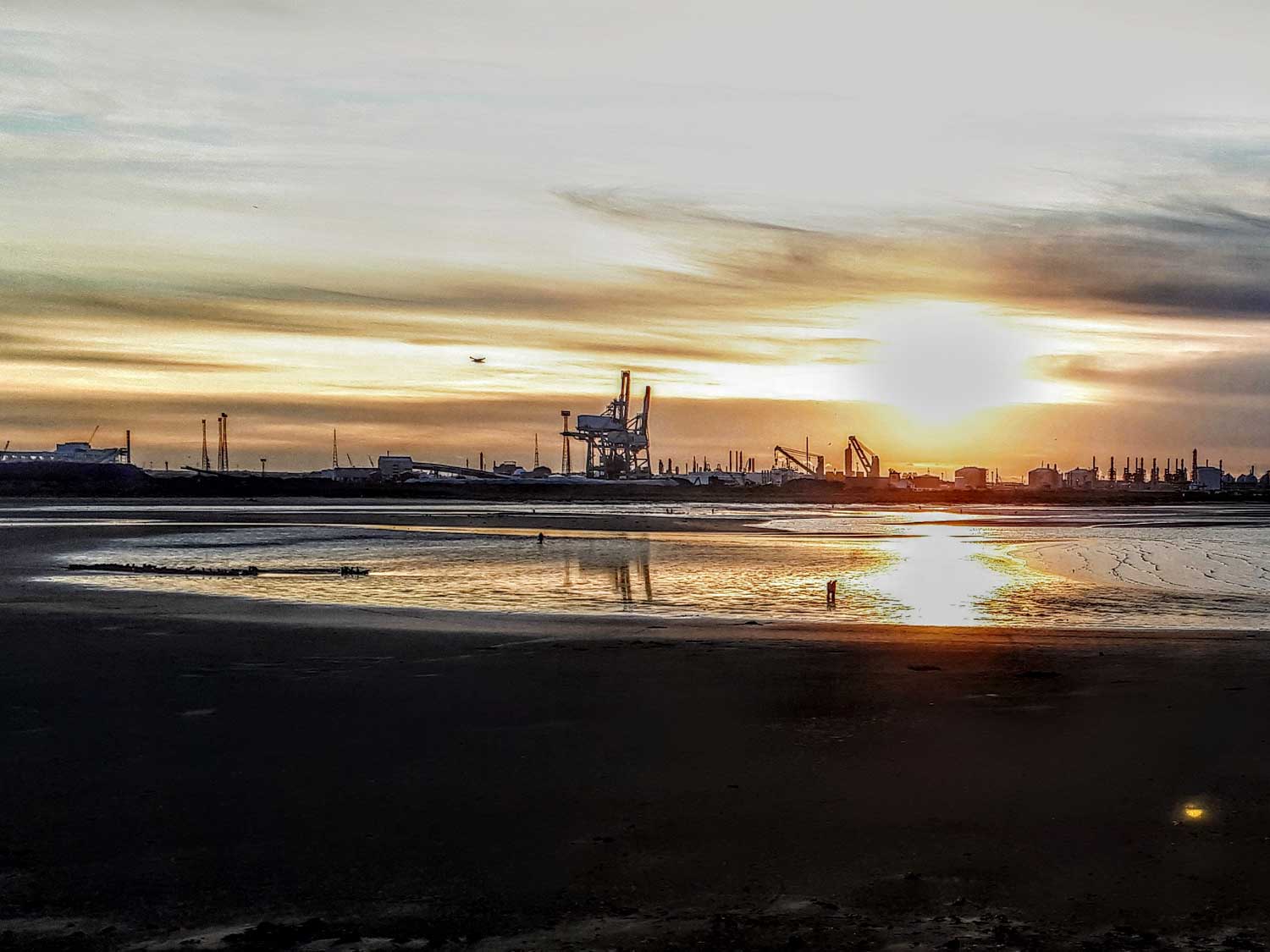
Teeside

The freeport effect – what does it mean and what are the benefits

There’s much more to the UK’s freeports than the ability to move goods tariff-free, with businesses potentially enjoying domestic tax breaks and cheaper employee costs, to encourage manufacturing, jobs and investment, in areas that would otherwise struggle to attract them.

In his Budget last week, Chancellor of the Exchequer, Rishi Sunak said the freeport’s would have "different rules to make it easier and cheaper to do business” in the wake of Brexit and the coronavirus crisis.

The winning eight bids came from ports scattered across England, including the Thames estuary and East Midlands Airport, with another one each in Scotland, Wales and Northern Ireland to be announced.

Freeport locations include the ports of Felixstowe and Harwich, Liverpool in the northwest, Plymouth and the Solent in the south and some include industrial facilities such as steel plants, while the winning Thames bid incorporates the Ford Motors Dagenham plant.

The Teeside freeport aims to be the biggest in the UK, covering 4,500 acres and creating 18,000 jobs over five years, while the Humber industrial cluster has a major green-energy component, focused on carbon capture, hydrogen technology and offshore wind to create 3,000 jobs.

Each freeport must contain at least one port of any mode and can house up to three taxation sites with a maximum combined area of 600 hectares (1,480 acres), plus a designated primary customs site and a number of satellites. No location can be more than 45 kilometres (28 miles) apart.

In England, companies inside the sites will be offered temporary tax breaks, mostly lasting five years, including reductions to the tax companies pay on their existing property, and when they buy new buildings and employers will pay reduced national insurance for new staff.

The locations of England's eight new freeports are:

  • East Midlands Airport
  • Felixstowe and Harwich
  • Humber region
  • Liverpool City Region
  • Plymouth
  • Solent
  • Thames
  • Teesside
  •  

Scotland, Wales and Northern Ireland are yet to announce their own Freeport policies. But they will and they will be strategically located to stimulate the local economies it is expected.

There are currently about 80 freeports dotted around the EU and while some expect the UK to adopt a more generous freeport policy, for example to give businesses more financial help, the Brexit trade deal still requires subsidies to be justified, otherwise they could be challenged in UK courts.

In more extreme circumstances, the EU could respond to UK subsidies by introducing tariffs on some UK goods deemed to be damaging EU trade or investment.

And the UK will still be subject to World Trade Organisation rules - which say you can't introduce subsidies linked just to export performance.

There are also questions surrounding Northern Ireland, which still has to follow EU subsidy rules under the UK's withdrawal deal, that means the freeport model used in Great Britain will need to be "adapted" for Northern Ireland.

Metro have embraced the concept of freeports, and free’air’ports and will be investing and developing related solutions to benefit our customers and deliver added-value, for global trading outside of the UK.

We will monitor the development of these Freeport’s closely and specifically how their evolution will deliver optimisation within the logistics environment to our customers supply and value chains.

Exploring cost-effective and value-added operations throughout our global port partnerships is always interesting and some of the announced Freeport locations may offer a beneficial shift in the way internationally focused and aspirational businesses operate in the new UK environment. 

For further information please contact Grant Liddell to discuss your logistics strategy and design, to create and engineer a new world supply chain model, fit for purpose with all the tools available and the added benefits of the government backed freeport regimes.

Power of attorney

Brexit simplification offers VAT cashflow benefits not only for EU shipments but also for non-EU shipments

Postponed VAT Accounting (PVA) was devised ahead of Brexit, to avoid the negative cash flow impact of an additional VAT bill at the EU/UK border.

Since 1st January 2021, businesses registered for VAT that import goods into the UK from anywhere in the world - and not just the EU -  can use postponed VAT, to account for the VAT on their periodic (usually quarterly) VAT Return, rather than paying it immediately at the border.

If your business already imports from outside the EU, PVA will offer you significant cash flow benefits, because it removes the need to account for the import VAT typically due, and to pay your agent for using their deferment account, if you don’t have your own facility directly with HMRC, at the time of importation and customs clearance.

PVA is compulsory if custom declarations submissions are currently deferred and optional in most other cases.

Providing you are VAT registered, no specific approval or accreditation is required to use PVA, but you - or your agent instructed in writing - must select PVA on your customs declaration.

HMRC will produce a Monthly Postponed Import VAT Statement (MPIVS), showing customs declarations for the previous month. This statement provides you with the figures required to enter in the VAT return.

If customs declarations are delayed, the import VAT must be estimated using the information on your EIDR or other commercial import records. Note the EIDR process is due to end on 30th June 2021 and full customs declarations will be required at time of import from The BLOC.

Estimates can be adjusted on the next VAT return, when a deferred declaration is submitted and the actual amount of import VAT/tax due is calculated and recorded on the MPIVS for the month the declaration has been submitted.

PVA is not limited to only EU imports and you need to press your agent, in the strongest terms, if they have failed to advise you that it can also be used for imports from the rest of the world - particularly if they have been charging you a fee for making VAT payments.

Metro are totally committed to driving our customers success and helping them enhance the ability to trade and grow internationally.

We think this benefit should be shared with our customers immediately, because we act in their interest and not in ours.

For further information if you have not already taken this development into your own import processes, or to discuss your situation in greater specific detail, please contact Chris Carlile or Grant Liddell or any member of our ever growing experienced brokerage team.