brexit proof

Government look to shift blame as Brexit queues loom

As the government insinuates that business has not prepared and warns of 7,000-truck-long queues in Kent and two-day delays for exports to the EU, BIFA director general Robert Keen accuses them of “making villains of the key workers who have been tackling the impact of the pandemic on the UK’s supply chains”.

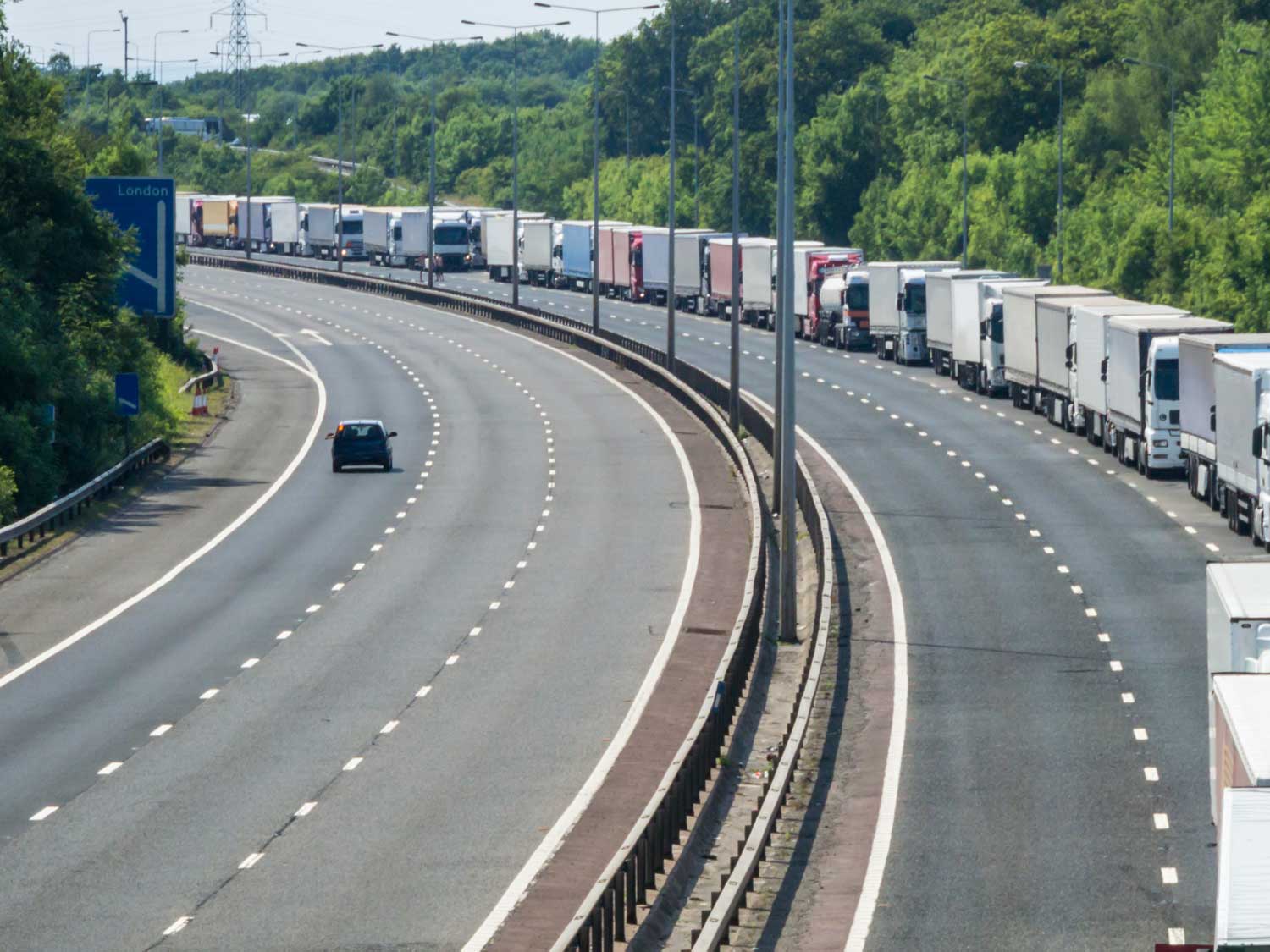
According to leaked Cabinet Office documents, in its “reasonable worst-case scenario”, there may be queues of 7,000 port bound trucks and associated delays of up to two days, with imports and exports disrupted to a similar extent.

The EU is expected to impose full goods controls on UK exports, stopping all freight without the correct documentation and the “reasonable worst-case scenario” anticipates that up to 70% of freight trucks travelling to the EU will be unprepared for new border controls, including up to half on the Dover to Calais and Eurotunnel routes.

Drawn up by the government’s Border and Protocol Delivery Group (BPDG), the leaked report (released yesterday) warns that the core “smart freight” IT system for hauliers was not expected to be tested publicly until the end of November.

It forecasts that 50-70% of large businesses will be ready for cross-border trade, while as few as 20-40% of SMEs will know what to do from 1st January.

“Considering demand levels in the first week of February, it is estimated that if readiness does not improve by then, queues could reach a length of 7,000 HGVs. In each case it is estimated that HGVs could take two days to reach the front of the queue,” the document warns.

Kent authorities have rebooted ‘Operation Fennel’ to move lorries away from the main arteries of the M20 and A20, but their efforts will be frustrated unless the smart freight system – a web portal operating a red, amber and green traffic light system for hauliers – is working on time.

Only those given the green light, after passing a documentations test, will be given a Kent access permit. But the document reveals the system will not go into a public beta testing phase until the end of November, leaving little time to launch it fully or train drivers and their customers.

The report adds to pressure on the government to decide and publicise plans for lorry parks across the country. So far it has only confirmed one, in Ashford in Kent, with legislation passed to give powers to build others in 29 council areas, as we reported last week.

With just 100 days to go before the end of the Brexit transition period on 31st December, the document also notes that ongoing work at the Department for Transport to provide the advice centres “is currently unfunded” with a parallel treasury bid for £18.5m still in development.

Responding to the leaked Cabinet Office letter to the logistics sector, the British International Freight Association (BIFA) said it appeared to be another example of the government getting its retaliation in first. BIFA director general Robert Keen said: “The Government has received repeated warnings from all sides of the supply chain that neither businesses involved in trade between the EU and the UK, nor the freight and logistics sector that physically handles and manages that trade, is ready for the new procedures that will be in place from January 1st 2021.

“With just over 14 weeks to go before the end of the Brexit Transition Period, traders and logistics providers are still waiting for so much information and clarity from the government and are shocked by the lack of consistency in Government policy, systems planning and procedures.”

He said the communications seemed to indicate that the UK government wanted to “make villains of the key workers who have been tackling the impact of the pandemic on the UK’s supply chains”, but that this was not a constructive approach.

Metro’s ‘Brexit Ready’ web portal has been designed to prepare your business for the 1st January 2021 . 

Metro’s ‘Brexit Ready’ web portal has been designed to prepare your business for the 1st January 2021.

For further information on Metro’s brokerage services, please contact Grant Liddell or Chris Carlile who are leading our 2021 EU withdrawal Task Team.
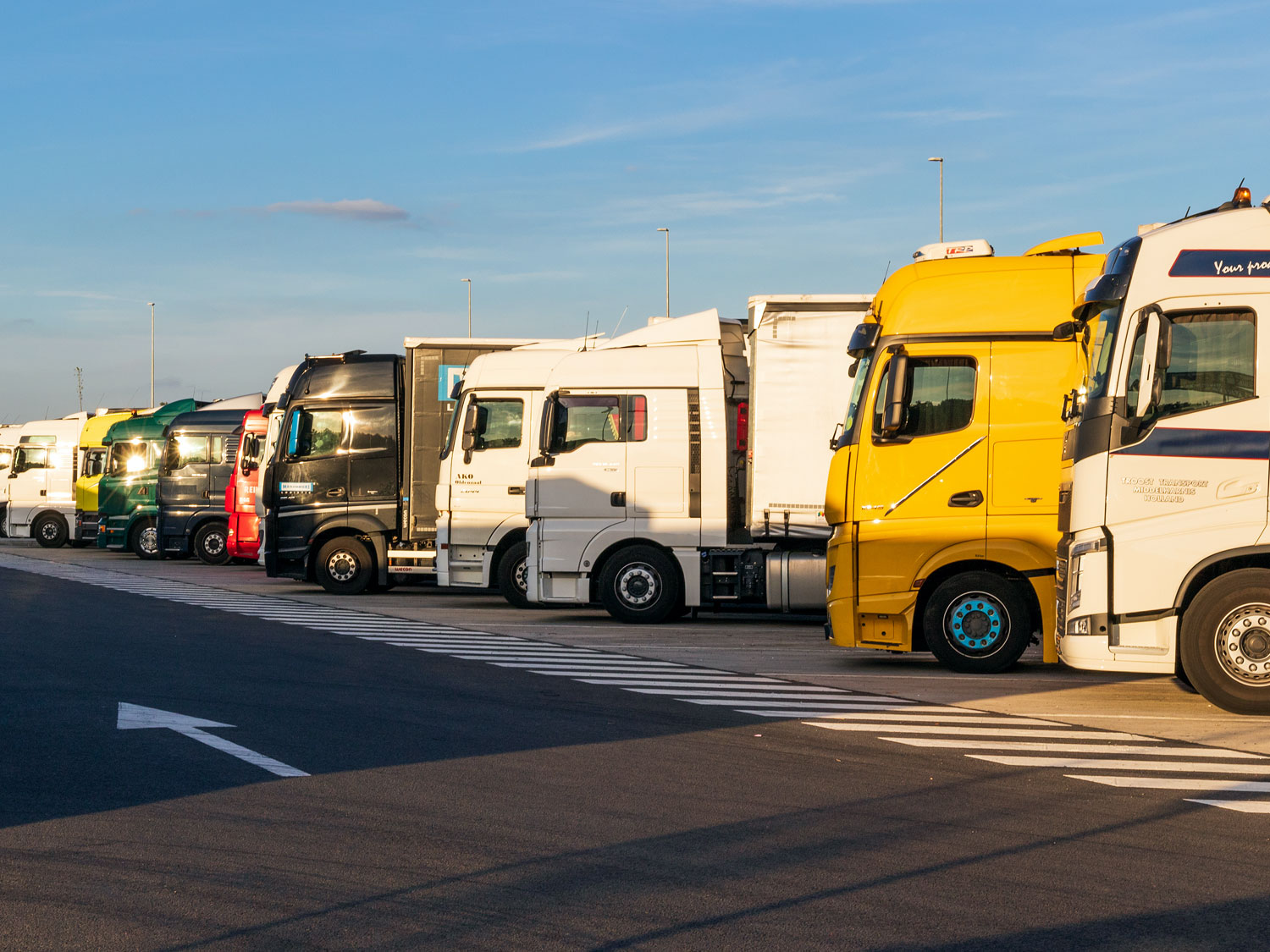

Lorry park

Emergency powers to build Brexit lorry parks

Up to a further 29 lorry parks, from Devon and Somerset to Warwickshire and Suffolk, will be built in order to cope with border trading chaos after Brexit, under emergency government powers, which will take no notice of local objections.

The move was revealed after the leak of a government document that described the current border preparation plans as “unmanageable”, with warnings of queues of 7,000 lorries in Kent, and two-day delays to cross into the EU.

Local residents will have no say over the construction of the sites in Leicestershire, Warwickshire, Solihull, Kent, Essex, Yorkshire and Lincolnshire, which are required because of growing fears that truck drivers will face long delays to enter the EU, or be turned away altogether.

The regulation triggering the order to build the lorry parks acknowledges that attempts by ports to cope with the vast new red tape have been hit by the coronavirus pandemic.

“The government is aware that the impact of coronavirus may have affected the ability of port operators and businesses to provide the necessary infrastructure by the end of the year,” it reads.

Until now, the only new lorry park under construction is a 27-acre site being built in Kent to handle what has been condemned as “a vast customs bureaucracy, with costs passed on to the consumer”.

Ministers have already admitted there could be up to 10 months of border disruption, with emergency traffic control measures in Kent to last until “the end of October 2021”.

As many as 10,000 trucks a day pass through Dover and other ports, and about four-fifths of the food reaching UK supermarkets comes from the EU, according to the British Retail Consortium.

Metro’s ‘Brexit Ready’ web portal has been designed to prepare your business for the 1st January 2021 

Digital disruption is just noise

Some UK freight forwarders unprepared for Brexit

In a survey by the freight forwarders trade association, BIFA, 64% of respondents felt they would not be ready to undertake the additional Customs-related work that will be required from January 1st 2021.

Following a survey of its members, the British International Freight Association (BIFA) reports that a majority of respondents have significant reservations over whether they will have the capacity to handle the major changes to the UK’s trading relationship at the start of 2021.

“Metro on the other hand has been upgrading our capability to process Customs declarations digitally and has developed new software, incorporating machine learning to digitise documentation.”

In a general question on their understanding of the Government’s plans for the border after the end of the Transition period, more than half of the respondents said that they either had no knowledge, or what knowledge they do have needs improving.

In regards to the Border Operating Model, whilst 70% of respondents said they understand the Customs procedures required to import goods into the UK from the EU at the end of the Transition period; less than half said that was the case in regards to Safety and Security Declarations. This was also the case with respondents that are involved in the import of live animals, and/or products of animal origin; as well as fresh fruit and vegetables.

“Metro has develop a Brexit portal specifically to share Customs procedures, related information and solutions.”

The results were broadly similar for procedures to be followed for export movements from the UK to EU. Although 79% said they have no understanding of import procedures in individual EU Member States regarding export movements from the UK to EU.

“Metro has developed a single strategic partnership to offer pan-European Customs Brokerage, with representation in every country.”

More than half of the respondents said they had no familiarity with the Goods Vehicle Management System (GVMS), whilst more than two thirds said the same about the Smart Freight Service; and the Trader Support Service (which applies to businesses in Northern Ireland only).

“Metro’s Brexit Ready portal incorporates glossaries and guidance on Brexit regimes, processes and systems.”

Robert Keen, BIFA’s Director General (pictured) added: “In a similar survey conducted in May this year, 50% of respondents felt they would not have sufficient staff to undertake the additional Customs-related work that will be required from 1 January 2021. In the latest survey, that has increased to 64%.”

“Metro systems are integrated with HMRC’s Customs Handling of Import and Export Freight (CHIEF), which means we can clear goods anywhere in the UK digitally, which is critical, as an estimated additional 200 million Customs declarations will follow Brexit.”

BIFA was concerned to hear that over 50% of respondents said they have not received direct communication from government on EU exit or the end of the Transition Period, and of those that had, less than 40% found it clear and accurate.

Mr Keen added: “We hope that they will be willing to listen to the significant reservations that have been expressed by the companies that are on the front line in the management of the UK’s visible imports and exports, including 80% or more of customs entries, in regards to their preparedness for the end of the transition period.”

Metro’s ‘Brexit Ready’ web portal has been designed to prepare your business for the 1st January 2021 

Politics

The Brexit Politics Round-up

The UK Internal Market Bill is a very provocative piece of legislation, proposed by the UK Government that, on paper at least, signifies the UK’s intent to leave the EU with no deal. The bill cleared its first hurdle in the House of Commons on Tuesday.

Here are the reasons why the UK Internal Market Bill is causing such a stir:

  • It tears up the Northern Ireland protocol as agreed under the WA (Withdrawal Agreement)
  • Under the terms of the WA there would be a requirement to complete customs declarations for goods moving between Northern Ireland and the mainland UK. This bill gives UK ministers the right to overrule or ignore this part of EU customs law
  • It also refers to state aid (eg the financial support governments give to businesses – for goods related to Northern Ireland. This bill gives UK ministers power to interpret what that means, and not be governed by the case law of the European Court of Justice)
  • On paper the UK is overriding EU law (The EU are stating that the UK are ‘breaking’ International law)

Short term effects:

  • Boris Johnson has stated that,’ if there is no deal on the table by October 15th, then the UK walk away’ – outcome no deal. This posturing from the PM places a heavy emphasis on the above date.
  • The EU have demanded talks with the UK to explain their intentions in regards to this legislation. Further, they are insistent that the UK withdraws these measures as they constitute a violation of International law.

Has the Prime Minister caused damage to the UK’s reputation on the world stage? Will the EU play hard-ball with the UK post-Brexit by imposing sanctions as a result? 

Only time will tell. This situation is worth a follow!

Elsewhere, Dominic Raab has found himself in the US, having to explain the UK’s latest position on Brexit, as senior US politicians are stating that there will be no US-UK Trade deal if the Good Friday Agreement in Northern Ireland was undermined.

Nancy Pelosi, the US Speaker of the House has said in no uncertain terms that, if the UK has violated International law, as claimed by the EU, then a Trade deal would not pass through the US congress.

I’m sure Mr. Raab will be at his most charming best! 

For further information on Metro’s brokerage services, please contact Grant Liddell or Chris Carlile who are leading our 2021 EU withdrawal Task Team.