Metro truck at bay

Brexit update; Cross border EU traffic threatened

Increasing numbers of exporters are struggling to acquire critical transit documents, which allow goods to cross borders within the European Union, because of delays at issuing offices and difficulties obtaining or increasing transit guarantees.

The Common Transit Convention (CTC) allows trucks to move through the European Union and UK using a transit document (TAD), with importers customs clearing and potentially paying import taxes and duties, when goods arrive at their final destination.

The trader, or agent, raising a transit document require a customs comprehensive guarantee (CCG) to cover potential duty, excise duty and import VAT.

But, new CCG applicants, or those seeking to increase their authority need to put up a financial guarantee, often backed by a bank, to cover any taxes or duties on the goods being moved - but they have almost all been committed - and there are delays at HMRC.

NOTE - Metro successfully applied for a massive uplift in our CCG nine months ago, to ensure we would have sufficient headroom to guarantee transit movements for our customers in the first quarter 2021. To ensure we maintain sufficient reserves to meet these customer requirements, we will not be adding new clients, until the current post-transit disruption subsides.

We do continue to welcome your enquiries and will on-board new customers ASAP once a full assessment has been completed.

The press has picked up on the ‘transit’ issue and are reporting how a UK government customs system has been overwhelmed within weeks of Brexit, threatening to trigger more disruption as freight traffic increases.

HMRC is conducting an urgent review into the delayed applications.

Forwarders are complaining that they have no guarantee left and others state they applied several months ago, anticipating a surge in demand because of Brexit, but have yet to receive a response from HMRC.

In response, HMRC said it is aware of the problems applicants are facing and is conducting an urgent review. It blamed delays on a recent software upgrade to its New Computerised Transit System (NCTS) and said it is currently processing 230 applications for transit guarantees, and expects them to be completed within a week.

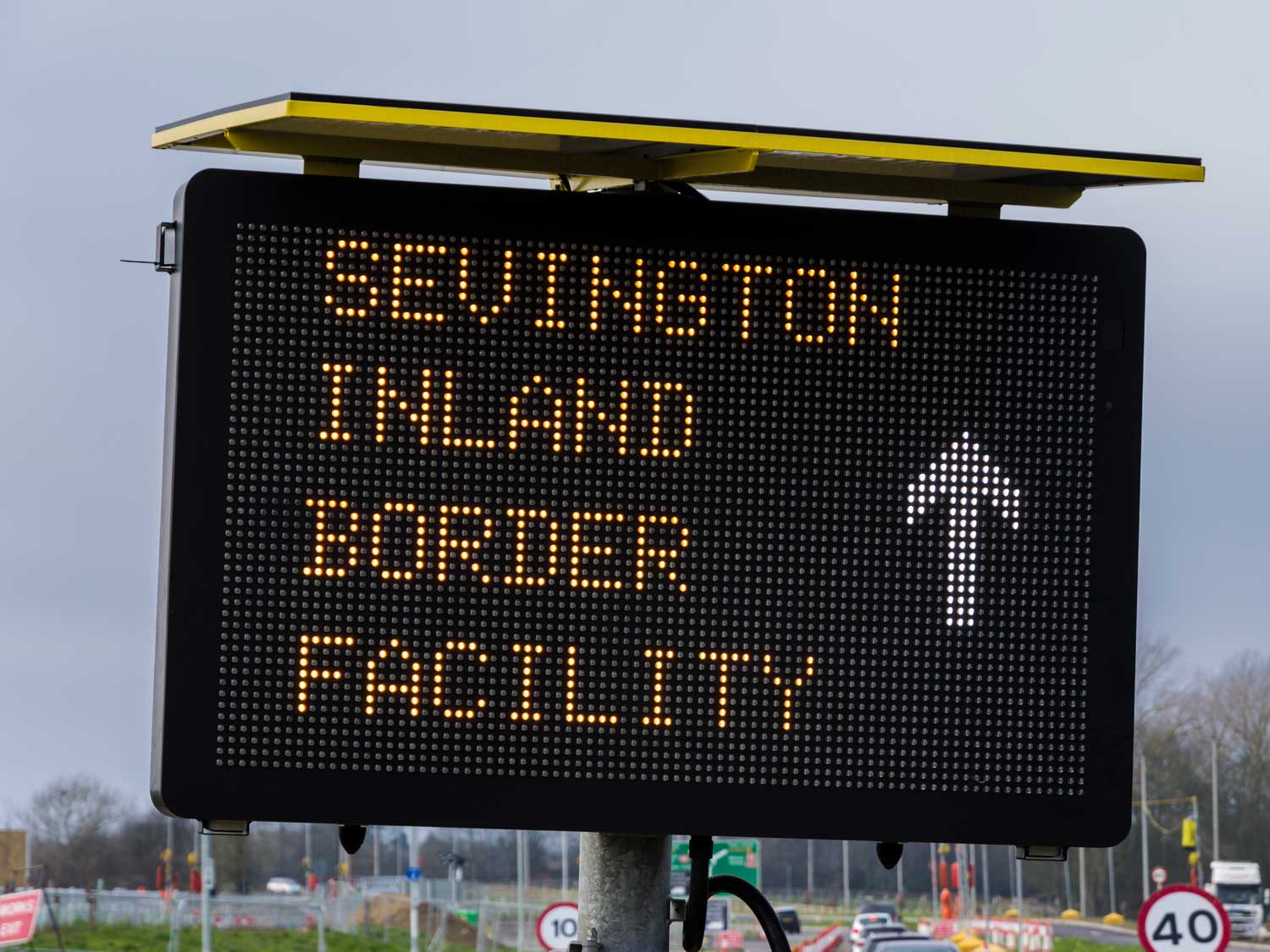
At Ashford, the closest inland border facility to Dover, drivers have had to wait for hours (some days) to obtain their transit documents and are regularly being turned back, which is particularly concerning, as much longer delays are likely, as soon as freight traffic recovers from its current subdued level, because as much as 90% of UK exported goods being moved will potentially need transit documents.

With red tape and confusion impacting trade between the UK and EU, estimates suggest that about 20% of SMEs have suspended exports to the EU. In general the freight industry is  experiencing a very soft market with overland movements to and from Europe with some operators reporting a 50% reduction in consignment flows compared to this time last year. It is expected that volumes of European trailer movements will increase significantly over coming weeks as inventory and buffer stocks deplete and The UK lockdowns are lifted creating additional demand for consumer products. The situation could deteriorate if this is the actual situation.

Metro are monitoring the cross-channel situation closely and continue to submit import and export customs transactions through our CuDoS system, to keep our customers European supply chains optimised and moving. Our platform is getting slicker as the experience builds and the rules of trade and transport become clearer on a daily basis.

Please contact Andrew White, leading our customs and brokerage business unit, for further information. 
Terms of trade will trip you up

New EU origin rules catching shippers out – if it isn’t manufactured in UK/EU duty is possibly applicable!

All goods with a UK or EU origin require an appropriate declaration of origin to benefit from preferential tariff rates and failure to provide this proof of origin could leave the importer liable for duty and - under some circumstances - the EU may even impose duty twice on the same goods.

The government heralded the free trade deal (FTA) agreed before Christmas as creating tariff-free trade between the UK and Europe, but shippers may be liable to to pay duties and taxes if they do not comply with Rules of Origin.

UK-made goods exported to the EU are tariff-free, as they were before Brexit, but goods imported from overseas and re-exported to the EU are subject to tariffs. Simple enough, although not widely understood as part of the trade deal.

Where it begins to get complicated is where a UK factory processes raw materials from abroad and then exports the finished item. Is the item British, or a “re-export”?

It gets complicated, because the answer depends on the nature of the product, the proportion of the product that came from outside the free trade area and the specific changes made by the ‘UK processing’.

Requirements vary from product to product, which is why the rules take up 50 pages of the trade deal. Defining how much the product has to be transformed are defined precisely, so painting something or repackaging it would not qualify.

If you dry food to stop it going off that isn't enough - but if you dehydrate it to give it a distinctive flavour or texture such as with sun-dried tomatoes or raisins then that is enough.

Where it gets crazy is when goods made in the EU, can also be liable when exported back into the EU, as the head of Customs at M&S explained to Metro’s Grant Liddell.

Percy Pigs sweets - everyone’s checkout favourite - are manufactured and packaged in Germany and then shipped to the UK - no tariffs are payable because of the trade deal.

They are then taken from the M&S warehouses and exported to stores in the Republic of Ireland, which is part of the EU.

But, because they have left the EU and not been processed enough to count as being made in the UK, it may be that a tariff needs to be paid to get them back into the EU, despite them having been made in the EU in the first place.

If they had been removed form their original packaging and combined with another product, as decorating for example, there would be no tariff because they would have been transformed, but just storing them in the UK is not processing.

It is exceptional; for countries negotiating such a free trade agreement would have such closely-integrated supply chains, so Percy Pigs will not be the only anomaly.

Please see below HMRC’s template suppliers’ declaration for products having preferential origin status:

I, the undersigned, declare that the goods listed on this document….…….…..…..(1) originate in…..…..…..…..(2) and satisfy the rules of origin governing preferential trade with…..…..…..…..(3):

I declare that (4):

Cumulation applied with…………………….(name of the country/countries)

No cumulation applied

I undertake to make available to the Customs authorities any further supporting documents they require:

…..…..…..…..……….(5)

…..…..…..…..……….(6)

…..…..…..…..……….(7)

1) If only some of the goods listed on the document are concerned, they shall be clearly indicated or marked and this marking entered in the declaration as follows:

‘….. listed on this invoice and marked ….. originate in …..’

2) The UK, EU, country, group of countries or territory, from which the goods originate

3) Country, group of countries or territory concerned

4) To be completed only where goods are being exported to a country in the Pan-Euro-Med zone. Delete as appropriate

5) Place and date

6) Name and position in the company

7) Signature

While the European freight operating environment will improve over time, as the new processes are better understood and teething problems addressed, we expect this will take several months. 

If you have any queries or would like any further information on our customs and documentation solutions (CuDoS) please contact Andrew White, who is leading this customs and brokerage business unit on development.

Lorry park

Brexit delays and confusion causing logistics delays and headaches

The Channel ports may be quiet, but behind the scenes drivers are being held up for hours and even days because they lack the right documents. European carriers are suspending UK services and European located businesses have stopped serving UK markets.

The end of the Brexit transition period came into effect on the 1st January, but the FTA between the EU and UK was only agreed on the 23rd December and even with retailers and manufacturers stockpiling (in anticipation of issues in the new year) the lower traffic has not stopped fallout.

Citing problems with new border regulations and processes, a number of courier, pallet and freight carriers are not accepting UK-bound consignments and the cost of moving full truckloads from France to the UK rose significantly above the third-quarter average last week.

After the initial lull, demand for transport with Europe increased last week to 78% of the average for the time of year and there is a likelihood that rates will increase even further as a result of Brexit.

As with any new processes, the first few weeks are always going to be a sharp learning curve and the new UK/EU requirements should soon become the norm, but we are dealing with complex changes and it’s arguably simpler to send something to Ghana than it is to send something to Germany.

The new regulations add complexity and process, which increases time, resource needs and costs. And it’s not just about ensuring compliance. Our objective is to find a way to support our customers, whilst keeping their customers happy and delivering as close to the level of service standards as pre-Brexit.

We do currently have a much more complicated supply chain system for Europe than we do for going anywhere else and we will work hard to simplify processes for, and guide our customers through these complexities, so their European supply chains are protected.

Under the new rules, shipments should be pre-cleared and rules of origin will be enforced, with EU officials on the lookout for third-country products and components, which is why it is critical that all commercial invoices carry an appropriate declaration of origin in the specified format that we have advised over recent months.

The logistics and freight sector associations have long been warning of a shortage of trained staff to fill out the extra expected 500 million customs declarations that are now required each year for goods moving between Britain and the EU.

The shortfall in customs brokers is massive and has left many shippers unable to find the support they need.

EU border authorities insist that trucks arriving from Britain have been almost totally non-compliant in terms of permits and paperwork and have been sending non-compliant trucks back to the UK, yet many exporters are struggling to acquire the required transit documents, because of a shortage of agents with the authority to issue them.

Transit documents, which allow goods to enter the European Union without delay require Custom’s authorisation and a financial guarantee, to cover any taxes or duties on the goods being moved -- but they have almost all been committed and firms wanting to apply for a transit guarantee or increase the size of their existing one have struggled because of delays at HMRC.

Metro are monitoring the cross-channel situation closely and continue to submit import and export customs transactions through our CuDoS system, to keep our customers’ European supply chains optimised and moving. Our platform is getting slicker as the experience builds and the rules of trade and transport become clearer on a daily basis.

Please contact Andrew White, leading our customs and brokerage business unit, for further information. 
Inland Border Facility

New inland border facilities

As part of their preparation for the UK’s new EU trading relationship the government committed to build new inland border facilities, to carry out customs compliance, transit, and Sanitary and Phytosanitary checks, including one facility opened beside Metro’s midland freight hub. 

Seven inland border facilities have been operational from the 31st December 2020, so that customs and document checks can be effected by HMRC, the Department for Transport (DfT) and the Department for Environment, Food and Rural Affairs (Defra) away from port locations.

The locating of one of these critical inland customs facilities alongside our Birmingham air freight facility and just minutes from our UK headquarters, provides Metro customers with unique access to a critical resource for inbound and outbound European movements.

New rules, that came into force on the 1st January, require additional customs and transit checks and with restricted space at ports for new border infrastructure, the Government  sought approval to build new inland border facilities where inbound checks and other activities will take place.

The facilities will act as a Government office of departure and destination, where hauliers can start and end journeys when moving goods, under the Common Transit Convention with Transit accompanying documents (TAD). 

They can also be used for Admission Temporaire or Temporary Admission (ATA) Carnets, Transport International Routiers (TIR) Carnets and Convention on International Trade in Endangered Species of Wild Fauna and Flora (CITES) checks

Lorries and their drivers should be “custom-ready” before entering these sites and those who haven’t completed the “Check an HGV” service’s questionnaire or haven’t received a green or amber light from the service may not be allowed entry, with checks expected to take up to two hours.

The inland border facilities are located at:

  • Ashford - Savington
  • Ashford - Waterbrook
  • Birmingham
  • Ebbsfleet
  • Manston
  • North Weald
  • Warrington

Metro European transport solutions include road, short-sea and intermodal, providing the most appropriate mode or mix of modes to support our customers’ domestic, European and international supply chains.