ship and graph

Sea freight facing even more challenges

Low-sulphur fuel container ship bunker prices have increased by a third since Russia’s move on Ukraine, with bunker surcharges rising around 15% and expected to spike further with crude oil hitting new highs of more than double the price at the beginning of the year.

Expect the carriers to claw back as much cash as possible in the form of emergency bunker surcharges and increased use of slow-steaming to mitigate the financial impact.

We are seeing delays and detention of cargo by overseas customs authorities seeking Russian and prohibited cargo and French customs officers have already seized two vessels suspected of breaching sanctions.

<

Until trade lanes are free of Russian containers, disruption is to be expected, as customs intercede, cargo is identified, offloaded and (ideally, to free up much needed equipment) unloaded. 

Dwell time for containers and vessels is a key indicator of port efficiency. The longer cargo is stuck in port, the more it potentially costs shippers, in rent, inventory holding and tied up working capital and container ships operate to stringent schedules, which means any delay ripples across the entire service. 

During unexpected increases in dwell time, port operators increase stack heights and store containers on every available space in their yards, which significantly lowers productivity, potentially exacerbating dwell time.

Dwell times have increased 43% across Europe since Russia’s invasion of Ukraine, with consumer packaged goods, food and beverages, hit particularly hard, as dwell times increased by 55%.

Container ships are skipping ports to try and maintain their schedules or, at best, limit delays, which are averaging 17 days and unchanged since last November. 

Average round trip duration for all seven OCEAN Alliance Asia - North Europe loops however stood at 93 days, compared to an average round voyage time of 78 days.

China to Europe rail freight operations are apparently continuing, though major service providers have added Moscow ally Belarus to their booking suspensions, which effectively blocks rail shipments on much of the Asia-North Europe network, because containers must be transferred to different gauge trains on entering Europe, with the busiest crossing at the Małaszewicze-Brest reloading area on the Poland-Belarus border.

Increasing in popularity with shippers, particularly for high-value products that would benefit from a faster transit, rail freight from China has grown massively since the advent of the COVID pandemic, with volumes surging 29% last year, to 1.46m teu.

The displacement of such massive volumes will have a profound impact on other modes from Asia, taking much needed capacity and putting even more pressure on pricing.

Air cargo shippers on Asia to Europe lanes, that are already anticipating a hike in prices as a substantial amount of capacity has come out of the market, as a direct result of Russia’s move on Ukraine, could be hit particularly hard.

Supply chains are facing a new set of challenges and with conditions changing rapidly, upstream and downstream, we are working closely with our network partners, to proactively identify potential issues and take any action necessary to protect our customers.

We maintain long-term contracts and space agreements with leading airlines, carriers and shipping lines, which means we can provide the best alternatives and options, whatever the situation.

Our proactive team, leading-edge technology and open communication, provide our customers with the real-time visibility, control and intelligence they need, to maintain resilient, flexible and reliable supply chains.
plastic packaging

Unwrapping the Plastic Packaging Tax

From the 1st April 2022, importers, will be expected to pay tax on any plastic packaging over 10 tonnes, that does not contain at least 30% recycled plastic, with penalties for those that fail to pay, declare, or register for the tax.

Not a lot of people know that. But there is a potentially huge exposure and liability for all commercial businesses that do not comply.

Announced in the 2020 Budget, the Plastic Packaging Tax (PPT), will encourage the use of recycled plastic, by providing an economic incentive to use recycled material when producing plastic packaging. It is estimated that the tax could lead to an increase in the use of recycled plastic in packaging by approximately 40%.

Companies that produce or import more than 10 tonnes of plastic packaging over a 12 month period, will be liable for the tax of £200 for every tonne of packaging made from less than 30% recycled plastic, unless they can claim a credit or relief.

The tax will be administered by HMRC, who will establish and maintain a register for the purposes of collecting and managing PPT. Manufacturers and importers of plastic packaging components will be liable to be registered for PPT if there are reasonable grounds to believe that they will manufacture and/or import at least 10 tonnes of finished plastic packaging components in the past 12 months.

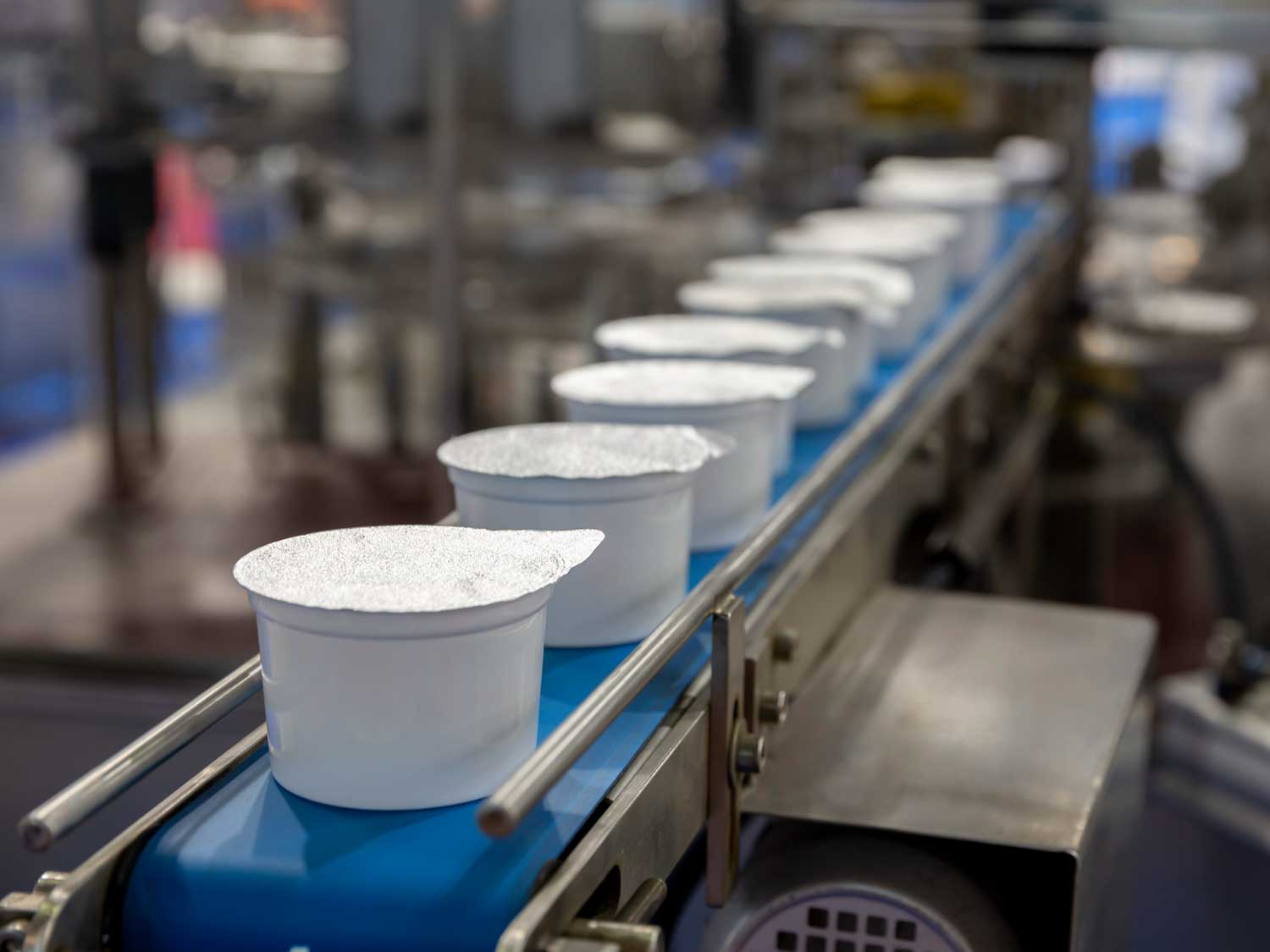
Because the tax will be calculated per component of plastic packaging, in the case of a glass jar with a plastic lid, the lid is treated as a separate component and in a bottle of moisturiser, the bottle and dispenser are classed as separate components that would need to be recorded separately.

Packaging that contains multiple materials, but contains more plastic by weight than any other single substance, will be a plastic packaging component for the purposes of the tax. For example, if a 10-gram item of packaging is made up of four grams of plastic, three grams of aluminium and three grams of cardboard, all 10 grams will be considered plastic packaging for the purposes of the tax.

In the UK supply chain, PPT is applied in the first instance to the packaging manufacturer. There is a secondary liability clause, meaning that if the tax has not been paid by the manufacturer, the liability can be passed down to other stakeholders in the supply chain, such as the brand owner or final product manufacturer.

Due diligence may be particularly difficult in relation to imported packaging and businesses will need to keep records of the due diligence checks they have made, which are in addition to the records required for PPT.

Producers and importers of less than 10 tonne of plastic packaging in a 12-month period, or where plastic packaging contains 30% or more recycled plastic content, will be exempt.

Medicine packaging, transit packaging like pallet wrap, packaging for goods in transit, or export within a year and durable components like DVD cases are also exempt.

Any business above the 10 ton threshold will need to keep records for their annual tax return of the packaging they manufacture or import, as plastic packaging is assumed to not meet the recycled content test unless it can be proven otherwise.

Accounting records (kept for six years) should show:

  • Total amount in weight and a breakdown by weight of the materials used to manufacture plastic packaging, excluding packaging which is used to transport imported goods.
  • Data and calculations used to determine if a packaging component is, for the most part plastic, and how much recycled plastic it contains
  • Weight of exempted plastic packaging and the reason for the exemption

OFFICIAL GUIDANCE CAN BE FOUND HERE

To discuss your PPT situation, exemptions and compliance, please contact our customs brokerage team, who can take you through the implications.  We have, within our extended group, expertise and specialist business analysts that can help and advise you on this evolving situation and we can introduce you directly to the best solution for your business needs.

US ports to offer storage while others struggle

Out of position empty containers may cause further supply chain impact later this year

When global supply chains finally start to return to some form of normality, which many hope to see in the second half of the year, carriers face more headaches, with an avalanche of empty containers predicted to cause chaos. Who would have thought it?

Full year 2021 demand for sea freight growth was 6.5% compared to 2020 and up by 5.3% compared to 2019, meaning an average annual growth rate of 2.6% compared to pre-pandemic 2019.

The problem in the supply chain is therefore not that of global demand, but the highly skewed nature of the global shipping market where we have seen super strong growth of imports from Asia to North America and consistent increases to Europe, but either slow output or outright declines on other trade lanes.

In 2021, overall demand was equivalent to loading (and shipping) 6 TEU every second throughout the year, but disruptions and bottlenecks in the supply chain during the pandemic have led to vessels being delayed for extended periods, which effectively reduces the amount of capacity in the market and increased the need for additional container capacity to be introduced.

Despite the introduction of millions of new and diverted containers, the gap between effective demand and available supply has been over 15% in the past year, which highlights the continuing challenge we face in positioning equipment in many origins.

We see the shortage of containers driven by three elements: onward intermodal connections; port and terminals; and shipping schedule considerations.

It is the consistent resolution of these problems, that will ultimately dictate how quickly the supply chain crisis is resolved, and consequently how long it will take for equipment availability to normalise. In the right place at the right time.

In short, until land-side issues are resolved and shipping schedules restored, there will be no let up on equipment availability pressures. The variables in shipping are intrinsically interwoven with resulting consequences that cause unrelated but direct issues to container movements.

But, when supply chains do finally start to shorten, it will release a large amount of empty containers, 3.5m TEU from the transpacific alone, which will potentially create a new wave of congestion problems in the second half of 2022 and in 2023, in terminals as well as container depots.

Carriers and container leasing companies need to start planning for this development, or the resolution of operational bottleneck problems will create a ripple effect, with the potential of overwhelming container depots in the US, Europe and globally, where cargo imbalances are experienced.

Supply chains have never faced so many challenges and with local conditions changing rapidly it is critical that you have the ability to react quickly to new challenges - like a deluge of empty containers creating unexpected bottlenecks.

Our MVT supply chain platform gives you the power to improve your supply chain resilience across five key areas:

PERCEPTION – With a thorough understanding of our customers’ requirements and objectives we create supply chain solutions that draw on all options available in the current market.

VISIBILITY – Linking your supply chain participants and critical time-scaled events to provide end-to-end visibility across the extended supply network, with global control down to individual SKU level.

AGILITY – Proactively managing your supply chain flow means slower moving lines from any origin can be deferred, while priority orders can be highlighted and expedited, to increase speed to market and accelerate the cash-to-cash cycle.

FLEXIBILITY – It is simple to change supply lines, adding and monitoring new vendors, product flows and outbound order data, from any location.

CONTINGENCY – MVT’s exception alerts and rules-based solutions, correct operational non-conformities, without human intervention, or alert users to issues outside set-parameters for corrective action.

For specific information, or to discuss how our technology could support your supply chain, please contact Simon George our Technical Solutions Director or Elliot Carlile.

Felicity Ace

Valuable automotive RoRo vessel abandoned mid-Atlantic – and it is fully loaded

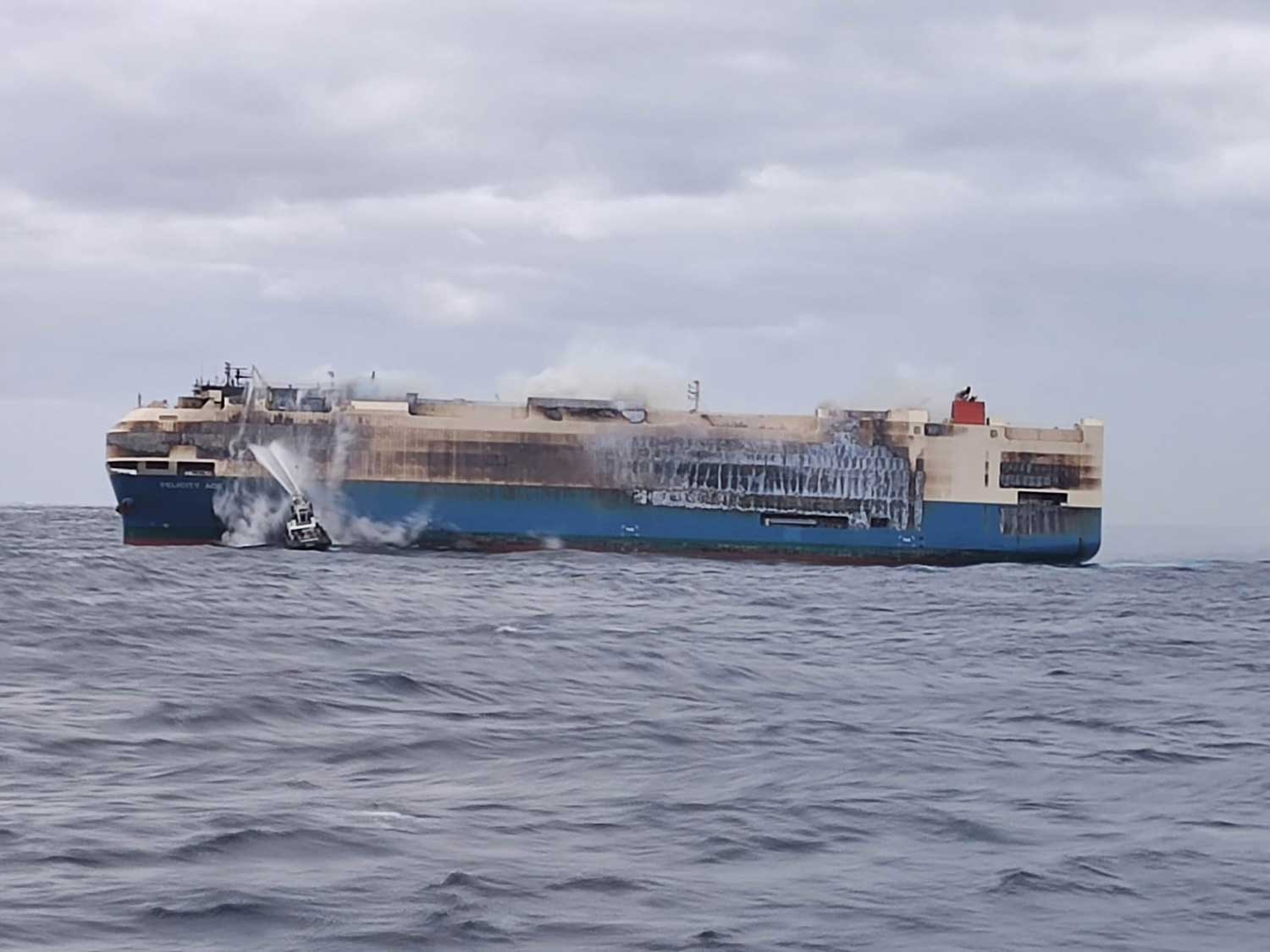
The Felicity Ace - which has not sadly sunk - was en-route from Germany to the USA, with 4,000 Volkswagen AG vehicles aboard, when it caught fire near the Azores islands in the Atlantic Ocean last week. The  Portuguese Air Force were the first to arrive at the stricken vessel, air-lifting off the crew and leaving the Felicity Ace to float mid-Atlantic, awaiting the arrival of fire-fighter tugs.

The RoRo ship was carrying about 4,000 Volkswagen AG vehicles, which could cost the brand at least $155 million, according to risk-modelling estimates, with Volkswagen, Porsche, Audi, Bentley and Lamborghini models on the vessel. Auto manufacturers other than VW may have lost about $246 million worth of vehicles.

Two large tugs with firefighting equipment rendezvoused with the Felicity Ace earlier this week to start spraying water and work with an initial salvage team that was already on board to cool down the ship.

No oil leakage has been detected, the vessel remains stable and MOL are expected to set up a website to provide updates on the incident.

This latest incident underlines once again the precariousness of global supply chains and the critical need for appropriate marine insurance cover.

The loss of so many vehicles and critical RoRo capacity - which could be the equivalent of 100k vehicles p.a. until the ship returns - comes at a bad time for global carmakers who are in the middle of a supply chain crisis sourcing semiconductors, resulting in extended delays for new cars and is likely to result in rate hikes, on a transport mode that was already massively over-subscribed.

The fire on the Felicity Ace could drive a marine re/insurance market loss of $500 million and while shipping losses have declined over the past 10 years, analysis shows that fires on board vessels remains one of the main safety concerns and have actually increased in recent years.

Metro did not have any of our customers products on this vessel but we are well prepared to provide assistance in air freighting replacement vehicles to their destinations to ensure demand is satisfied. We move huge numbers of vehicles every year globally by all modes and always consider and deliver available solutions in the current global market, within the automotive vertical, regardless of the challenges.

Carriers like MOL operate under conditions that limit their liability and may even require you to compensate them, in certain circumstances. Any compensation you may eventually receive is likely to be considerably lower than your actual loss.

Metro recommend and offer All Risk marine insurance cover that protects your cargo during every stage of transportation and storage, on a per shipment or annual cover basis, to the full value of the goods.

Metro has specialised in the automotive and construction vehicle sectors for over four decades. Working with many of the most respected and established brands, our specialist teams coordinate the end to end movement of vehicles and machinery around the world.

Long-standing partnerships and volume agreements with the leading RoRo carriers and container shipping lines means we can offer the widest choice of services, routes and solutions.

For further information please contact Tom Fernihough, our Automotive Director, for the latest advice and market news relating to the global supply chain of finished vehicles.

Image source: Portugese Navy