Business lady with report

40% of firms find better post-COVID suppliers

In a recent survey, reported by the Chartered Institute of Procurement & Supply (CIPS), 41% of firms said that they have found “new and better” suppliers to work with as a direct result of coronavirus.

The survey also found that 57% found the outbreak an “incentive” to make positive changes to their business model, with 35% are now using cheaper suppliers than those they had worked with previously

The survey of 502 senior decision-makers confirmed that the pandemic has been damaging and challenging for the UK’s private sector, but it has also presented opportunities.

The report highlights how Covid-19 has forced businesses to re-evaluate their business models and supply chains, enabling them to make improvements to the way they operate.

The worst impacts of the economic costs of the pandemic are confirmed, with 36% of respondents stating that businesses in their supply chain had closed down since March and over half (56%) had had to change how they delivered their product or service.

And while there is a sense of optimism from the business leaders, with a positive second half of the year anticipated, only 52% expect their turnover to grow in 2020.

The reports findings are in stark contrast to the doom and gloom of three months ago and suggest that businesses are not becoming complacent, but are actively seeking new opportunities while overcoming the challenges of the pandemic.

Although much of the foregoing detail and survey responses relate to the supply of products, the drive for continual improvement, even in the midst of a onadmeic, apply equally to logistics and freight. 

Metro have continued to enhance our platforms over the pandemic period, launching initiatives and driving innovation to deliver cost effective and reliable solutions, during a turbulent and unpredictable market. 

We also strive to look into the future, by anticipating further changes with Brexit and further supply chain impacts from Covid19. 

Metro have continued to attract new business from clients over the last 6 months, many of whom are reassured by our consistent long term approach to our business continuity and strategic planning. 

For further information on our solutions please contact Grant Liddell, Business Development Director (grant.liddell@metroshipping.co.uk/ 07817 477926) who will be delighted to assist you and present all options available based on requirements and expectations.
The Suez strikes back

Shipping lines set to increase Asia–Europe contract rates

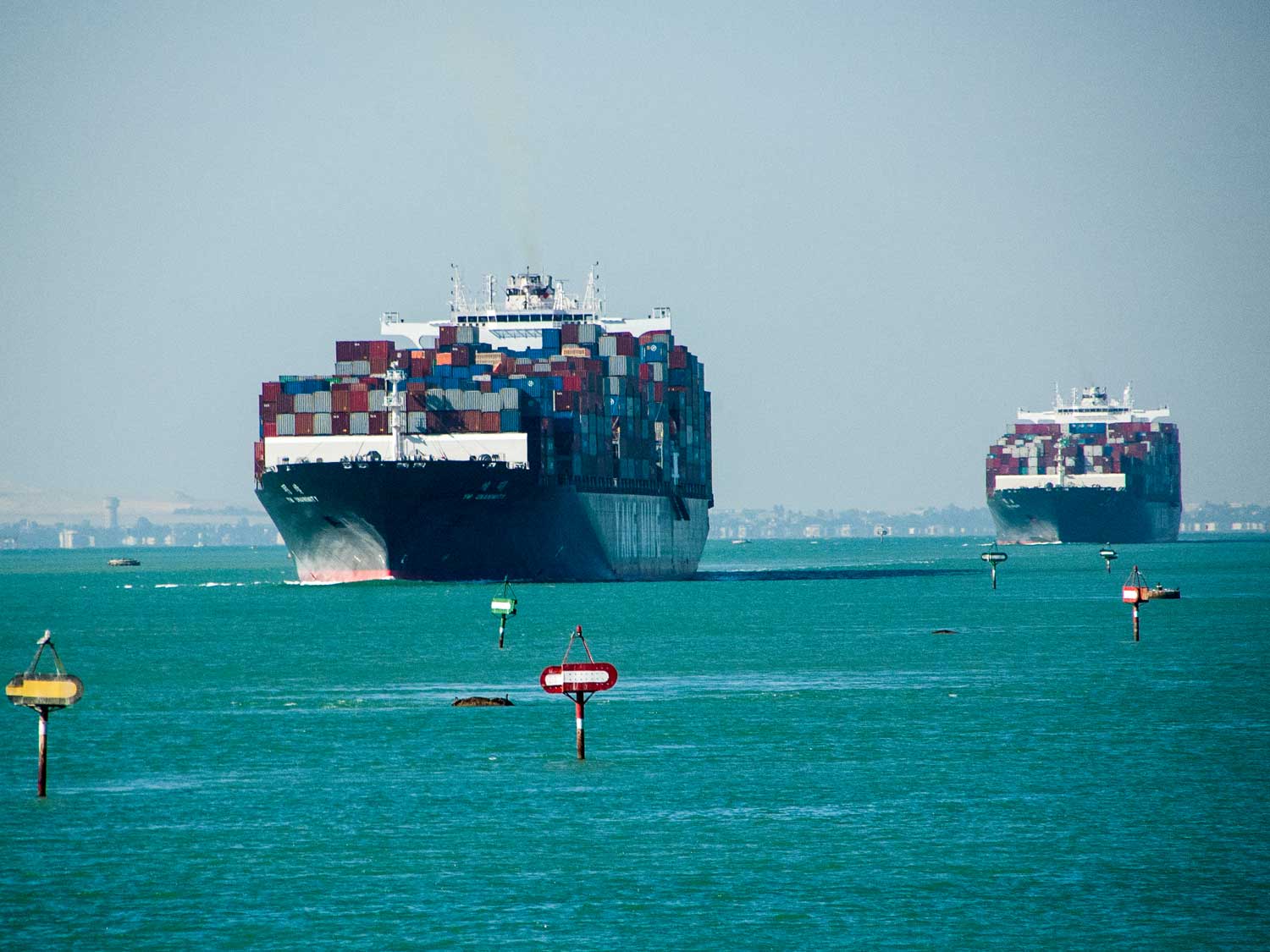
As the container shipping lines continue to control capacity tightly, announcing a new series of blanked sailings in October on the Asia - Europe trade, they are preparing for their annual contract negotiations with the largest shippers on the critical route, with many anticipating higher long term prices. 

Sea freight spot rates from Asia-Europe have been increasing since May’s low point, defying the demand-cutting coronavirus pandemic, with carefully orchestrated volume controls.

Despite the pandemic’s economic impact, demand has been more robust than expected from China to North Europe which, combined with the limited vessel space, has seen spot rates increasing over 20%.

Metro’s customers have been protected from the worse impacts of these volatile freight rates, by the fixed availability and long-term prices we negotiate with the major shipping lines and alliances.

Short-term rate developments are often used by analysts as an indication of what to expect from the long-term market, which means that because short-term rates are volatile, similar, though less dramatic oscillation may be expected on the long-term market.

As the contract talks of the final quarter draw nearer, the big volume shippers are considering optimum time to get their tenders out and what adjustments they need to make to their annual negotiations.

Among their chief concerns will be whether using market uncertainty to secure the lowest possible contract rate could place them at a disadvantage compared with shippers paying higher long-term rates, who’s cargo will be more attractive to overly-laden shipping lines.

With so much supply and demand uncertainty it's not only about having the cheapest rate, it's also securing space and getting cargo shipped on time.

The biggest danger for the contracted shippers with the biggest discounts is when the spot market overtakes the lower end of the contract market because for shippers paying lower contract rates, which raises the risk of rolling.

If the carriers can pick and choose with limited capacity on their vessels, they will pick the boxes that yield the most and this is where shippers risk not only, not getting their goods loaded, but also the opportunity cost of lost sales, which would far outweigh the freight rate the lines want.

If you have any questions regarding these developments or would like further information, updates, or the latest market pricing please contact Chris Carlile or Grant Liddell.

Metro will be negotiating our 2021/22 contracts in the final quarter of the year. We recommend and encourage this model against short term or spot pricing. If you would like further details of our collaborative approach please contact Ian Barnes (ian.barnes@metroshipping.co.uk) for a discussion into our strategic negotiations with partner carriers.

port infographic 2

UK ports matter

European ports used to be the world’s busiest and largest ports, but have been eclipsed by the impact of globalisation and the massive growth of container ports in Asia. 

European ports still have a major role to play in global trade and, as an island nation, particularly so for the UK. 

There are 120 commercial ports in the UK, including major all-purpose ports like Tilbury and Liverpool; ferry and Ro/Ro like Dover; specialised container ports, such as London Gateway and Felixstowe, and ports catering for specialised bulk traffic, such as coal or oil.

There are also 50 airports across the UK that are configured to accept inbound and outbound cargo.

Metro’s operations systems integrate with HMRC to provide complete customs support and digital declaration services at each and every one of these locations.

Capability that is market-leading now and will be critical following Brexit on the 1st January 2021.

The impact of the COVID-19 pandemic on the UK’s ports and waterways was profound over the 1st quarter, with the total volume of freight decreasing 6% to 113 million tonnes and containerised traffic falling 12%.

For further information and advice on our Brexit brokerage solutions, please contact Grant Liddell or Chris Carlile for assistance.

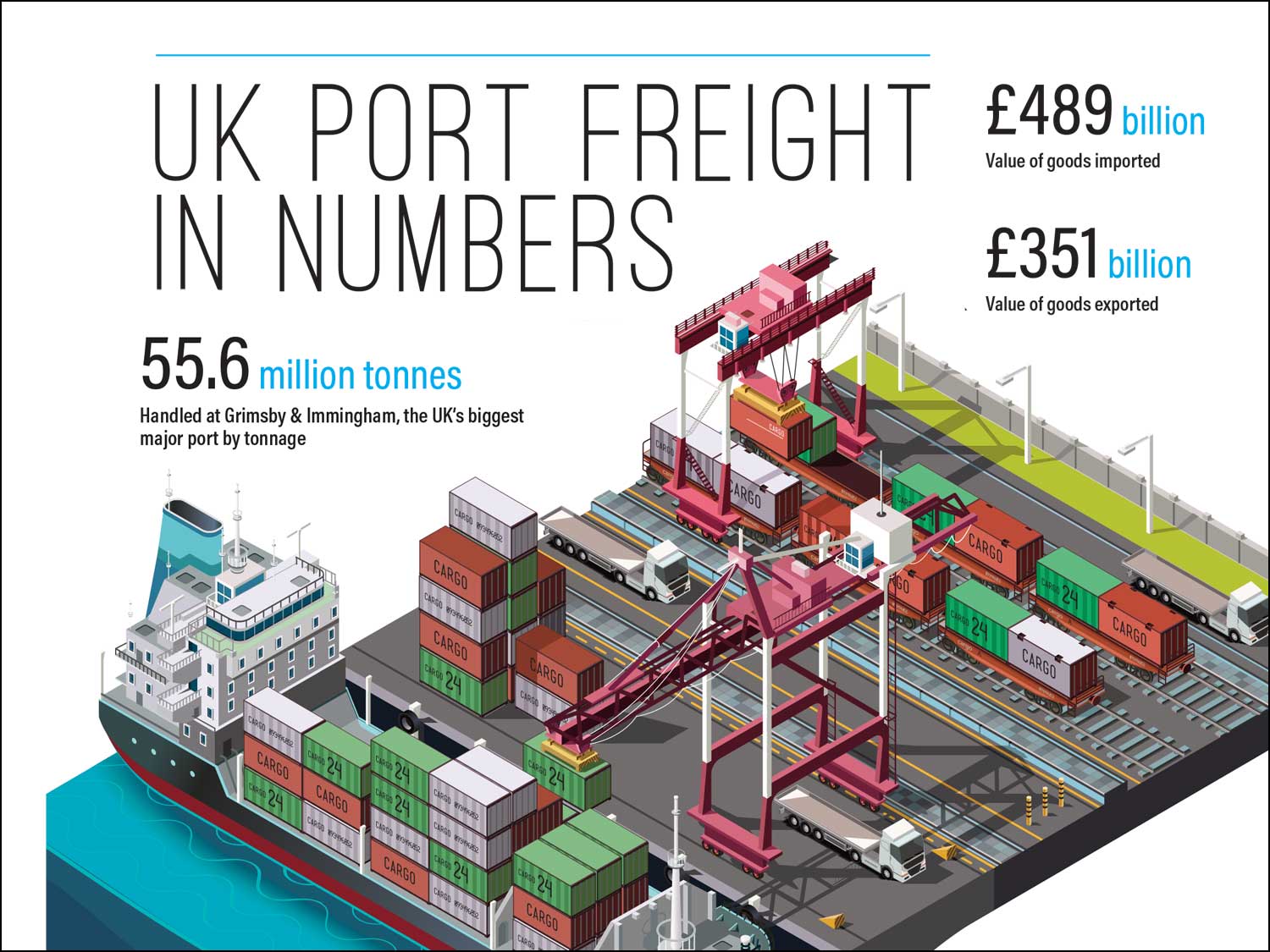
This infographic from the Chartered Institute of Logistics and Transport shows the values of UK port freight in numbers. It's worth a read!

UK-port-freight-in-numbers

Click to Download

Shipping line withdraw from China

Trans-Atlantic demand slump is not our experience

The trade press continue to report that trans-Atlantic demand is reduced by the pandemic and that carriers are adding to blanking programmes, while we have evidence of shipping lines refusing bookings due to lack of space.

While blanked sailings have been reinstated on the transpacific and extra sailings are now being offered from Asia to North Europe to accommodate increased cargo volume during the summer peak period, more void sailings in September have been announced for the transatlantic trade.

While the lines battle the ‘demand slump’ our commercial team are having to work harder than ever to get cargo booked onto open vessels, having to make use of alternative loading ports and feeders, when first choice services are full.

2M partners Maersk and MSC are extending the suspension of their TA4/NEUATL4 transatlantic loop to the end of September outbound from Europe, and to early October from the US.

The 2M Alliance withdrew 18.2% of capacity in July compared with the previous year, while the THE and Ocean alliances reduced by 5% and 1.6%, respectively.

Freight rates on the trans-Atlantic trade are renowned for their robustness, in contrast to the volatility often seen on the transpacific and Asia-Europe and It is clear that the lines are taking drastic action to protect them.

We continue to advise shippers to provide the biggest possible booking window, with a minimum of two weeks plus, and share our volume forecasts continuously with our liner partners, in the hope that will add more capacity. 

Air freight is also very buoyant, as there is very little passenger (PAX) belly-hold space available, due to the Trump administration’s embargo/ suspension/ banning of flights from The UK and Schengen area. 

With pure freighters and a number of ‘Preighters’ currently providing all the capacity on the trade, rates remain very strong on both east and westbound lanes.

For further information, market updates, latest schedules and much more please contact Chris Carlile or Grant Liddell for further details and we will be delighted to arrange a meeting, teams call or alternative communication to provide you with the latest market position and detail. Visibility and market intelligence are key to successful supply chains.