No sign of China air boom busting

Strong air freight demand expected to continue

Even as England enters a four-week lockdown and the rest of the UK operate under strict restrictions, consumer activity will continue to be strong, driving further air freight demand.

Air freight rates from China continue to rise, as the peak season continues and distressed sea freight is increasingly diverted to the mode, exacerbated by blanked sailings and falling schedule reliability.

Carriers appear to be pulling scheduled passenger flights again and this will further impact the capacity situation, although some PAX carriers are introducing new preighters on selected routes.

Rates from China to the EU and US continue to track at a higher level, as a result of stronger load factors and rate increases are not really surprising, as the industry is heading into the peak season. 

However, with different market dynamics in play this year, rate progression and capacity availability has been harder to predict.

With goods continuing to be sold through stores that remain open and online channels, for ‘non-essential’  there will be demand - increased demand for some product lines from the region - which means that supply chain flows continue unabated for air and sea freight.

Heavy discounting by retailers and fashion brands is encouraging consumers to refresh their wardrobes, with air capacity from key sourcing country Bangladesh, extremely tight, with carriers holding back space for lucrative last-minute spot buying.

We expect the Bangladeshi market to remain at these levels through November and probably well into December, especially if we see the expected surge in e-commerce volumes.

Bangladeshi exports have been hard-hit by technical problems at Dhaka Airport through broken scanning machines, causing “massive air shipment problems”.

The air peak season has been exacerbated not just by the limited capacity, but also with a return to PPE shipments, as well as hi-tech launches such as the Playstation 5, which launches globally this month.

The impact of e-commerce volumes has not been sufficiently factored in by many in the industry, with online product flows congesting the market. 

As the biggest e-commerce product flows tend to be handled by integrators and specialist fulfilment providers, rather than forwarders, their volumes are not considered as reducing supply with airlines. And this will get worse as we run up to Christmas festivities and more people are shopping online globally. It will be crunch time right up to Christmas.

Strong air freight demand, versus tight capacity, drives up rates and with  new product launches and congestion at all major hub points, more or less the entire market will become spot rate driven.

Metro are doing everything we can to overcome turbulent capacity issues with airlines withdrawing flights dependent on revenue streams at the last moment and price flight specific increases by developing and offering alternative services and multimodal services. 

We work closely with the world’s largest cargo airlines to offer consistent and reliable transits at competitive rates. 

If you have any questions regarding these developments or would like further information, updates, or the latest market pricing please contact Chris Carlile or Grant Liddell.

FXT loading

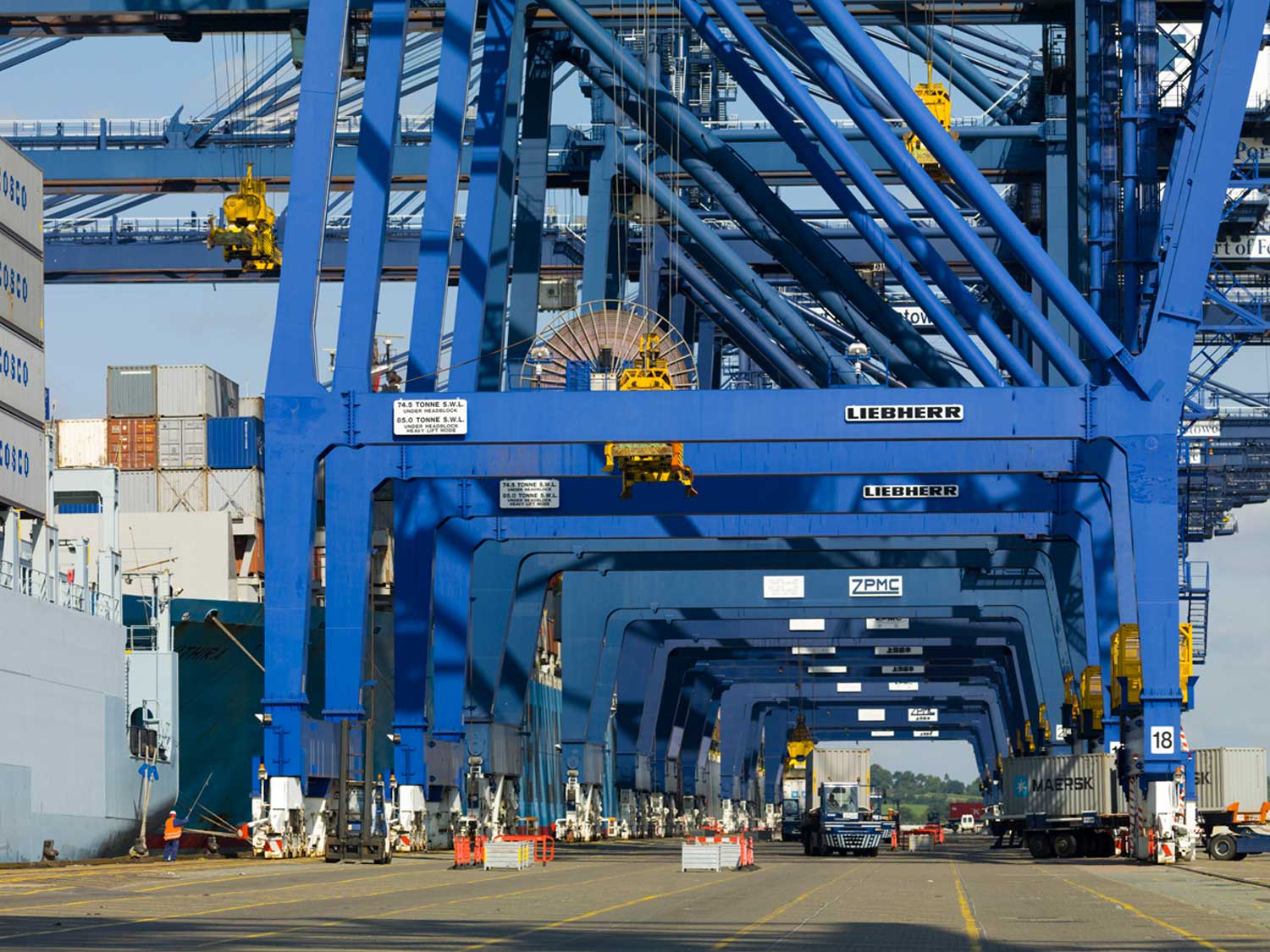
Felixstowe in the news again – for all the wrong reasons

The start of the working week and the Port of Felixstowe is back in the news, for cancelling empty container restitutions (again), but the challenges facing shippers run much farther afield than Suffolk.

The Taiwanese container shipping line Evergreen has issued a customer notice stating that the port (Felixstowe) announced on Sunday that it would “temporarily stop the restitution of all empty containers until further notice”.

The ban means further challenges to inland container operations, that are already suffering from severe congestion, leading many hauliers and forwarders to blame Felixstowe’s decision to furlough large numbers of staff and issue with its vehicle booking system (VBS).

The port has issued its own update in which it, seemingly, passes the blame back to the lines. “Each shipping line has an agreed empty storage capacity. The receipt of empty containers is managed on a line-by-line basis. If a line exceeds its empty storage capacity receipt of empty containers for that line are temporarily suspended until sufficient empties are removed.”

It also states that “No port workers have been made redundant since the onset of the Covid pandemic” and “All were back at work by early August.”

In respect of the VBS, the port’s update maintains that “In the week to 01.11.2020 a total of 26,376 VBS bookings were available of which 6,959 went unused” while “the average turnaround times for hauliers were 52.74 minutes at Trinity Terminal and 37.96 minutes at Berths 8&9.”

The port has acknowledged that the spike in container volumes that created the congestion they are struggling to work through will last at least into December and possibly through into the New Year.

Felixstowe is not alone, Southampton and London Gateway have been impacted by the same volume spike and there are choke-points around the world.

Australian ports are suffering from a huge build-up of empty containers and MSC has imposed a congestion surcharge on all imports to Auckland (New Zealand) from Europe, China, Japan and South-east Asia.

Shippers from the US have been impacted by strong domestic demand for China exports, with shipping lines suspending bookings of agricultural products in order to quickly reposition empty equipment to the more lucrative Asian export market.

Metro has strong working relationships directly with the ports, carriers and haulage partners, that ensures we are informed and can react swiftly to any issues the ports may face. 

Keeping our customers informed through their account management team and via our award winning MVT supply chain visibility tool means we can limit the issues they face, to keep supply chains moving and avoid unnecessary costs. 

Sea Air

Inbound freight situation update

The UK’s supply chains are facing unparalleled challenges and some links are buckling under the strain. The following is a transcript of a customer advisory issued by Metro Shipping on Tuesday……..

The COVID pandemic continues to impact global and domestic freight in the most profound ways, slashing air and sea carrier capacity and driving rates up, while diminishing performance at origin and destination.

Metro is working tirelessly to keep our customers’ supply chains running as smoothly as possible, by providing visibility through our MVT platform, avoiding, or working round choke points and looking for alternative solutions when traditional options are no longer viable.

You can help us help you avoid unnecessary disruption and delay, by providing forecasts and making bookings at the earliest possible time, with ideally 4 weeks visibility. When we can see your volumes and deadlines, we can find the most effective options and best fit solutions.

We outline below the current situation and the most significant challenges impacting the movement of goods into the UK and Europe by air and sea.

The original Coronavirus outbreak in early 2020, in China, prompted shipping lines from the Far East and Indian Sub-continent to begin blanking sailings as factories began closing across Asia, with even deeper cuts to capacity, as the pandemic spread to US and Europe prompting long lockdowns.

When supply chains reopened in the early Summer, most global airlines were grounded, and the shipping lines schedules were in tatters, with empty equipment out of position, leading to a fight for air capacity that continues and the world’s shipping lines with half their volume out of circulation.

The UK’s primary air ports and sea port’s have been struggling to deal with the post-lockdown import spikes, which are particularly pronounced on the sea freight side, while simultaneously having their operational capability reduced, because workers are missing and COVID-safe working practices mean that less work can be completed in a working day. Restricting the ability of carriers, hauliers and service providers to deliver cargo on time.

The traditional pre-Christmas ‘peak’ season would be over by now, but lockdowns have impacted demand and changed ordering patterns, which is extending the ‘peak’ period and means that space on vessels and aircraft out of Asia remains at a premium and the acute equipment shortages continue. 

The UK’s ports struggles with high volumes, congestion and reduced operational capability is likely to continue into the New Year and made worse in the short-term, by software failures, woeful schedule reliability, vessel diversions, shortage of drivers/ hauliers, rail space and off dock storage. 

By working collaboratively, during these demanding times, we can continue to overcome your challenges, doing everything possible to keep your supply chain moving.

In addition to the ongoing conditions of the past 7/8 months we are now faced with a second national and possible European wide lockdown. This will have undoubtedly further impact on the market and shipping trade. We are constantly monitoring and managing our own internal and external resources and platforms to ensure that we continue to deliver on expectations.

We will keep you updated with these ad hoc bulletins, our regular newsletters (please advise if you are not receiving and we will add you to the audience), our CRM department activity and of course through your day to day contacts at Metro. 

For any further information, please do not hesitate to contact your Metro team and your key account manager.

Eclipse House

Metro in lockdown (again)

From today, England enters a new national lockdown, meaning that everyone who can work effectively from home must do so, excluding those working in essential services, including the supply chain, who may continue to go into work. 

As in the earlier lockdown period, Metro will divide home and office based working protocols to service core functions and ensure that customer service levels are maintained, whilst protecting colleagues and any impact from the virus.

We have been preparing for this eventuality since the previous lockdown was lifted in the Summer, to ensure that our teams remain 100% operational at all times, by preparing our workspaces to make them COVID-secure and adapting our systems to allow staff to work from home securely, as much as possible.

The Metro board is committed to the physical, emotional and mental wellbeing of our colleagues, which is why we are resolute in following public health guidance and HR best practice. 

In preparing our workspaces, Metro’s HR and H&S teams have undertaken detailed risk management approaches to safeguard employees' health and minimise the risk of infection, basing our planning on the latest government and public health guidance.

The Health and Safety Executive recently conducted a thorough review of our workspace practices including: maintaining safe distance; managing meetings interviews and other interactions; the use of kitchen areas and sharing working spaces; concluding that they “were the best they had seen.”

While we are confident that we will maintain the service levels under our control, and continue direct customer access to our personnel, it is inevitable that the lockdown will have an impact on key supply chain operations including ports, airports, inland terminals, hauliers and warehouses.

The impact of the last lockdown is still directly impacting Felixstowe, other major ports and all the supply chain tiers that link into them and even if these operators can maintain a full workforce complement (which is unlikely) their operational capability will continue to be diminished by the need to maintain COVID-safe work practices and the regular deep-cleaning of operating areas.

We will be working closely with all of our customers during these challenging times, identifying and resolving potential problems, to keep their supply chains running.

As always, we will monitor the situation closely, with regular posts on our social channels and weekly eNEWS round-up. Click HERE to join the eNEWS audience.