
BIFA’s 2025 Standard Trading Conditions: A Strategic Update for UK Freight Forwarding

BIFA’s 2025 Standard Trading Conditions: A Strategic Update for UK Freight Forwarding

The British International Freight Association (BIFA) has unveiled its 2025 edition of the Standard Trading Conditions (STC), replacing the 2021 version under which Metro and the wider UK forwarding industry currently operate. 

The 2025 revision represents one of the most comprehensive updates in recent years.
BIFA has sought to future-proof the framework against a more volatile trading environment, incorporating lessons learned since Brexit and adapting to the increasing frequency of customs-related responsibilities handled by forwarders.

The new STC also strengthens legal robustness, ensuring compliance with the Unfair Contract Terms Act 1977, and updates terminology to align with modern commercial practice and current UK contract law.

Key Changes in the 2025 STC

  • Updated liability framework – Clarified definitions of loss, damage, delay, and consequential loss, with adjustments to how liability limits apply to multimodal transport and ancillary services.
  • Enhanced customs provisions – Expanded clauses covering declarations, indirect representation, and data accuracy, reflecting the critical role forwarders play in UK border compliance.
  • Digital documentation and e-commerce – Introduction of language recognising electronic records, digital communication, and automation tools as valid and binding forms of documentation.
  • Improved clarity on lien and payment rights – Modernised wording on forwarders’ entitlement to retain goods or documentation until payment is received, ensuring consistency with case law.
  • Force majeure and sanctions – Strengthened references to trade sanctions, embargoes, and extraordinary disruptions such as pandemics or cyber incidents.
  • Modernised terminology – Simplified and standardised language throughout to reduce ambiguity and prevent misinterpretation in contractual disputes.

Collectively, these revisions make the 2025 STC more aligned with the realities of today’s international trade, providing forwarders and their clients with a transparent and fair contractual framework.

What Shippers Should Do

  • Familiarise themselves with the new conditions and note how these may affect contractual responsibilities, especially regarding customs declarations and documentation accuracy.
  • Review existing contracts to ensure consistency with the updated terms ahead of implementation.
  • Engage with account managers for clarification on any specific service implications under the new framework.

Transition and Implementation

The 2025 Standard Trading Conditions take effect on 31 December 2025, replacing the 2021 edition.

BIFA has published the revised terms well in advance to give members and their customers time to prepare, review contractual documentation, and ensure a seamless transition.

The full text for the 2025 edition can be found here, and the 2021 edition here.

The 2025 BIFA Standard Trading Conditions introduce important legal and operational changes that affect all freight forwarding contracts. EMAIL Laurence Burford, Chief Financial Officer, to discuss the details, potential implications, and how Metro can help ensure your trading agreements remain fully compliant and commercially protected.
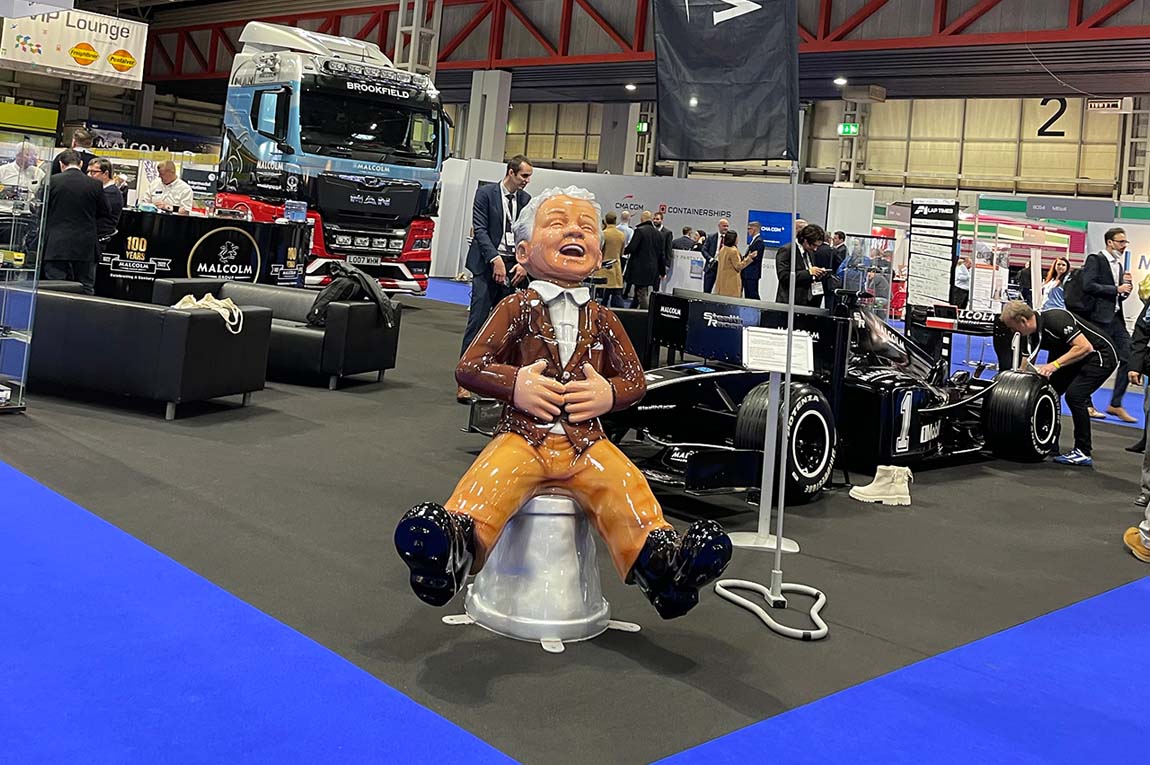
THE industry trade show returns – Multimodal 2021

THE industry trade show returns – Multimodal 2021

After a break of more than two years the UK freight industry’s only dedicated conference and exhibition – Multimodal – has returned to Birmingham’s NEC centre and, as it is just down the road, we’ve popped in for a look around.

While the various COVID lockdowns and restrictions played out, Mutimodal suffered repeated postponements, denying the industry its annual opportunity to meet and greet.

Exhibitors are a mix of carriers, hauliers, ports, 3PL’s, trade associations and suppliers into the sector.

New for 2021 is the British International Freight Association’s (BIFA) village, designed to provide a marketplace for BIFA members to showcase the products and services they offer.

As a BIFA freight service award winner Metro were entitled to a free stand within the village but, due to the exceptional supply chain challenges we are currently facing, our priority is supporting our customers. Which meant we could not release senior team members for the three days that Multimodal runs, and have had to forego the opportunity to exhibit.

While we couldn’t spare colleagues for three full days, we have taken the opportunity to pop in for a quick look around, take these pics and see one of our team participating in one of the popular seminars.

This year’s seminar programme has been developed by Logistics UK, to share insight and best practice and “explore how technology, innovation and people power are driving a new business landscape.”

Day 3 of Multimodal  will see BIFA take the lead role in a seminar programme, supported by Metro’s Colin Smith (Training & Career Development Manager) that focuses on attracting young talent to the sector; with an examination of apprenticeships that are available; the trade association’s recently launched schools engagement programme, as well as the work being done by BIFA’s Young Forwarder Network.

Feedback on the seminar sessions is interesting, particularly the most popular ones, as they explore the way forward for businesses in the supply chain. 

The most consistent theme is that supply chain has never been in the public eye, like now and it is critical that we raise the profile of the sector and it’s role within the wider economy and in particular to use this opportunity, as Colin highlights, to attract the next generation into the industry.

The HGV crisis came up consistently, but so too did sustainability and the need to look at every supply chain element, because we need to protect the future.

And in protecting the future, there were calls to ensure that EU suppliers and operators are fully prepared and ready for the 1st January 2022, as businesses will not be able to delay making import declarations and if you use ports that operate the pre-lodgement model or the Goods Vehicle Movement System (GVMS), full import declarations will be required before the UK Border.

Brexit politics round-up 17th December

Brexit politics round-up 17th December

While the president of the European Commission tells the European Parliament that there is a path to an agreement with the UK, the prime minister continues to view no deal as “the most likely outcome”.

With just two weeks till the end of the transition period, still no one really knows if a trade agreement will be reached and Boris Johnson’s decision to send MPs home for the Christmas parliamentary recess means an emergency Commons recall will be needed if a deal is done by the end of the year.

The PM’s move is being interpreted by some as a signal to Brussels that he will not be forced into a climb-down in hasty discussions and comes as the EU has weakened its threat of issuing lightning tariffs if the UK cuts state aid, labour or environmental standards in future.

Press reports suggest that both sides were still far apart on a trade deal and not close to cinching an agreement, but even if one is agreed at the 11th hour and 58th minute (transition ends on the 59th), it will make no material difference to the logistics of the UK’s ‘first’ day as a sovereign state.

500,000 additional customs declarations will be submitted on HMRC systems on the 1st January and every day following, which is why Metro has developed digital and automated tools to process and submit the additional volumes directly into customs systems that may well be overwhelmed by physical declarations.

Metro customers shipping into and out of the Euro zone are dealing with our dedicated Brexit Brokerage team, who have access to resources within the EU to expedite local clearances and international outsourcing teams, who process the vast volume of data and documentary requirements.

For exports to the EU after the 1st January, you simply have to get the paperwork right, or your goods will be stuck at the border, going nowhere.

Postponed VAT accounting

Postponed VAT accounting

Currently, VAT from 3rd country imports is due on arrival, or on release of the goods into free circulation. From the 1st January 2021 postponed VAT accounting (PVA) is being introduced for EU and non-EU imports of goods. 

This means that all UK VAT-registered traders who import goods into the UK, excepting those that operate a Duty Deferment facility (which defers payment to the fifteenth of the following month) will account for import VAT on their quarterly VAT returns.

The import VAT can then usually be reclaimed as input tax on the next VAT return (subject to the normal VAT rules on input tax deduction). 

Announced in the last budget this is a welcome measure, which mitigates cashflow concerns for businesses that import goods. 

Traders can account for import VAT if:

  • The goods they import are for use in their business
  • Their EORI number, which starts ‘GB’ is on the customs declaration
  • Their VAT registration number is on the customs declaration, where needed

UK VAT registered importers will be able to elect to use PVA on their customs declaration. PVA will not, ordinarily, be mandatory and it will be possible for importers to continue to use the current process to pay, defer or (if appropriate) secure the VAT on importation if they so wish. They can then choose to start using PVA at any time after 11pm on 31st December 2020. It will also be possible for importers to use PVA for some imports and existing means of payment for others. 

Goods moved into a customs special procedure, can be accounted for import VAT in the VAT Return when a declaration has been submitted to release those goods into free circulation from:

  • Customs warehousing
  • Inward processing
  • Temporary admission
  • End use
  • Outward processing
  • Duty suspension

Traders will not be able to account for import VAT on their VAT Return if they are authorised to use simplified declarations for imports and complete the simplified frontier declaration before 1st January 2021.

Staged Approach from 1st January 2021 until 30th June 2021 

VAT registered traders who import standard (non-controlled) goods into GB from the EU and who make an Entry in Declarants Records (EIDR) under the staged approach to import controls will be required to use PVA to account for the import VAT on those goods. 

Making the EIDR allows the trader to defer submission of their supplementary declaration by up to 6 months from the point of import, and they will be required to use PVA irrespective of when they submit their supplementary declaration. 

Where the importer does defer their supplementary declaration, they will not have a Monthly Postponed Import VAT Statement (MPIVS) when they complete their VAT return. They will therefore need to use the information on their EIDR or other commercial import records to estimate the amount of import VAT due and account for that tax on the VAT return relating to the month of import. 

For example the VAT on goods imported in January 2021 will be accounted for on the VAT return that covers January 2021. 

When the deferred declaration is subsequently submitted, the next online monthly statement will show the amount of import VAT due on that declaration. The trader will then be able to adjust their estimate and account for any difference on their next VAT Return.

When the deferred declaration is subsequently submitted the actual amount of import VAT will be calculated and tax due to be accounted for will be recorded on the Monthly Postponed Import VAT Statement (MPIVS) for the month the declaration is submitted. This should be compared to the estimated amount and any adjustments required should be made on the next VAT return. 

Metro’s ‘Brexit Ready’ web portal has been designed to prepare your business for the 1st January 2021