The world's largest container shipping lines are becoming increasingly divided by their scale, infrastructure and control over global networks. As the leading operators strengthen their positions, shippers face important questions about carrier choice, service reliability and the future of competition.
A decade of consolidation, fleet expansion and investment in port terminals has transformed container shipping. What was once broadly divided between major global carriers and smaller operators is developing into a more complex hierarchy, with significant differences in the ability of shipping lines to manage their own networks.
For businesses moving goods internationally, these changes matter because the quality of an ocean freight service increasingly depends on more than vessel capacity or the price of a container.
Three distinct groups emerge among leading carriers
The world's ten largest container shipping lines now occupy three competitive tiers, defined by fleet size, terminal ownership, network independence and their reliance on other operators.
At the top sits Mediterranean Shipping Company (MSC), which controls over 20% of global container fleet capacity. Its position is strengthened by extensive terminal investments and the ability to operate and adjust much of its network independently.
The second group comprises Maersk, CMA CGM, Cosco and Hapag-Lloyd. These carriers possess substantial fleets and infrastructure, but generally rely more heavily on partnerships and vessel-sharing arrangements to deliver comprehensive global coverage.
The remaining major operators, including ONE, Evergreen, HMM, Yang Ming and ZIM, form a third group. Although they remain significant international carriers, they depend more extensively on alliances, feeder operators and third-party infrastructure.
Together, the ten largest operators control approximately 85% of global container capacity, underlining how concentrated the industry has become.
Moving between these groups is increasingly difficult without substantial investment, acquisitions or closer cooperation.
Terminal ownership is becoming a competitive advantage
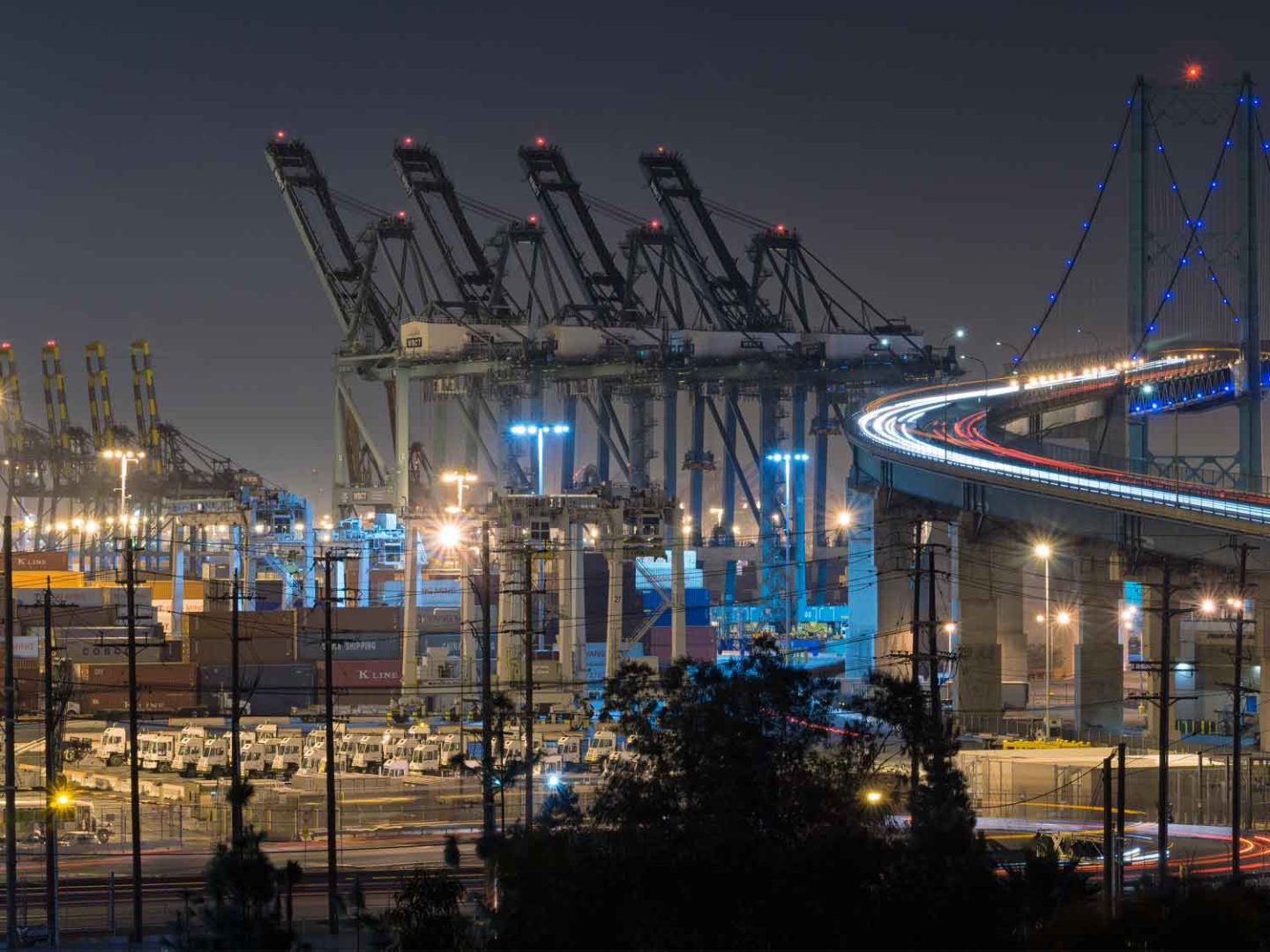
Fleet size remains important, but control over port terminals and connecting services is becoming an equally significant factor in carrier competitiveness.
Shipping lines with substantial terminal interests can exercise greater influence over vessel handling, hub connections and network development.
Combined with their own feeder services, these assets can provide greater flexibility when schedules change or disruption affects established routes.
MSC has pursued this approach particularly aggressively, while Maersk, CMA CGM and Cosco have also invested heavily in terminal infrastructure.
The potential benefits extend beyond operational efficiency. Carriers with greater control over their networks may be better positioned to introduce new services, adjust port rotations and coordinate connections between major hubs and smaller destinations.
However, ownership does not automatically guarantee reliability. Port congestion, labour disputes, weather disruption and infrastructure constraints can affect even the most integrated networks.
For shippers, the important distinction is how effectively a carrier's network performs on the specific trade lanes and ports they use.
Alliances remain central to global coverage
Not every carrier needs to own the largest fleet or operate its own terminals to provide competitive international services.
Shipping alliances allow operators to share vessel capacity, extend geographic coverage and improve network efficiency without independently serving every port.
The Gemini Cooperation between Maersk and Hapag-Lloyd, the Ocean Alliance and the Premier Alliance illustrate the different approaches carriers are taking to global network development.
These partnerships provide access to services and destinations that individual operators might otherwise struggle to support economically.
However, reliance on partners can also introduce operational dependencies. A schedule change, missed connection or disruption affecting one operator may influence cargo moving through several interconnected services.
For shippers, this makes it important to understand not only which carrier accepts a booking, but how the complete movement is organised, including transhipment points, feeder connections and inland delivery arrangements.
Further consolidation could reshape the market
The growing differences between the largest carriers raise questions about whether further consolidation is inevitable.
Fleet investment alone may not be sufficient for smaller operators to close the competitive gap, particularly when leading carriers are simultaneously expanding their terminal portfolios and global networks.
Acquisitions, deeper alliances and changes to existing partnerships could therefore become increasingly attractive strategic options.
However, further consolidation would also raise questions about competition, service choice and the concentration of capacity across important international trade lanes.
As the structure of container shipping evolves, carrier selection is becoming a more complex commercial decision, because the lowest freight rate or largest shipping line will not necessarily deliver the best overall solution.
Metro recommends that businesses consider several factors when evaluating ocean freight services:
- Network reliability: Assess schedule performance, transit times and the resilience of connections on individual trade lanes.
- Port and terminal coverage: Consider how terminal arrangements and feeder networks influence cargo handling and delivery.
- Routing flexibility: Understand the alternatives available when congestion, disruption or schedule changes affect planned movements.
- Carrier diversification: Avoid unnecessary dependence on a single shipping network where alternative services can provide greater resilience.
- Total supply chain cost: Evaluate the consequences of delays, missed connections and inland transport requirements alongside the ocean freight rate.
These considerations are particularly important as carriers continue adjusting networks in response to changing trade flows and the gradual return of services through the Suez Canal.
Metro works across all three alliances, ocean carriers and service networks, helping customers select optimum solutions based on their cargo requirements, delivery priorities and commercial objectives.
Our ocean freight specialists are continuously evaluating routing options, sailing schedules, capacity availability and onward connections to identify services that balance cost, reliability and flexibility.
Contact Metro to review your ocean freight arrangements and discover how independent carrier selection, informed routing decisions and proactive shipment management can strengthen your supply chain.