Spot freight rates have eased from their summer highs, but the container market remains far from settled. While demand has softened following an unusually early peak season, ocean carriers continue to tightly control available vessel space through blank sailings.
The result is a market where freight rates are easing only gradually, despite significant growth in the global container fleet.
For shippers, this represents an important change. Blank sailings are no longer simply a response to weak demand, they have become a fundamental part of how carriers manage capacity and support market stability.
Capacity is growing but available space isn't
Since 2019, container shipping lines have invested heavily in new vessels, significantly increasing fleet capacity across the major East-West trades.
However, much of that additional capacity is never reaching the market.
Sea-Intelligence data shows that blanked capacity has grown substantially faster than overall fleet capacity on every major trade lane. On Asia-North America East Coast services, scheduled capacity has increased by 46% since 2019, yet blanked capacity has risen by 215%. Similar trends can be seen on Asia-Mediterranean (56% versus 159%), Asia-North Europe (20% versus 83%) and Asia-North America West Coast (16% versus 62%).
Rather than allowing new vessel deliveries to create excess supply, carriers are actively withdrawing sailings to maintain higher vessel utilisation and prevent freight rates falling too quickly.
This represents a significant shift from the pre-pandemic market, when fleet growth generally translated into greater shipping availability.
Blank sailings remain high through August
The latest market data suggests carriers have no intention of relaxing that discipline.
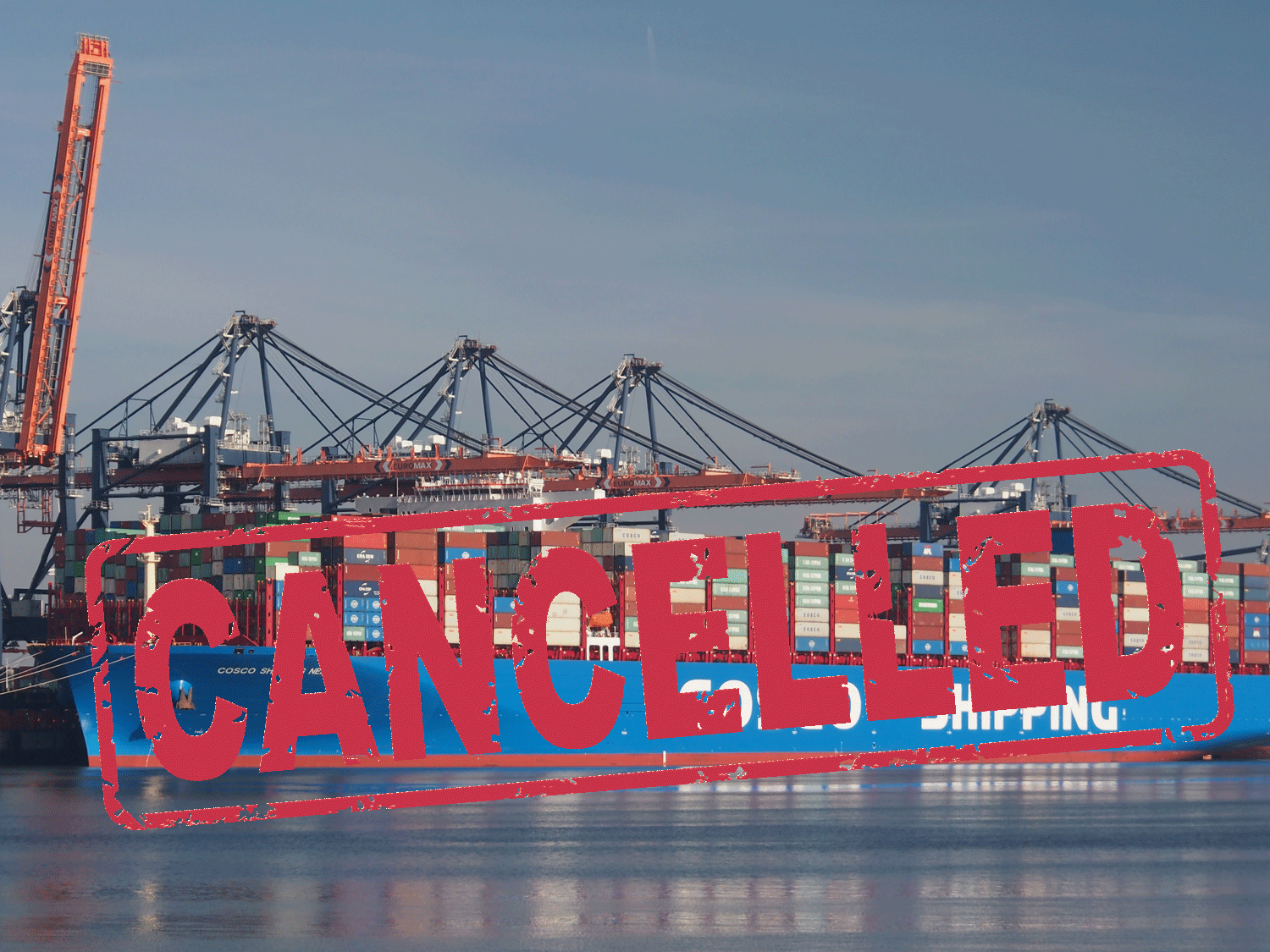
Across the major East-West trades, 58 blank sailings are scheduled between weeks 32 and 36 (3 August to 6 September), representing around 8% of all planned departures.
Despite these cancellations, 92% of scheduled sailings are still expected to operate, demonstrating that carriers are making targeted adjustments rather than widespread service reductions.
The greatest concentration of cancellations is on the Transpacific eastbound trade, followed by Asia-North Europe/Mediterranean services and the Transatlantic.
Freight rates are softening but only gradually
Container spot rates have softened through the end of July, but, the pace of decline remains measured, because rather than allowing prices to fall sharply after the early summer peak, carriers are relying on blank sailings, selective discounting and careful capacity management to support the market.
Additional attempts to introduce general rate increases during August suggest shipping lines remain determined to defend current pricing levels, even as demand becomes more balanced.
For shippers, this means freight rates are likely to remain more resilient than previous market cycles would suggest, with a Q4 spike likely to apply further upward pressure.
Network disruption hasn't disappeared
Capacity management is only one factor influencing schedules. As Chinese ports continue to recover from recent typhoon disruption and prepare for the arrival of Typhoon Dolphin, ongoing congestion and vessel bunching is still affecting service reliability across several trade lanes. Although roll pools have reduced significantly since the summer peak, carriers continue to omit selected port calls and adjust networks to maintain schedule integrity.
These operational pressures reinforce the importance of securing space well in advance, particularly as the market approaches the expected fourth-quarter demand increase.
The container market is becoming more disciplined rather than more predictable and lower demand no longer leads automatically to sharply lower freight rates. Instead, carriers are using blank sailings as a strategic tool to balance supply with demand and maintain network efficiency.
For shippers, planning assumptions based on pre-pandemic market behaviour are becoming increasingly unreliable.
Booking earlier, allowing greater flexibility around sailing schedules and reviewing inventory strategies will help businesses manage a market where capacity remains carefully controlled even as freight volumes become more balanced.
As carrier networks continue to evolve, Metro helps customers stay ahead of changing market conditions. From securing capacity and monitoring sailing schedules to identifying alternative routings and managing inventory risk, we'll help keep your supply chain moving efficiently, whatever the market throws at it.
EMAIL Managing Director, Andrew Smith to learn more.