Outsourcing a crisis

Outsourcing a crisis

Metro’s Outsourcing teams in the UK, India and Malaysia provide critical commercial, compliance and financial documentation services to internal and external customers and had to remain operative through the national COVID19 lockdowns.

The Business Process & Outsource (BPO) operations produce of thousands of critical documents for colleagues and customers every day, with teams working shifts in India and Malaysia to meet demand.

The correct paperwork is vital and time-critical, so it is essential that the BPO team deliver, or shipments will be delayed, or refused transit at a border.

As the scale of the Coronavirus pandemic grew, the lockdown processes in India and Malaysia were factored into business continuity planning and shared with local team leaders.

It was clear that working from home was the only option available and the biggest challenge would be making the transition without impacting the flow, production and delivery of the BPOs critical output.

While working from home processes and support were advanced and robust in the UK, this was not the case in India and Malaysia, where all equipment and communication links were 100% office-based.

Training staff on Work from Home (WFH) protocols, the use of video applications, purchasing laptops and setting up secure internet access was the initial priority, with the latter a particular challenge in more rural communities.

Office-based systems and reporting were adapted to monitor and support remote teams, with Microsoft Teams for group meetings and encouraged inter-colleague calls between locations.

Documentation printing and delivery has been an issue throughout and will add to call for shipping lines to move toward digitalisation.

All our BPO teams have adapted well and it has been business as usual, with 50 international colleagues working remotely.

While globally International trade has reduced over the last few months, productivity in our outsource offices has remained at good levels, with new BPO services added, staff joined, inducted, trained and developed, all during lockdown and WFH.
ChinaUK rail growing

China/UK rail growing

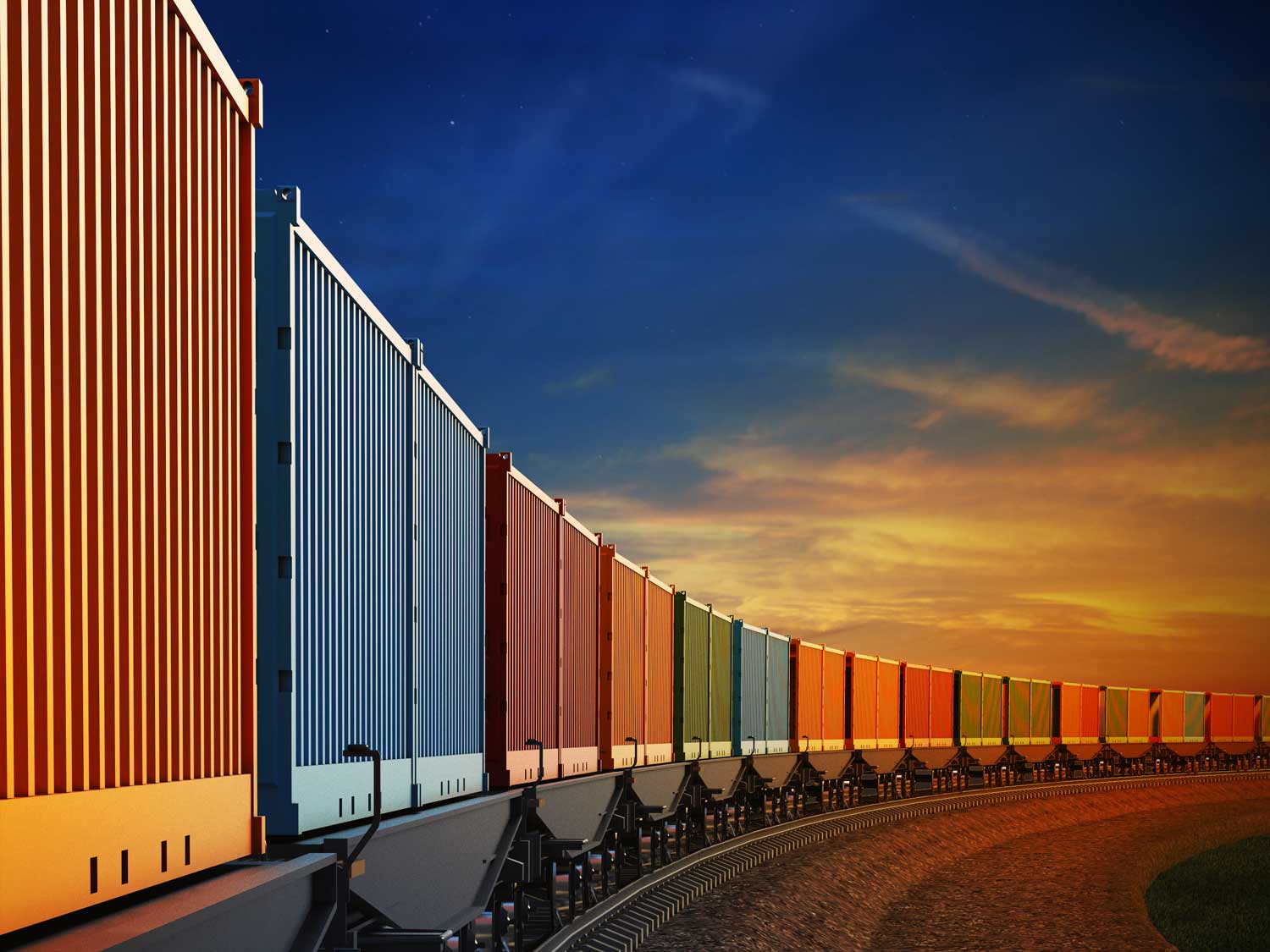
Sky high air freight rates and the supply chain chaos in the wake of the coronavirus pandemic strengthened appeal of the China-Europe rail service for the many shippers.

In March, when most train services from China to Europe resumed as factories reopened, a monthly record of 73,000 TEU was carried, with 64% of the cargo Westbound. Overall, volume on the China-Europe network surged 18% year over year to 174,000 TEU in the first quarter.

The rail sector experienced strong demand in recent months and tight conditions remain on services from Xi’an, in central China. With a direct line via Kaliningrad in Russia and Mukran in Germany, cargo on the service can reach Europe in around14 days.

The weekly direct service from Xi’an to the UK, has cargo railed to Duisburg in southern Germany, with the bonded containers trucked to Rotterdam and ferried to Purfleet for customs clearance and delivery.

Despite the number of cargo handovers points, the transit to Purfleet can be as little as 17 days, with comparable sea freight transit taking about 35 days, while air cargo that can take more than a week.

Rail freight from China is positioned between air and ocean, far quicker than sea and much more competitive than air for higher-volume shipments. 

Developing backhaul volume from Europe to China is critical to the long term success of rail, as it is in balance that the mode will truly be sustainable and competitive.

In 2019, 57% of cargo moving by rail comprised westbound trade out of China, an increase of 21% compared with 2018.

It is uncertain - and probably unlikely - that the backhaul percentage will increase further this year considering the widespread shutdown of European manufacturing. 

At the end of the 1st quarter, Maersk Line launched the first eastbound train on its AE19 service, which began in August 2019 as a westbound service from Asia to Europe.

The overall transit time of the new service using short-sea shipping to ports in Northern Europe, rail to the Russian Far East, and short-sea shipping to ports in South Korea and Japan will be 23 to 32 days, about half as long as the traditional ocean route. In 2019, two-way volume between China and Europe almost doubled year over year, growing 98% to about 725,000 TEU, according to China Railways.

Metro is pleased to offer regular direct services to and from China and Northern Europe rail terminals, with dedicated onward delivery by truck to the UK.

Gloomy trade forecasts abound

Gloomy trade forecasts abound

The United Nations Conference on Trade and Development (UNCTAD) and International Monetary Fund (IMF) have released updated trade and growth forecasts, that are even more gloomy than earlier predictions, with global trade contracting 20% and global growth declining 5% in 2020.

UNCTAD said yesterday that data for the second quarter indicated a decline in global trade of 20% for 2020, which is in line with the World Trade Organisation (WTO) that is forecasting a wide-ranging 13 to 32% decline in international trade.

The UNCTAD and WTO are slightly less optimistic than the European Commission, which expects trade among its 27 member countries to decline by 10 to 16% in 2020.

The IMF has lowered its global growth forecast, predicting a decline of almost 5% in 2020, with the UK economy expected to contract more than 10% this year, which would be one of the most severe declines, although not as deep as forecast for Italy, France or Spain.

The Organisation for Economic Co-operation and Development (OECD) forecasts that the UK’s economy will contract by 11.5% in 2020, with France declining 11.4%, Italy 11.3%, and Germany 6.6%.

Should there be a second wave of the coronavirus in Europe, the economic impact will be even greater.

Faced with such economic upheaval and a drop in demand for containerised imports from China, carriers have been cutting capacity levels on the Asia-Europe trade as they try to support freight rates.

Carriers are expecting a decline in volume for the first quarter of between 11 - 25% and while they expect container shipping demand would remain “very fluid, they are anticipating some sort of recovery in the third quarter, with further improvements running into the end of the year.

Carriers have blanked 94 scheduled sailings on Asia–Europe routes from April through August as a direct result of the coronavirus, with more withdrawn capacity expected, as the Ocean Alliance has yet to announce Q3 blank sailings.

Metro are maintaining global trade conditions and we will continually update on new and adjusted services, in line with partner carriers, for both air freight and sea freight. Please contact your account manager for further information.

Carriers balancing act continues into 3rd quarter

Carriers’ balancing act continues into 3rd quarter

Data from April gave the container shipping industry its first glimpse of the impact of the Covid-19 pandemic, with April 2020 global volumes plummeting 16.9%, compared to April 2019.

And while the financial implications of such a drop are serious for the lines, their effective volume reductions, are supporting revenues and may even lead to profitability for some by the end of 2020.

In days gone by, a big hit on volume like this would have had a huge financial impact on the carriers, however, in 2020, the shipping lines have been remarkably effective at managing their collective capacity on the key global trade lanes.

As we move into Q3, which is the traditional peak volume period for global trade and the carriers, we consider what has changed since Q2 and what the impact of this will be on the market in terms of pricing and service.

Carriers had been expecting a decline in volume for the first quarter of up to 25% and while they expect container shipping demand would remain “very fluid, they are anticipating some sort of recovery in the third quarter, with further improvements running into the end of the year.

While carriers have restored volume on some Middle East and Indian trade lanes, they have blanked 94 scheduled sailings on Asia–Europe routes from April through August, with more likely, which suggests they are uncertain how strong the peak will be.

Metro negotiate rate, space and service agreements across all key carriers and alliances to give our customers the agility, flexibility and dependability they need during these challenging times

The three main alliances are remaining very agile in how they are managing their projected capacity.

2M has removed 22% of its capacity, however, they are operating a ‘sweeper’ service to lessen the impact of any rolling’s and to maintain its volume commitments.

The Oceans alliance have brought back the previously intermittent LL3 service in Q3, but has yet to announce its Q3 blank sailings program.

The Alliance is expected to reduce in capacity by 28% within their service offering, as the FE4 service remains rationalised.

The extensive blank sailings have caused capacity out of China to tighten, an issue that will likely become more acute in the second half as demand returns and blank sailings remain at a high level through August.

Capacity out of Asia is becoming tight, but our commercial team go through accurate allocation planning with every carrier on a daily and weekly basis to secure capacity and ensure that our customers can ship everything on time, even with much of the container fleet lying idle.

Prudent shippers are building additional lead time into their supply chain planning, to avoid cargo rolling, missed sailings, or terminal delays because of manpower issues.

On the Asia to USWC trade, the previously announced 133 blank sailings for 2020 has now been lowered to 120. It remains to be seen if this was on the basis of an expected increase in volume.

The capacity for Q3 compared to Q2 looks to be improved, but the impact of the peak is still uncertain, which means that that the carriers will continue to closely manage capacity to suit demand.

If demand surges, the carriers can consider re-introducing idle ships, but the strength of the economy and demand will determine what comes next in terms of capacity on these key trades.

Metro provide a diverse offering of competitive sea freight, sea/air, air freight and rail options on all global trades