Competitive advantage in training Part 1

Competitive advantage in training Part 1

Effective training increases job satisfaction and morale. It provides motivation to the individual and increases efficiencies in processes for the business, while increasing the capacity of the wider team to adopt new technologies and methods.

Metro believe that effective training creates competitive advantage. Which is why we maintain an internal training function, to support employees and customers.

Metro has grown from a team of 50, to over 150 in just eight years. The longevity and experience of our team is a critical success factor and highlights our commitment to a rewarding work environment and career development, through experience and effective training.

Under the control of Training & Career Development Manager, Colin Smith, Metro design and deliver a wide-range of training solutions and experiences to four key groups: the Metro team; Undergraduates; Young people; and customers.

Prior to the Coronavirus lockdown, learning and development opportunities were expanding and a massive range of activity was in progress, encompassing all four groups

Metro team

  • Partnership development programme was active and growing with two-way visits and great dialogue that was building new relationships
  • Inductions and the programme for new team members was ever evolving
  • Management Development Programme
  • Supplementary training in technical and personal skills for staff and managers
  • Vessel-Port-Airport-Container Loading-ISO Tank Depot-Rail Hub Visits were growing, with strengthening relationships with service delivery partners
  • Customs Training in preparation for Brexit and CDS

Undergraduates

  • Placements, were thriving, giving students the chance to experience the world of freight forwarding
  • Relationships with universities were growing and expanding the pool of potential undergraduates

Young people

  • 1st International Freight Forwarding Specialist Apprenticeship
  • Helped design the apprenticeship framework
  • Work with local schools and colleges was growing, to raise awareness to careers in freight forwarding
  • BIFA Young Forwarders Network involvement and engagement was growing and developing the provision of additional training opportunities

Customers

  • Training and supporting services customers was beginning to grow; with demand for additional services growing

Then bang! The Covid-19 grenade went off and other solutions needed.
NEXT WEEK: PART 2 Brave New World post Covid-19

Car shipping post Covid

Car shipping post-Covid

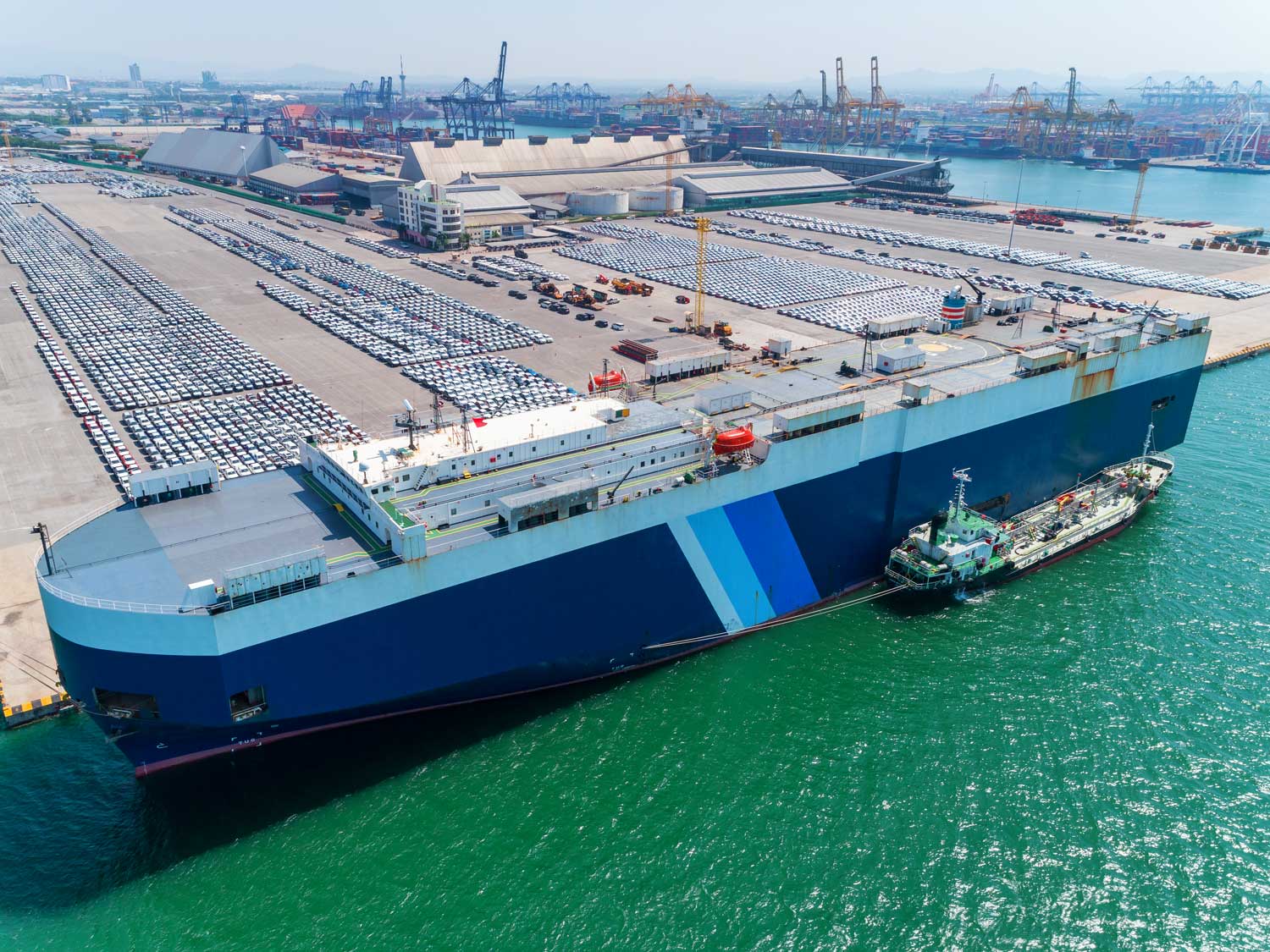
With automotive demand flat-lining in the face of the COVID-19 pandemic, the knock-on effects to global roll-on, roll-off (RoRo) shipping has been profound, with ships removed from service, or earmarked for recycling, raising doubts that the RoRo sector will recover fully.

The backbone of global automotive transport has historically been the global fleet of large RoRo vessel called a pure car carrier (PCC) or pure car/truck carrier (PCTC), with the biggest capable of carrying over 8,000 cars.

Leading RoRo lines and operators have been grappling with uncertainty over the future of automotive shipping, with some pushing to substitute more breakbulk and project cargo shipments, as the global supply of new vehicles and equipment continues to be suppressed by low end-user demand.

United European Car Carriers reduced its sailing schedules and trading network, which covers Europe from the Baltic Sea to the eastern Mediterranean, in reaction to the fall in demand for its services due to vehicle factory closures.

Almost all manufacturers and original equipment manufacturers [OEMs] in the European automotive industry have suspended or reduced production, due to the pandemic.

It is uncertain when production will fully resume, but the RoRo lines are anticipating that it will take some time and will have a significant impact on the liner trading network, and while many continue to operate, it is with reduced sailing frequency.

Leading RoRo operator Wallenius Wilhelmsen said it would reduce its fleet by 10 to 15 vessels through a mix of lay-up, ship scrapping, and return chartered-in tonnage to their owners.

Eukor Car Carriers, which is 20% owned by South Korean vehicle makers Hyundai and Kia and 80% by Wallenius Wilhelmsen and operates 80 pure car and truck carriers (PCTCs) is seeking alternative types of cargo to its traditional automotive shipments, especially from Europe to Asia.

With car RoRo shipping declining so dramatically and the carriers now seeking alternative cargoes, container shipping is likely to be the more effective option for handling smaller volumes on a sporadic basis and more diverse routings.

In recent years RoRo critics have highlighted the deficiencies of RoRo shipping, its inability to cope with spikes in demand and the demands for flexibility that characterise the consumer vehicle market.

RoRo shipping is seen by many to be slow, expensive, inflexible, and laden with the risk of damage and theft, risks that multiply with each change of transport and that often add significantly to the cost of movement.

Automotive shipping by container has become particularly cost-effective and efficient, with the advent of new packaging technologies, which can secure as many as six vehicles within a single container.

The flexibility, security and potential cost savings of container shipping will appeal to many automotive logisticians, as they offer the option to move away from RoRo operators’ set routes and schedules, to the widest variety of global ports, schedules and services, with equipment that can be transferred from ships, to road, rail or barge transportation – slashing delivery times and lowering overall costs.

Metro has established partnerships and agreements with leading RoRo carriers and container shipping lines to offer the automotive industry the widest choice of services, routes and solutions.

US ports to offer storage while others struggle

Carriers leveraging every revenue opportunity

Aggressive capacity management has supported vessel load factors and freight rates during the pandemic, leaving unfortunate shippers to face lower service quality and cargo roll-overs as carriers favour higher-paying spot cargo.

Despite significantly reduced bunker costs in the second quarter of 2020 shippers saw little benefit from these reductions as many carriers used their market leverage to hold onto bunker surcharges with the threat of rolled cargo.

And now shipping lines are using rollovers to bump up freight rates, forcing many shippers to pay no-roll premiums.

Many feel they have to pay premiums on the Asia and Pacific trades because they lack guaranteed space and if they don’t pay a premium their cargo could be sitting at origin for four or five weeks, because if you get rolled one week, there’s no guarantee you make it onboard the following week.

Increased rates and rollovers have been made possible by carriers’ capacity discipline – in turn, a result of the widespread industry consolidation in recent years.

The Metro commercial team manage our global rate, space and service agreements, with daily carrier allocation planning, to secure capacity and ship our cargo on time from every origin.

The carriers tight grip on capacity has seen load factors reach as high as 95% on headhaul services, up from 80% in “normal” times.

With sky-high load factors, the carriers are in an enviable position to dictate the terms of carriage.

Shipping rates are way up, with prices on the transpacific eastbound routes expected to be double what they were a year ago, with Asia-Europe spot rates following a similar trajectory.

The shipping lines 3rd quarter blanking programme suggests that they have discounted any semblance of a peak season, yet our global partners are are seeing demand improving as major consumer countries start to open up.

Metro are firm believers in loyalty to our customers and partner carriers and we work with long term fixed validity contracts that deliver competitive costs and reliable consistent services achieved through commitment and strategic planning with our partners.

In fact in a time of distress and shipping volatility, in a rising spot market, many of our clients have seen reductions in overall costs due to our long term pricing mechanism and capacity management, delivered through reductions in bunker surcharges over recent months.

Seafarer crew crisis impact to industry

Seafarer crew crisis impact to industry

The coronvarius crew crisis is triggering ship detentions and diversions, that if not addressed effectively, will impact operations, create disruption and lead to price increases.

Despite the International Maritime Organisation (IMO) calling on governments to designate marine personnel, as 'key workers' providing an essential service, around 200,000 seafarers with expired and extended crew contracts, can’t get home due to COVID-19 travel restrictions and are stranded on vessels and in ports around the world.

Concerns are growing, that what some felt was a humanitarian crisis, is turning into something that may have a profound impact on the global supply chain.

More port detentions due to expire crew contracts and voyage diversions to make crew changes, to avoid detentions, are reducing available ship capacity, which restricts shippers’ ability to move cargo across the globe.

Restricted capacity by shipowners diverting vessels increases spot rates, which is bad news for shippers, but good news for owners of the ships that aren’t detained or diverted.

While questions remain over which countries port-state control (PSC) authorities will strictly enforce minimum manning standards and detain ships, despite the IMO’s plea is largely ignored.

Will the U.S. Coast Guard detain ultra-large container ships off California, or the European Maritime Safety Agency (EMSA) intercept vessels in the English Channel, if they believe they have too few crew aboard with valid seafarer employment agreements (SEA).

PSC inspectors in Australia, the AMSA [the Australian Maritime Safety Authority] has already applied its authority to prevent a ship from leaving harbour because the crew complement fell short of the manning requirement, while another ship’s master was directed to repatriate seafarers who had gone beyond their contractual terms.

Australia’s intervention is impacting the shipping sector, with schedules disrupted, charter rates and crew costs rising.

If there are not enough crew with valid employment agreements on board to meet minimum manning requirements, AMSA won’t let the ship sail.

Equally if AMSA inspectors find seafarers have a valid SEA but have been onboard for over 11-13 months, they will may take action, including vessel detention.

But in many cases the crew members cannot be repatriated, because of COVID-19 travel restrictions. A Catch 22 situation for all involved, which could result in vessels being detained indefinitely.

In contrast to the AMSA approach, the European Commission recognised the inability of the industry to carry out around 100,000 crew changes a month and asked member states to facilitate transit arrangements of seafarers and the implementation of green lanes, to fast-track crew changes. With adequate facilities for seafarers to undertake

medical checks, quarantine if required by the country in question, and transport connections onward to their home country.

Going forward, the more that national PSCs implement rules like those in Australia, rather than the EU, the more voyages will be diverted to make crew changes, increasing trading inefficiency and raising the likelihood of spot rate changes.

Metro has agreements with all of the major alliances and is able to offer choice and flexibility during the current challenging times.