brexit proof

Operation Brock relaunched

Operation Brock is set to return, as part of plans to cope with potential queues at Channel Ports, as the government questions hauliers’ readiness for Brexit

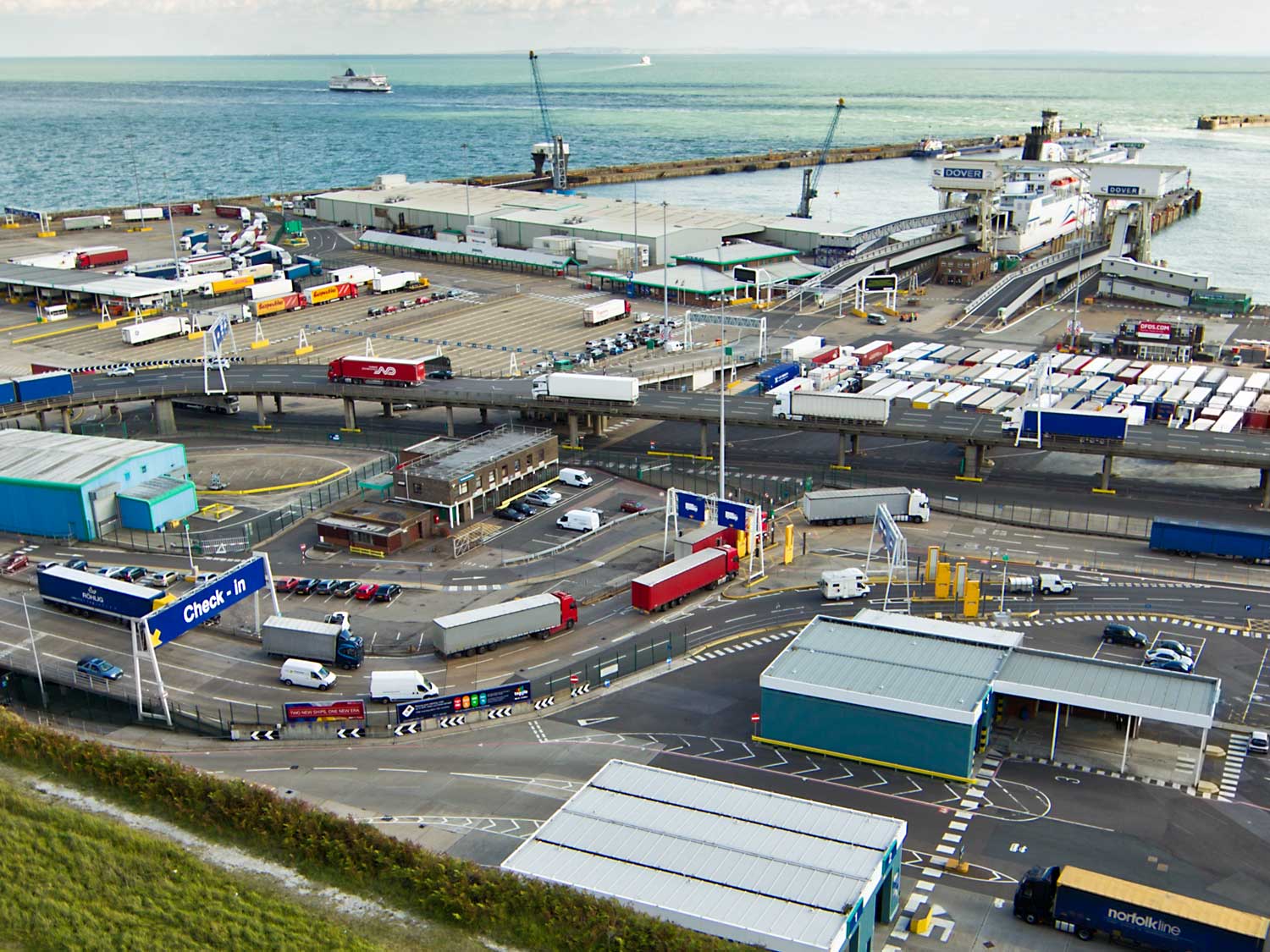
Operation Brock is the planned traffic management system in Kent for use in the event of a no-deal Brexit. It supersedes Operation Stack, the previous plan that has been used in the past for temporary cross-Channel traffic problems.

The move to relaunch Operation Brock is contained in a consultation document published this week, by the government, which acknowledges that there could be border queues created by the UK’s exit from the EU in December, for at least the first six months of next year.

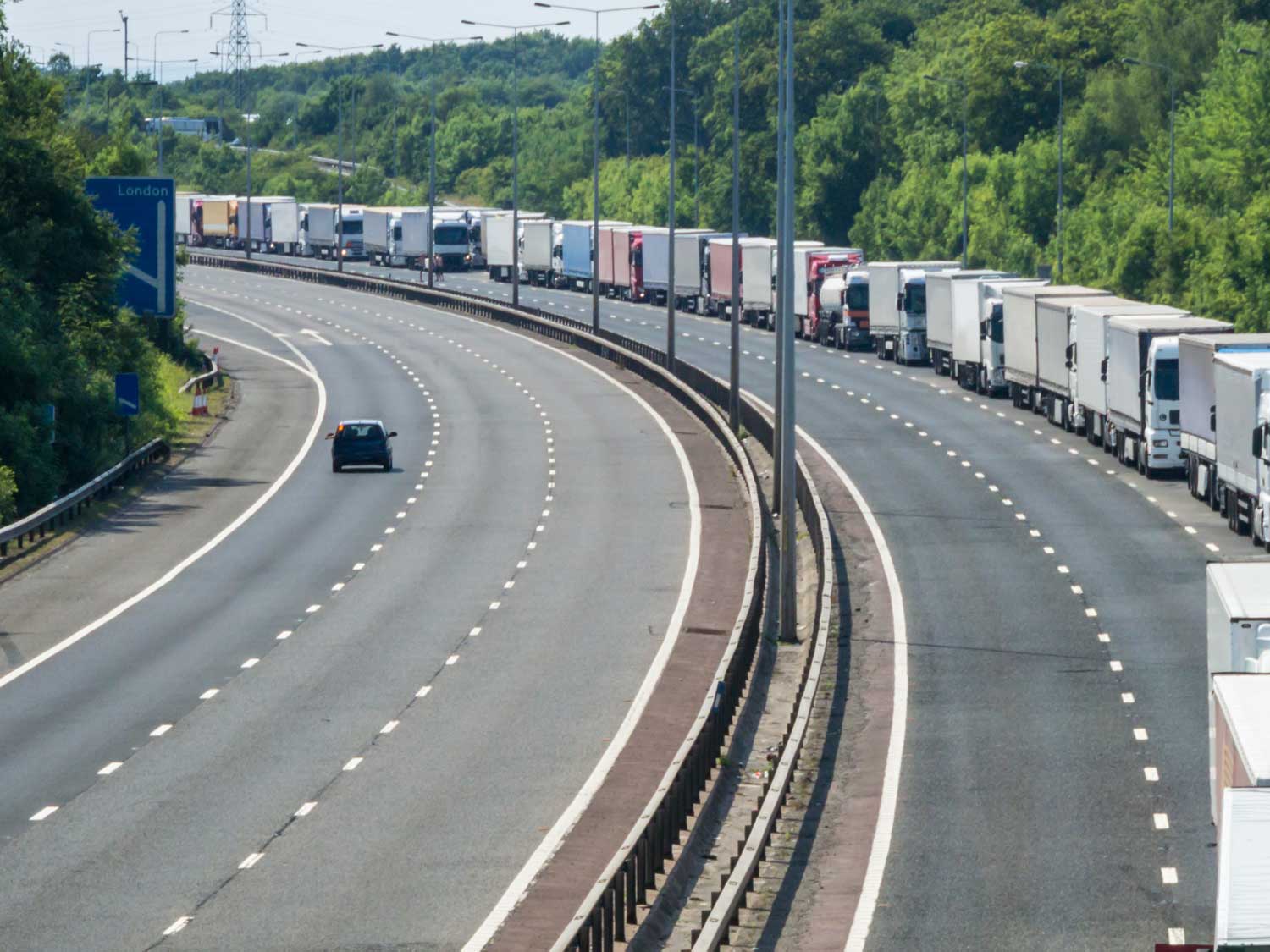
Mitigation plans proposed in the document include the relaunch of Operation Brock from December this year, which will allow up to 2,000 HGVs to be queued on the coast-bound carriageway between junctions 8 and 9 of the M20 and at other holding areas in Kent - while non-port traffic bypasses the queue via a contraflow.

The document also singles out hauliers as liable to “exacerbate” queues by not being “border ready” with all the necessary border documentation.

It plans to incentivise export hauliers, to ensure they are border-ready before setting off for the port by making use of the proposed Smart Freight Service, punishing those who do not have the right documentation with £300 fines and possible seizure of goods.

The document also proposes Kent Access Permits for hauliers, which will require drivers to stick to designated routes and penalise those that do not comply.

There is surprise that the onus for compliance will be placed on drivers, leaving them personally liable for a fine if they do not comply with the new rules.

Questions also remain about the readiness of the Smart Freight system, as it is still unclear when it will be available for testing.

Experts warn that the current proposals leave too many questions unanswered and very little time available to identify and implement solutions to keep the country trading.

In a statement accompanying the consultation, transport secretary Grant Shapps admitted. “This will be an important moment of change, and there is at least initially a risk of some additional friction at the border – notably if goods arrive without having completed the necessary customs and other processes.”

“It is thus important that we put in place plans both to minimise the risk of disruption and to mitigate its impact should it occur. And we need of course to have a particular focus in that context on the Short Straits, given the volume of traffic that moves both on the ferries leaving Dover and through the Channel Tunnel.”
For further information on Metro’s  Brexit solution, please contact Grant Liddell or Andrew White to organise an immediate Health Check. 

Brexit red line

BREXIT UPDATE ; You have 150 days and counting

On the 1st January 2021 you will potentially be liable for customs duty and import VAT when you import goods from the EU and you’ll need to submit safety and security declarations for all exports to the EU.

Metro has produced a Brexit health-check questionnaire to help traders prepare for January 1st 2021, when the transition period expires and the UK is no longer bound by EU rules and laws.

The questionnaire compiles the information and data that we need to assist you in continuing your trade with Europe and globally after midnight on the 31st December this year.

Whether or not a trade deal is agreed between the UK and EU, there will be a need for a formal customs clearance on every shipment leaving the UK into Europe or entering the UK from Europe. This is going to happen and needs a platform in place to facilitate.

This new requirement will apply in much the same way as for trade with the rest of the world currently.

Are you prepared and have you appointed Metro as your partner customs broker to cover all customs formalities, requirements and legislation? Metro operate a brokerage team that can handle all of your import and export requirements, whether we are acting as the carrier or simply to ensure you have a seamless customs process in place for your European movements by overland, rail, sea or air movement.

If you have not considered and put in place a solution your European supply chain will cease to operate with European movements.

The consequences of not being prepared and being unable to submit customs entries will be an inability to trade with European suppliers and customers.

The government has stated that it will not accept ignorance of the situation and all traders have a responsibility to be prepared for the new customs environment.

Goods Vehicle Movement Service (GVMS) is the new IT platform that The UK Government is currently developing to track movements digitally.

This however has only just gone into production and is some way from implementation and the test phase. Development is expected to be completed by October and the actual running of the system is still not finalised.

GVMS is there to simplify trade and is still being developed. There is much more to be discussed. Regardless of the outcome, all types of businesses – whether youre a port operator, a haulier or a trader – must prepare for the requirements needed for the way GVMS is envisaged.”

There are however certain elements of data that we know will be needed both for the GVMS process and also the customs process. These are included within the questionnaire that was recently sent to you for completion. A big aspect of the data required are the historic movements that you have moved so that we can analyse the scale and most appropriate tailored solution for you going forward – this can be gathered from your INTRAstat declarations – a simple way to gather the information.

The Metro technical team is working closely with our Brexit Task Force team to create a bespoke digital platform that will automate and simplify customs clearance into and out of the UK, handling all submissions through digitised data transfers.

With 500,000 additional customs entries in the UK alone being submitted every day after Brexit, digitalisation and automation will be critical and the only practical way to ensure that the customs system and supporting infrastructure is not overwhelmed. 

Please help Metro help you and agree a formal approach to both trade with the EU and global trade post Brexit withdrawal on 1st January 2021.

Metro’s Brexit Task Force, which comprises some of our industry’s most experienced professionals, was established 18 months ago to conceive and implement our Brexit solution and platform. We have a skillset and experts operating both from within and externally to the freight and logistics sector to provide a complete solution and the latest intelligence on developments and government announcements.

In addition we have formally partnered with Europe’s largest and most experienced customs consultancy and brokerage house, with offices and partners throughout the EU to provide our customers with immediate access to the widest network at gateways to ensure sustainable trade is maintained. This, along with Metros own in-house resource and BPO operations gives us access to over 500 experienced and qualified customs brokers working in the post-Brexit environment.

If you have not received a questionnaire, simply reach out and we will send you one by return and talk you through the requirements.

If you have received the questionnaire please take time to complete it and call and we will talk you through the process and where to find the data that we require to analyse your current and future needs so that we can build a tailored solution with you and arrange a follow up meeting.

150 days is not a long time in business, especially in the current pandemic crisis. Time really is of the essence.

We can help simplify your migration to the new way of trading with your European partners in the future.

The quickest way for us to identify your optimum solution and ensure that you are ready in advance of the 1st January 2021, is to get some basic information.

COMPANY NAME -
CONTACT -
EMAIL -
PHONE -
UK VAT NO -
UK EORI NO -

DO YOU HAVE:
Deferment account -
CFSP authorisation -

WHAT ARE YOUR TERMS OF SHIPMENT -

EXPORTS TO EU/IMPORTS FROM EU -
Annual volume -
Historical Intrastat data -
Total consignments by country
Products -

Once we have gathered the above information we will call you to discuss all optinos and put together a tailored solution that dovetails with your current and future requirements in trading with The EU.

Please contact Chris Carlile or Grant Liddell for full details on being Brexit ready to trade and we will ensure you have everything in place for customs platform in 2021. We will be in touch with you in the near future by phone to follow up on this advisory and assist you further if required.

The lockdown impact on UK transport

Your data will simplify Brexit

“Trade isn't about goods. Trade is about information. Goods sit in the warehouse until data moves them.” On January 1st 2021 the United Kingdom begins a new trading relationship with the European Union and your data is needed now to keep your goods moving. 

While lots of uncertainty about how trade between the UK and the EU will operate from January 2021, we know that record keeping, filing and customs declarations WILL be needed for trade between the UK and the EU.

We provide customs clearance and filing services for all UK ports and airports, and with our customs support partner, provide a full-service ‘Customs Agent’ service across Europe, with dedicated offices in the UK, Netherlands, Belgium and Germany.

As an importer/exporter, you should start preparing for the Brexit changes now by compiling your ‘master data’ and sharing them with your customs broker, ideally Metro.

It is essential that all data fields required for customs clearance are correct, which means that basic information such as value, weight, volume, insurance, and delivery conditions are kept in a structured database. 

A key element that needs to be captured is the product description and HS code (Customs Code) data. 

Enriching a product database with correct HS code information is a time-consuming process that requires specialist knowledge. 

Don’t wait until December 31st, this can be done in advance and we can help help you prepare your product database, so that you are ready for customs filings. 

  • Address data of customers, suppliers, providers
  • Materials, product descriptions
  • Product commodity codes
  • EU dual-use numbers 
  • Export Control Classification Numbers
  • Origins; preferential and non-preferential
  • Coded documents
  • Weight data
  • Legal basis/conditions
  • EORI/customs numbers

The above ‘master data’ list is only a partial one, which is why it’s important to share it with us now, so we can fill in any gaps, check classifications, build your trader relationship file and automate many of the day one Brexit customs declarations and processes. 

Holding your master data also ensures consistency so that, for example, a single (8-digit) commodity code is used in the export declaration, in the Intrastat report, and in the commercial documentation.

Metro are well positioned with our post Brexit customs platform, which we have developed over the last 2 years with our partners in Europe and software development digitalising customs submissions. 

Please contact us in relation to Metro providing you with the complete Brexit customs solution.

Brexit border controls eased

Government not prepared for post Brexit customs

The UK’s freight forwarders’ association, BIFA, has warned that the government had failed to recognise the practical constraints to building sufficient post-Brexit customs agent capacity in the industry which was still reeling from coronavirus.

Industry experts agree that the proposed £50 millon funding to hire 50,000 custom brokers, to cope with an estimated 215 million additional customs declarations, is not enough and the scope is too narrow for the huge logistical challenge that will ensue, after Brexit transition ends.

Richard Burnett, chief executive of the Road Haulage Association, says the terms to access the funding is simply too narrowly focused. “The government is completely complacent on this issue. It takes six months to a year to train one person properly and as it stands today we have five months to do this.

“Whatever the framework that is announced on Wednesday it will not support speeding this up to the degree that is required. No matter which way you turn this is flawed,” he said.

Bosses have also raised alarm over whether companies which have hit the EU’s state-aid limits of €200,000 over three years as a result of the Covid-19 crisis will still be able to access the grant funding.

They also said the scheme only covers 600 businesses and should be extended to general traders and not just customs intermediaries.

Robert Windsor, executive director at BIFA, said money was not an instant panacea warning that £50m million - or £1,000 for each new agent - would have “little impact” on the problem.

He said the government had failed to recognise the practical constraints to building capacity in the industry which was still reeling from coronavirus. It was also still waiting to see how much EU trade would actually survive after the transition period ends given the additional bureaucratic costs.

Many BIFA members have frozen recruitment because of the Covid-19 crisis, and others were reluctant to accept new clients that had no experience of customs procedures, because the risks and liabilities could be too large. The association’s current training in-take is running at about 50 enrolments a month because of the pandemic.

The Institute for Export and International Trade (IOE) believe the government’s messaging that the £50m funding was purely for intermediaries firms had caused confusion.

“We have three generations of business leaders who have not had to complete a customs form to do trade with Europe. There has to be flexibility not just for business, but also for individuals. We’ve got to build capacity because there is going to be a lack of capacity come January 1 for sure,” he said.

The government will have invested a total of £84m to boost customs training, including a new online customs academy. This has completed some 3,000 courses, with BIFA training another 1,700 intermediaries since 2019, leaving a huge shortfall.

Although industry has estimated 50,000 new customs agents will be required, liability for the declarations will remain with importers and exporters, meaning companies will also need to build in-house customs expertise.

Metro are well positioned with our post Brexit customs platform, which we have developed over the last 2 years with our partners in Europe and software development digitalising customs submissions. 

Please contact us in relation to Metro providing you with the complete Brexit customs solution.