Brexit. What now

Half of UK business yet to make any Brexit preparations

The British Chambers of Commerce has gone on the record to state their concern that only half of UK firms have considered the impact of Brexit on their operations, with just 52% carrying out any form of risk assessment.

Mr Gove told Parliament that it was up to firms to get ready for the end of the transition period.

"The consequences of a lack of business preparedness will be not just economic opportunities missed for those companies who don't prepare, but potentially much wider disruption," he said.

The BCC's director general, Adam Marshall. "With just 98 days to go, business communities face the triple threat of a resurgent coronavirus, receding government support schemes and a disorderly end to the transition period.”

"Despite recent public information campaigns, base levels of preparedness are low. Many firms say they've heard talk of deadlines and cliff-edges before, and others are still grappling with fundamental challenges as a result of the pandemic."

The BCC said companies were still in the dark on a number of issues, including:

- Firms do not know what rules of origin will apply after transition

- There is no clarity on how food and drink due to be sold in the EU and Northern Ireland is to be labelled

- There is very limited guidance on the movement of goods from Britain to Northern Ireland. Though this may be offset with the launch of the Trader Support Service

The BCC said firms needed more clarity and called on the government to "ramp up engagement with business urgently".

It complained of a lack of information with which to plan, while companies were suffering from "deadline fatigue”, which was exacerbating their lack of preparedness.

However fatiguing it is, the Brexit deadline is less than 65 working days away and those traders that are not yet prepared, need to take urgent action now to protect their business.

It is not unusual for trading companies to import virtually all their equipment and if they don't want to down customers because of delays at the ports, it is quite likely that in addition to dealing with import formalities for the first time, they may also have to take on paperwork that was previously handled by its suppliers.

It is critical that importers understand that there is no ‘light touch’ customs regime that does not require action on their part AND the EU has consistently stated that the UK exports will be subject to full customs checks. Light touch does not = no need for customs compliance !

IN SHORT YOU MUST PREPARE FOR BREXIT. The consequences of not being in a position to customs clear and comply with the new process or manage freight movements with the EU, and probably Northern Ireland, will result in an inability to trade goods with the European Union post transition period.

You can contact Grant Liddell or Chris Carlile, who are leading our 2021 EU withdrawal Task Team, to talk through your situation.

Or visit MetroBrexit Ready’ web portal, which has been designed to prepare your business for the 1st January 2021.

Belfast

EU/Northern Ireland; Politics and Practicalities

The UK government plans to break international law, while launching the Trader Support System, to keep them compliant!

In a truly extraordinary admission to the House on Tuesday, Northern Ireland Secretary Brandon Lewis said the government will break the law in a ‘very limited and specific way’ over the EU Withdrawal Agreement.

They intend to give UK ministers the power to override parts of that international treaty with respect to Northern Ireland – for example, allowing ministers to waive export declarations on NI to GB trade if the issue isn’t settled in joint talks with the EU.

The UK’s intended ‘Internal Market Bill’ does not look like going away anytime soon!

The move itself has sparked outrage from Conservative MP’s, who say Britain must stand up for the rule of law.

What price a deal now?

And while on the subject of Northern Ireland, and perhaps not entirely un-coincidental, the government released an update on Tuesday specifically aimed at UK Traders who do business with Northern Ireland.

The Northern Ireland Protocol (NIP) was introduced to avoid a border on the island of Ireland and to allow free movement of goods between NI and ROI (and vice versa).  

To achieve this NI, although remaining in the UK customs territory, will operate to the EU customs code (UCC).  

The NIP requires some form of control on goods moving between GB and NI (the so-called border in the sea) because they are effectively entering the EU customs control zone and may be at risk of entering the Republic of Ireland. (See indicative process below.)

HM Government have eased the situation by creating the Trader Support Service, which is now open and available for registrations!

This is the UK Government’s one stop shop for all things customs related for UK Traders shipping goods to Northern Ireland.

It will assist with things like: Import declarations into Ireland, licences and certificates for products of animal origin. Small parcel couriers and International Trade shipments clearing through the UK and moving into Northern Ireland.

This is all in line with the Northern Ireland protocol which comes into force on the 1st January 2021 and is a free to use service.

For any Trader on the mainland UK, who has elements of Trade with Northern Ireland, documentation queries and such like, it will be a must have. The service is now available online, so sign up today at the link below:

https://www.gov.uk/guidance/trader-support-service

GB to NI process (extract):

1. GB supplier raises commercial invoice and charges UK VAT as normal 

2. No export declaration required

3. Export health certificate required if SPS goods

4. ENS entry safety & security declaration required 2 hours prior to arrival in NI

5. IPAFFS pre-notification of SPS goods

6. Import declaration to be pre-lodged, either full declaration or simplified

7. GVMS record generates GMR (goods movement reference)

8. Import entry arrived or finalised

9. Duty payable on goods 'at risk' of not remaining in NI

10. Goods are free to move on the island of Ireland but will attract duty if moved to ROI or (ultimately) no duty if they remain in NI

If you have not considered your Northern Irish post Brexit transition cargo movements we recommend that you consider this, until further notice and advice is given on a compromise with the EU, as an international market still adhering to the EU ‘rules’.

European roadmap to recovery

Brexit Politics Round Up, 24th September 2020

The effects and uncertainty of COVID is creating a parallel issue for UK businesses, who are already trying to navigate the shifting landscape of a post-Brexit trading environment.

On Monday we learned that the coronavirus alert level should move to 4, transmission is ‘high or rising exponentially’, as the Prime Minister announed new lockdown rules in the commons on Tuesday.

At a time of extreme insecurity, both for our personal health, and the health of our businesses, it is critical that we complete Brexit preparations, so that supply chains operate efficiently through a prolonged pandemic and the 1stJanuary 2021.

As for politics, the Internal Market bill is unlikely to make it through the House of Lords, so expect a painful back and forth over many weeks, that will dominate parliamentary time, effort and political oxygen, while the government is trying to deal with another big crisis.

With even the most ardent Brexiteers suspicious of the government’s tactics, Boris continues to bang pots, crash conventions and create noise in the hope that bravado will get a deal over the line.

There is no denying that this is an uncomfortable moment - a strategy that could be worth it, if it shows the EU a seriousness of intent - but it remains unclear that the outcome will be worth the risk.

Meanwhile in Europe, The EU and UK have agreed to hold trade talks in Brussels next Monday as the two sides desperately try to find a way through the latest controversy, threatening to derail a Brexit deal.

The move flies in the face of some, namely France, who went so far as to suggest that Mr Sefcovic refused to meet the UK delegation until the offending clauses were withdrawn from the Internal Market Bill.

So next Monday’s meeting represents a major snub to French President Macron, who has been pushing hard for Eurocrats to open legal proceedings against Britain over an alleged breach of the divorce treaty.

Hardliners in Paris were quickly warned to be more cautious, because a hearing in the European Court of Justice could easily trigger a collapse in post-Brexit trade talks.

Now no-one would want that, would they?

Metro’s ‘Brexit Ready’ web portal has been designed to prepare your business for the 1st January 2021 

For further information on Metro’s brokerage services, please contact Grant Liddell or Chris Carlile who are leading our 2021 EU withdrawal Task Team.

brexit proof

Government look to shift blame as Brexit queues loom

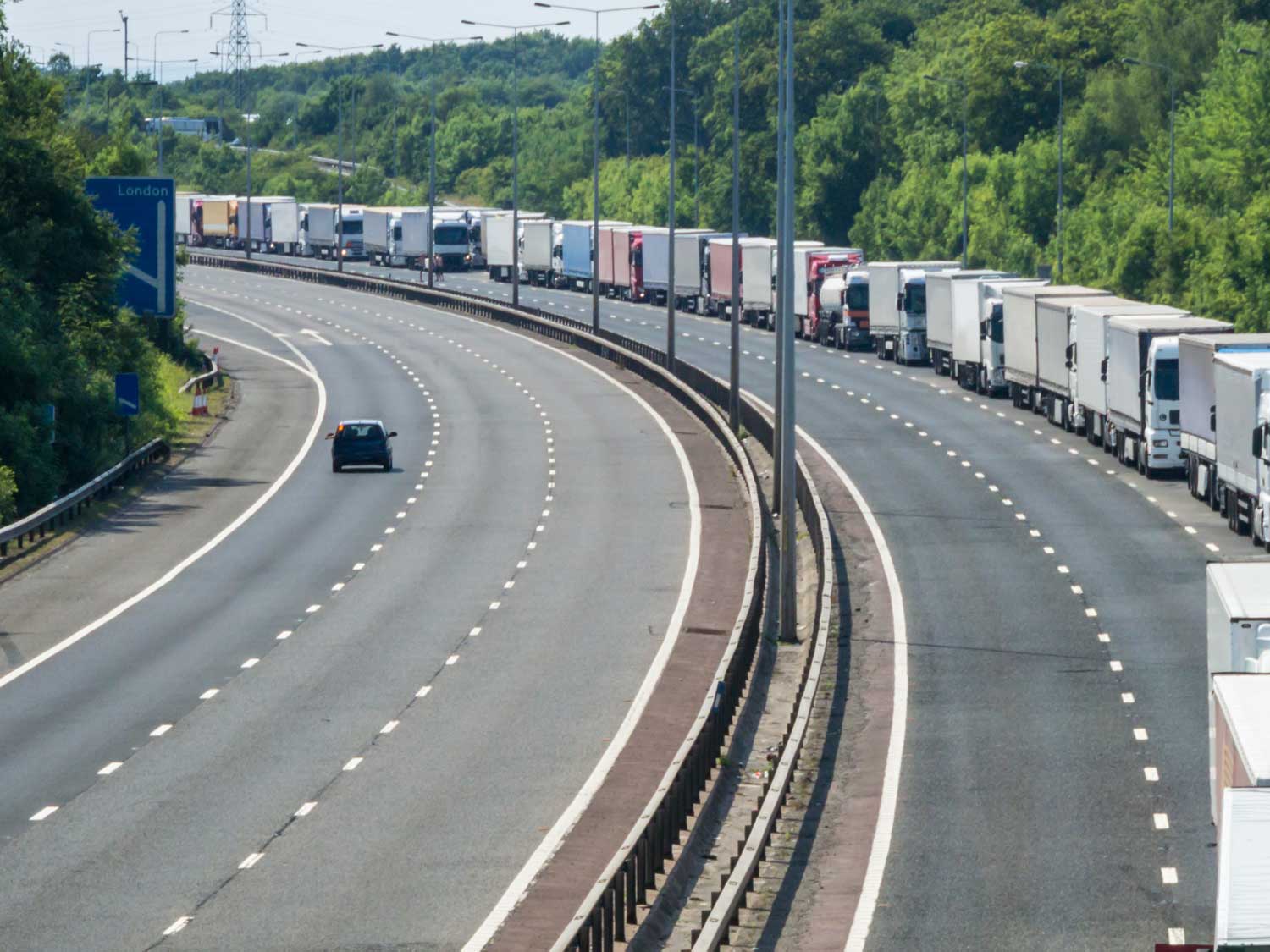
As the government insinuates that business has not prepared and warns of 7,000-truck-long queues in Kent and two-day delays for exports to the EU, BIFA director general Robert Keen accuses them of “making villains of the key workers who have been tackling the impact of the pandemic on the UK’s supply chains”.

According to leaked Cabinet Office documents, in its “reasonable worst-case scenario”, there may be queues of 7,000 port bound trucks and associated delays of up to two days, with imports and exports disrupted to a similar extent.

The EU is expected to impose full goods controls on UK exports, stopping all freight without the correct documentation and the “reasonable worst-case scenario” anticipates that up to 70% of freight trucks travelling to the EU will be unprepared for new border controls, including up to half on the Dover to Calais and Eurotunnel routes.

Drawn up by the government’s Border and Protocol Delivery Group (BPDG), the leaked report (released yesterday) warns that the core “smart freight” IT system for hauliers was not expected to be tested publicly until the end of November.

It forecasts that 50-70% of large businesses will be ready for cross-border trade, while as few as 20-40% of SMEs will know what to do from 1st January.

“Considering demand levels in the first week of February, it is estimated that if readiness does not improve by then, queues could reach a length of 7,000 HGVs. In each case it is estimated that HGVs could take two days to reach the front of the queue,” the document warns.

Kent authorities have rebooted ‘Operation Fennel’ to move lorries away from the main arteries of the M20 and A20, but their efforts will be frustrated unless the smart freight system – a web portal operating a red, amber and green traffic light system for hauliers – is working on time.

Only those given the green light, after passing a documentations test, will be given a Kent access permit. But the document reveals the system will not go into a public beta testing phase until the end of November, leaving little time to launch it fully or train drivers and their customers.

The report adds to pressure on the government to decide and publicise plans for lorry parks across the country. So far it has only confirmed one, in Ashford in Kent, with legislation passed to give powers to build others in 29 council areas, as we reported last week.

With just 100 days to go before the end of the Brexit transition period on 31st December, the document also notes that ongoing work at the Department for Transport to provide the advice centres “is currently unfunded” with a parallel treasury bid for £18.5m still in development.

Responding to the leaked Cabinet Office letter to the logistics sector, the British International Freight Association (BIFA) said it appeared to be another example of the government getting its retaliation in first. BIFA director general Robert Keen said: “The Government has received repeated warnings from all sides of the supply chain that neither businesses involved in trade between the EU and the UK, nor the freight and logistics sector that physically handles and manages that trade, is ready for the new procedures that will be in place from January 1st 2021.

“With just over 14 weeks to go before the end of the Brexit Transition Period, traders and logistics providers are still waiting for so much information and clarity from the government and are shocked by the lack of consistency in Government policy, systems planning and procedures.”

He said the communications seemed to indicate that the UK government wanted to “make villains of the key workers who have been tackling the impact of the pandemic on the UK’s supply chains”, but that this was not a constructive approach.

Metro’s ‘Brexit Ready’ web portal has been designed to prepare your business for the 1st January 2021 . 

Metro’s ‘Brexit Ready’ web portal has been designed to prepare your business for the 1st January 2021.
For further information on Metro’s brokerage services, please contact Grant Liddell or Chris Carlile who are leading our 2021 EU withdrawal Task Team.